Ever wondered what it takes to lead a project from start to finish, turning raw ideas into a long-lasting reality? Project Managers are the driving force behind successful projects, coordinating teams, managing budgets, and overcoming challenges.
In this blog, we’ll explore the Project Manager Job Description, breaking down the essential skills and responsibilities that make this role vital in every industry. So read on and make your mark in Project Management excellence!
What is a Project Manager?
A Project Manager is a professional accountable for planning, executing, and closing projects within specific constraints such as time, budget, and scope. Understanding the
Project Manager Job Description
sheds light on these professionals' critical role in steering organizational success. From strategic oversight to detailed execution, Program Managers, along with Product Managers and Project Managers, ensure that complex projects are completed effectively and align with broader business goals. complex initiatives across industries, ensuring timely completion within budget and resource constraints.
In essence, a Project Manager is the glue that holds a project together, ensuring all moving parts are synchronized and geared toward achieving the project’s goals. Their ability to lead teams and keep projects on track is invaluable to any organization.

Project Manager Roles and Responsibilities
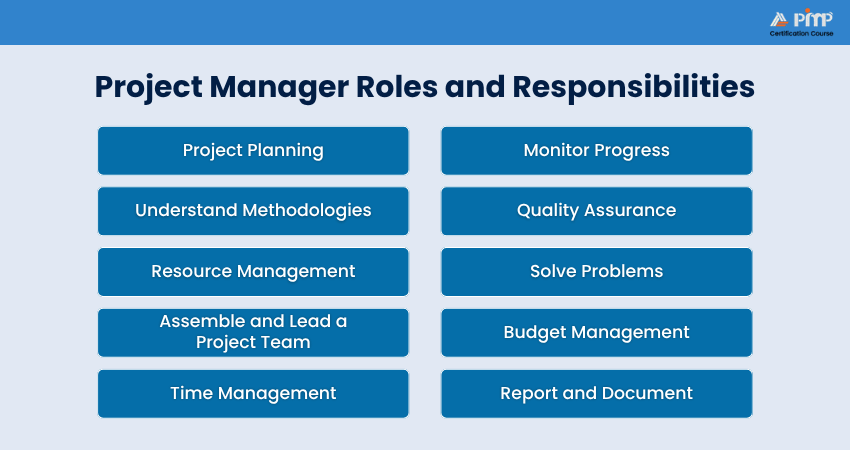
Project Managers play an important role in driving project success. They guide every stage from initial planning through to completion. Their responsibilities are wide-ranging and interconnected. Let's explore these duties in detail to gain a deeper understanding of the Project Manager Job Description:
1) Project Planning
A Project Manager’s main duty is to design a complete project plan. This includes defining the scope, objectives and key deliverables in collaboration with stakeholders. They map out tasks, timelines, budgets, resources and milestones to guide the team. Strong planning provides a structured roadmap for successful project delivery.
2) Understand Methodologies
From traditional Waterfall to modern Agile practices, Project Managers need a strong grasp of various Project Management methodologies. They must know which approach best suits each project and be able to train team members to apply the chosen methodology effectively.
3) Resource Management
Project Managers oversee both the human and material resources to keep the project on track. They assign tasks based on skills and coordinate staffing when required. They also ensure that the team has the tools, equipment and support they need at the right time. Effective Resource Management helps maintain productivity and smooth project execution.
4) Assemble and Lead a Project Team
Project Managers must build a capable team to deliver proper project outcomes. They may work with an existing team or form a new one, then create a project schedule that assigns tasks, sets deadlines and supports effective collaboration without micromanagement. Regular check-ins help resolve bottlenecks and adjust resources to keep workloads balanced and the project moving forward.
5) Time Management
Keeping a project on schedule is a big responsibility for Project Managers. They set realistic deadlines, prioritize tasks and promptly address delays. Effective Time Management also means continuously monitoring progress and adjusting timelines to handle challenges throughout the project lifecycle.
6) Monitor Progress
To make sure that the project stays aligned with its plan, Project Managers must consistently track its performance and compare it with the original schedule and goals. It's about gathering reliable data, such as team status reports, which helps identify gaps, measure actual progress, and make timely adjustments when needed.
7) Quality Assurance
Ensuring high-quality outcomes is a crucial responsibility. Project Managers set clear quality standards and oversee regular testing, reviews and validation to confirm these standards are met. By collaborating with the Quality Assurance team, they quickly identify issues and implement corrective actions to maintain consistent quality throughout the project.
8) Solve Problems
Project Managers must quickly recognize issues, understand their root causes and develop effective solutions. Once a resolution is selected, they have to allocate tasks to the right team members to address the problem without hampering the project’s momentum.
9) Budget Management
Project Managers have the responsibility for making sure the project stays within its approved budget. This includes estimating costs, creating a financial plan and monitoring the expenses throughout the project. They should provide regular financial updates to the stakeholders. This helps manage expectations regarding the project’s financial status.
10) Report and Document
Reporting helps keep both your team and stakeholders informed about the project. Every team needs detailed updates, while the stakeholders prefer high-level progress information. The Project Manager must also approve and store all project documents at the end, thus creating a useful record for future projects.
11) Risk Management
Project Managers must be able to detect potential risks early on and plan ways to reduce their impact. They have to analyze possible threats to the project’s success and create strategies to manage them. This proactive approach is necessary to prevent disruptions and support smoother project delivery.
12) Manage Stakeholders
This is a non-negotiable part of a Project Manager's role. Keeping stakeholders satisfied by delivering results that meet or exceed expectations is vital. This requires regular communication and listening to their feedback. Staying engaged with stakeholders encourages long-term collaboration on future projects.
13) Compliance and Regulatory Adherence
In many industries, Project Managers must ensure that all project activities follow the required regulations and standards. This is especially important in sectors like healthcare, construction and financial services, where strict regulatory compliance helps oversee safe project delivery.
Build practical Project Management knowledge with industry-focused
Certified Associate in Project Management (CAPM) ® Training
– Join now!
Essential Skills of a Project Manager
While specific requirements vary depending on role, industry and experience level, several core skills are required of all Project Managers. Let’s explore the key skills always outlined in the Project Manager Job Description:
1) Soft Skills for a Project Manager
a) Leadership Skills:
This refers to the ability to guide a team towards shared goals.
b) Communication Skills:
This involves clearly sharing ideas and updates with teams and stakeholders.
c) Interpersonal Skills:
This is about building strong relationships and collaboration within the team.
d) Team Mentality:
This is about working well with others and promoting a cooperative team environment.
e) Organizational Skills:
This is about efficiently managing tasks and resources to keep the project on track.
2) Hard Skills for a Project Manager
a) Time Management:
This skill involves planning schedules to ensure timely project delivery.
b) Risk Management:
It's the skill of identifying and addressing risks that could affect the project.
c) Stakeholder Management:
This skill involves maintaining positive relationships with stakeholders.
d) Industry-related Technical Skills:
This involves applying specialized knowledge relevant to the project’s domain.
e) Knowledge of Project Management Software:
This involves the skilled usage of tools like MS Project, Jira or Trello.
f) Project Management Certifications:
This involves formal credentials that validate professional skills and industry expertise.
How to Become a Project Manager?
Becoming a Project Manager typically follows a structured path, though it may vary depending on your industry or area of interest. Here’s a simplified roadmap to help you get started:
a) Education:
Earn a bachelor’s degree in business, management or a related field. Consider a master’s degree for advanced knowledge.
b) Experience:
Gain experience in project-related roles and industry-specific positions.
c) Certifications:
Obtain certifications like PMP, CAPM, PRINCE2 or Agile Certifications. Utilizing the right PMP Study Material can help you prepare effectively for certification exams.
d) Skills:
Develop key skills such as leadership, communication, organization, problem-solving, and Risk Management.
e) Networking and Learning:
Join professional organizations, attend workshops, and take online courses to stay updated and connected.
Prepare confidently for Agile Project Management roles with the
PMI-ACP® Certification Training
– Register today!
Project Manager Salary Globally
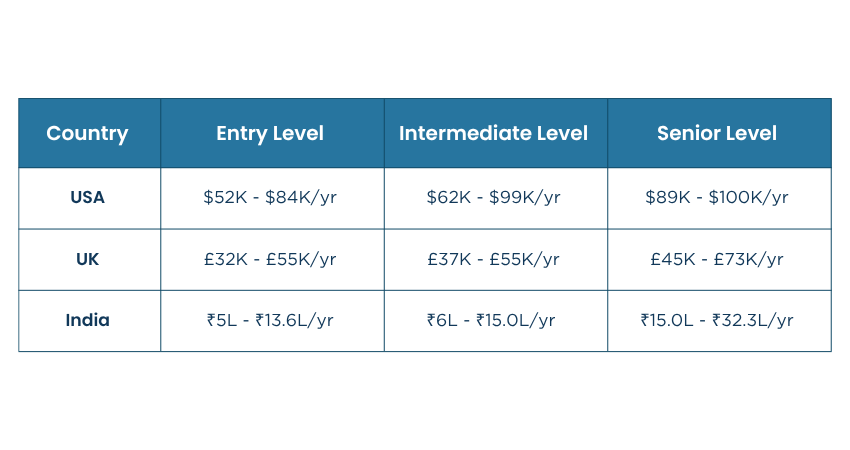
Here’s the salary range for Project Managers across three major regions:
Source:
Glassdoor
,
Payscale
Example of Project Manager Job Description
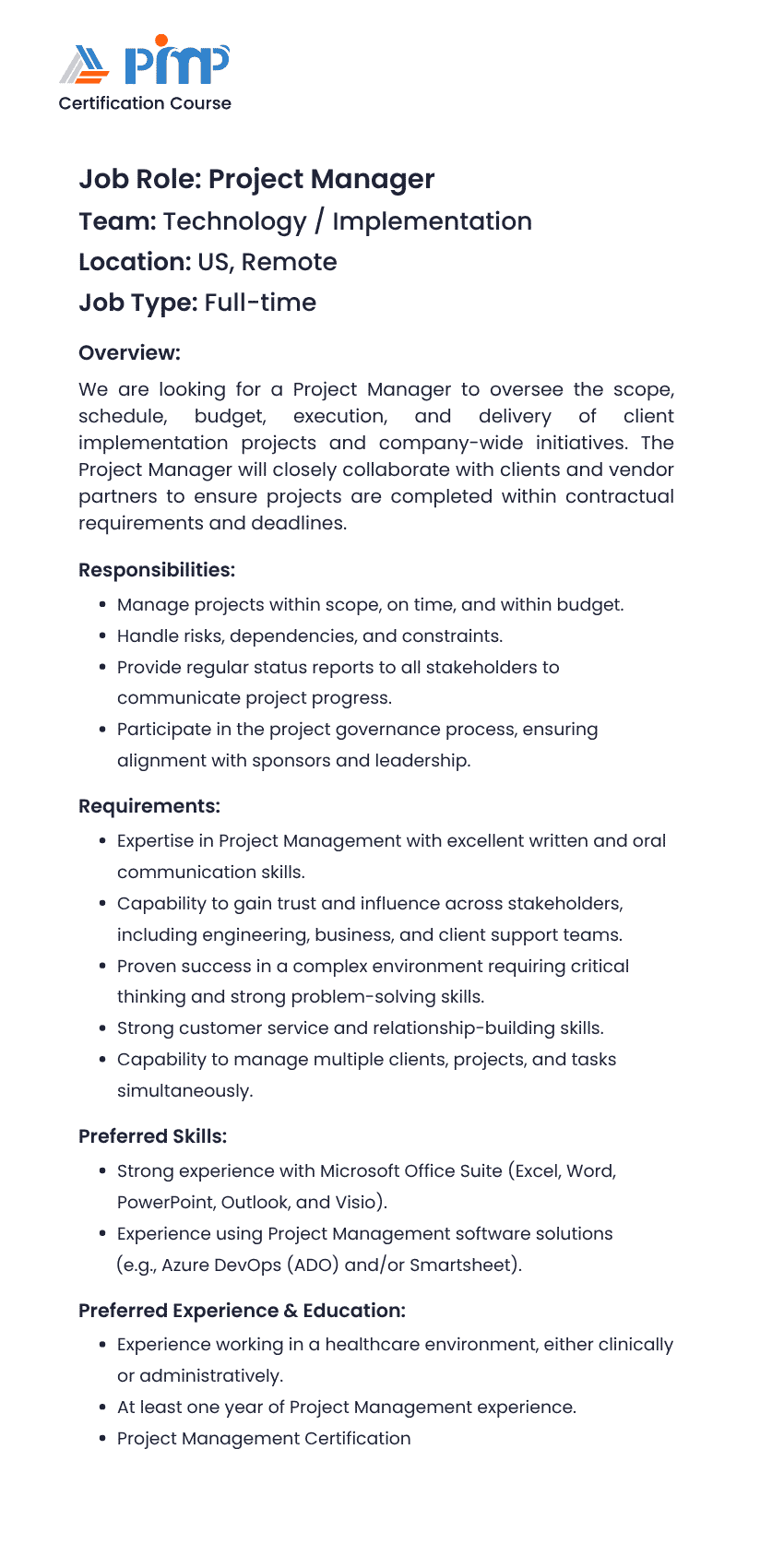
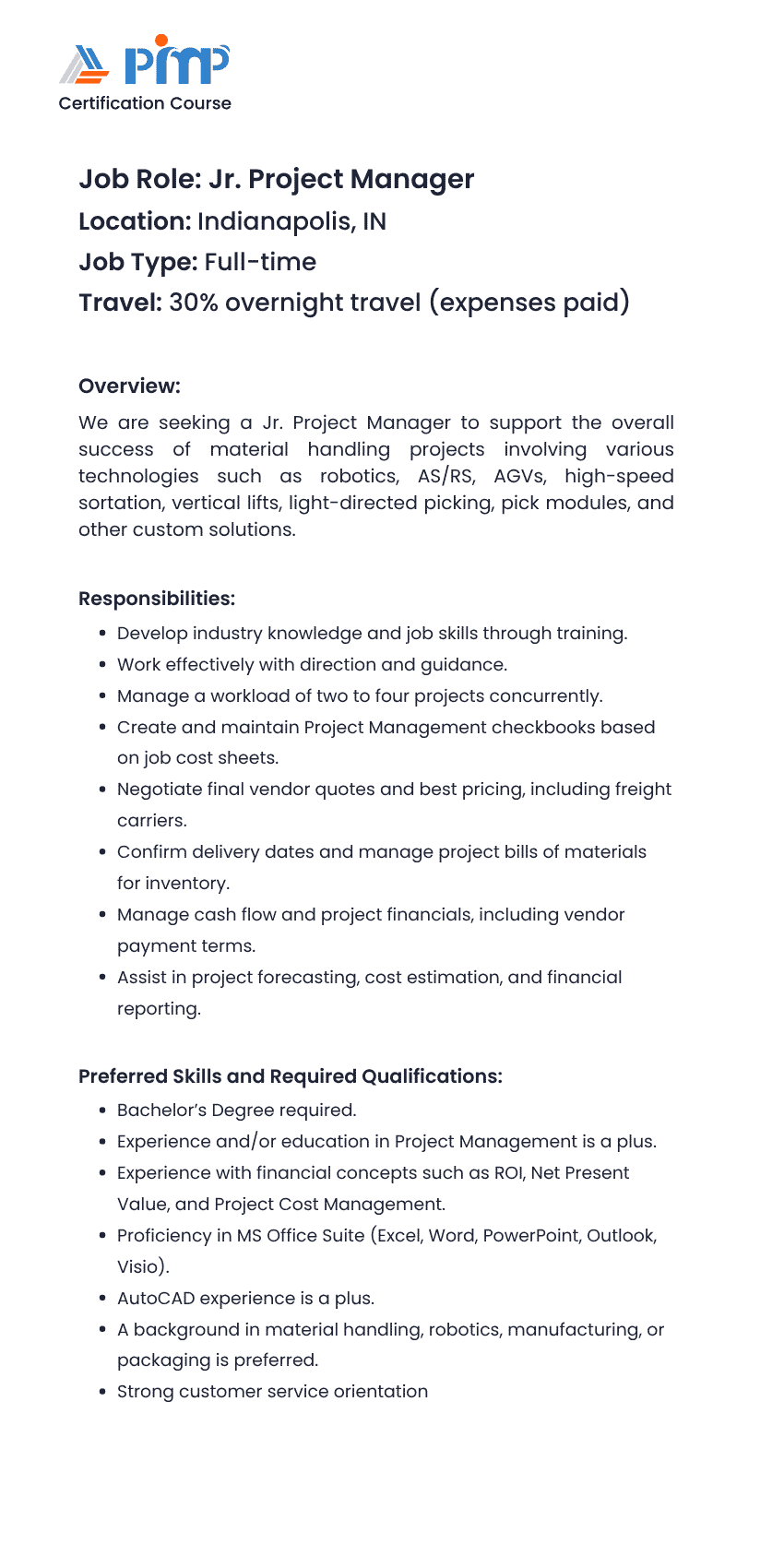
Here’s a simple example of a Job Description for a Project Manager outlining the key responsibilities, qualifications, and skills required for the role.
Example 1
Example 2
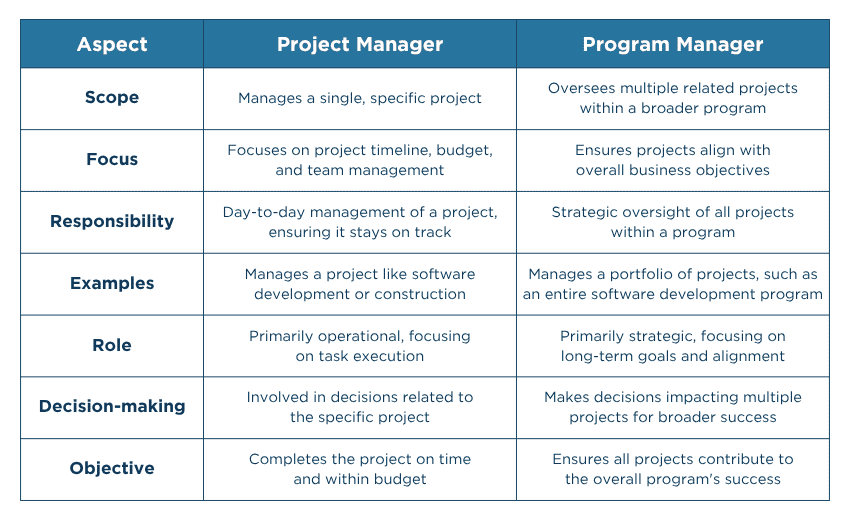
Difference Between Project Manager and Program Manager
While both
Project Managers and Program Managers
play major roles in overseeing work, their responsibilities and scope differ significantly. Let's break down the key distinctions between these two roles in the table below.
Conclusion
The Project Manager Job Description highlights the essential role of managing projects from planning to execution, ensuring timely delivery within budget. With strong leadership, communication, and problem-solving skills, Project Managers drive success across industries. Pursue the right skills and certifications today to build a rewarding career in Project Management!
Advance your career with globally recognized
Project Management Institute (PMI)® Certification Courses
– Join now!


 Back
Back

 Topics

 Courses


 10 Aug 2026
 Veronica Davis