Every project promises results, but success depends on defining exactly what gets delivered. This is where Project Deliverables come in as the heartbeat that keeps a project's progress alive and measurable. They transform ideas into something tangible: documents, designs, prototypes, or full-fledged products that mark each milestone.
In this blog, we’ll explore what Project Deliverables are, how to recognize the ones that matter and how to manage them with confidence from start to completion. So read on and turn your deliverables into powerful tools for control, quality and stakeholder satisfaction!
What are Project Deliverables?
Project Deliverables are the intangible or tangible outputs a project is expected to produce. These may include products, services or documentation defined within the project scope. They are agreed upon by stakeholders and serve as the primary criteria for evaluating project success. The number of deliverables depends on the customer’s specific needs.
Project Deliverables are clearly defined, measurable and time-bound, with expectations for deadlines and quality standards. When established during the planning stage, they help Project Managers set priorities, allocate resources and address potential issues more effectively as the project progresses
Types of Project Deliverables
Now let’s take a look at the main types of Project Deliverables:
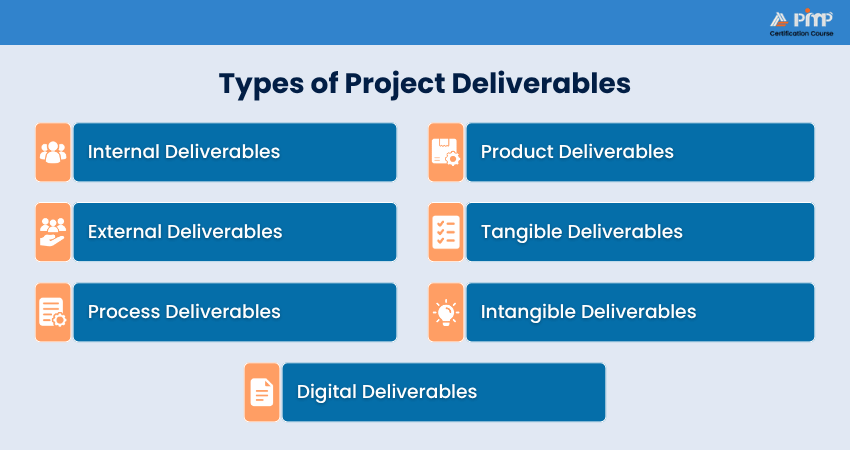
1) Internal Deliverables
Internal deliverables are created for use within the project team or organization rather than for the client. These include project plans, status reports, risk registers, schedules and internal documentation that support coordination, tracking, and decision-making throughout the project lifecycle.
2) External Deliverables
External deliverables are outputs provided directly to clients, customers, or external stakeholders. These may include final reports, completed services, software releases, or physical products. They represent the visible outcomes of the project and are usually tied to contractual or stakeholder expectations.
3) Process Deliverables
Process deliverables focus on how the project is executed rather than what is produced. Examples include workflow designs, quality assurance plans, governance frameworks and compliance documentation. These deliverables ensure consistency, control and adherence to agreed standards throughout project execution.
4) Product Deliverables
Product deliverables are the primary outputs that the project is designed to create. These include finished goods, systems, applications, or services that fulfil the project’s core objectives. They are typically defined clearly in the project scope and form the main measure of project completion.
5) Tangible Deliverables
Tangible deliverables are physical, measurable outputs that can be seen or touched. Examples include equipment, printed manuals, prototypes, infrastructure components, or hardware installations. These deliverables are easy to verify as they exist in a physical form.
6) Intangible Deliverables
Intangible deliverables do not have a physical form but provide significant value. These include knowledge transfer, training outcomes, improved processes, enhanced skills or intellectual property. Although these are harder to measure, they are assessed through performance improvements and agreed success criteria.
7) Digital Deliverables
Digital deliverables exist in electronic form and are increasingly common in modern projects. These include software applications, websites, databases, digital reports, dashboards and multimedia content. They require clear technical specifications, version control, and acceptance criteria to ensure quality and usability.
Surf the Agile wave with confidence. Sign up for our
PMI-ACP® Certification
and turn every project adaptable!
Importance of Project Deliverables
Deliverables play a vital role in guiding projects from initiation to completion. Here are the key reasons why deliverables matter in Project Management:
1) Serves as Project Milestones
Deliverables often represent milestones that signal the completion of major phases in a project. These checkpoints allow teams to confirm phase completion and move confidently into the next stage. Breaking the project into manageable deliverables also makes progress easier to monitor and sustain.
2) Helps Track and Measure Progress
Project Deliverables provide measurable outputs that can be reviewed against the project plan. This enables Project Managers to evaluate timelines, budgets, and overall performance. Tools such as Gantt charts and Project Management software help visualize deliverable status and quickly highlight delays or deviations.
3) Enhances Stakeholder Communication
Well-defined deliverables clarify expectations which is key to improving communication with stakeholders. Transparent reporting on deliverables keeps everyone aligned on objectives and progress, builds trust and minimizes misunderstandings or scope creep during execution.
4) Ensures Quality Standards
Deliverables help uphold quality by establishing clear acceptance criteria for each output. This ensures work meets agreed standards at every stage, reduces the need for rework and increases the likelihood that the final outcome meets stakeholder requirements.
How to Identify Project Deliverables?
Many teams rush straight into execution without fully defining what success looks like. Without a clear set of Project Deliverables, deadlines can slip, and large portions of work have to be redone. Here's how you can identify the Project Deliverables:
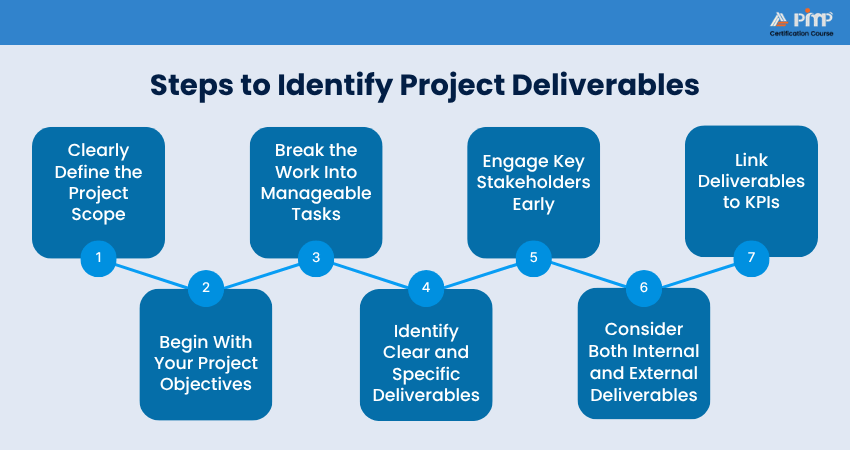
1) Clearly Define the Project Scope
Begin by clearly outlining the project scope. This defines what is included and excluded, sets firm boundaries and helps prevent scope creep. A well-defined scope gives the team a common understanding of the expectations and desired outcomes.
2) Begin With Your Project Objectives
Review the objectives outlined in the project plan or project charter. These objectives guide the creation of deliverables and ensure the team’s efforts remain aligned with overall goals and stakeholder expectations.
3) Break the Work Into Manageable Tasks
Use a Work Breakdown Structure (WBS) to divide large goals into smaller, manageable tasks. This approach provides visibility into the full workload and shows how individual tasks contribute to milestones or the final output.
4) Identify Clear and Specific Deliverables
Review each task and ask whether it results in something that can be handed over or delivered. If so, it qualifies as a deliverable. These may be tangible outputs, such as reports, or intangible ones, such as improved processes.
5) Engage Key Stakeholders Early
Share a draft list of deliverables with key stakeholders at an early stage. Their feedback helps refine requirements, align expectations and reduce the risk of rework or overlooked dependencies later in the project.
6) Consider Both Internal and External Deliverables
Identify both internal deliverables, such as schedules, status reports or resource plans and external deliverables, such as client-ready products or presentations. Each type plays a distinct role in monitoring progress and outcomes.
7) Link Deliverables to KPIs
Make sure that each deliverable supports one or more Key Performance Indicators (KPIs). Deliverables that influence or measure KPI performance are critical to project success and should be tracked closely.
Fuel your Project Management ambitions with our
Certified Associate in Project Management (CAPM) ® Training
- Sign up now!
How to Manage Project Deliverables?
The following steps help ensure that Project Deliverables are planned, monitored and completed successfully:
1) Establish Clear Criteria
Begin by setting clear acceptance criteria for each deliverable. These must be specific and measurable so that everyone understands what “complete” looks like. Clear criteria minimize misunderstandings and help prevent scope creep.
2) Set Achievable Deadlines
Establish practical timelines by factoring in project scope and available resources. Involving the team in setting deadlines helps ensure that they are achievable and highlights possible challenges early on. This helps with stronger planning and Resource Management.
3) Allocate Responsibilities
Allocate each deliverable to a named individual or team. Clearly defined responsibilities improve accountability and make it easier to monitor progress or resolve issues. A responsibility assignment matrix can help clarify ownership and roles.
4) Monitor Progress
Use Project Management tools to track deliverable status, quality, and risks on a regular basis. Ongoing reviews, dashboards and status reports help identify issues early and enable timely corrective action.
Challenges in Managing Project Deliverables
Managing Project Deliverables comes with several common challenges that can affect timelines and quality. Here are some of the key issues:
a) Unclear Project Scope and Requirements:
When the project scope and requirements are poorly defined, teams face uncertainty around what needs to be delivered and by when. This can lead to misaligned efforts and repeated work.
b Misalignment With Stakeholder Expectations:
Misalignment can occur if the requirements are communicated inaccurately or misunderstood. When this happens, projects may fall short of their original objectives.
c) Scope Creep:
Scope creep is a frequent challenge caused by changing expectations during project execution. These unplanned changes disrupt established workflows, extend timelines and increase complexity.
d) Quality Control Issues:
Without good quality assurance processes, deliverables may fail to meet agreed standards. This can lead to incomplete outputs, technical flaws, or inconsistent documentation.
e) Resource Constraints:
Projects rely heavily on the availability and capability of resources. Challenges such as skill shortages, resource unavailability, or unexpected attrition can significantly hinder progress.
f) Unrealistic Deadlines:
Setting overly ambitious deadlines puts pressure on teams to deliver quickly, often at the expense of thoroughness and accuracy.
Examples of Project Deliverables
These Project Deliverables examples will improve your understanding of these essential elements and how they function:
1) Marketing Campaign Plan
A marketing campaign plan is a document that outlines the goals, target audience, channels, messaging, timelines and budget for a marketing initiative. It provides a comprehensive roadmap for executing promotions, coordinating team efforts and measuring campaign performance.
2) Sales Plan
A sales plan defines the strategy, sales targets, customer segments, action steps and performance expectations required to achieve revenue goals. It can also outline key activities, sales tactics, tools and resources. A sales plan guides the sales team in coordinating with marketing and product teams to drive revenue growth.
3) Usability Testing Plan
A usability testing plan details how User Experience testing will be conducted. It includes participant selection, test scenarios, success criteria, tasks to be completed and tools used during testing. This plan ensures user feedback is gathered systematically to validate design decisions and improve the usability of a product or service.
4) Product Marketing Launch
A product marketing launch deliverables includes all activities, materials, and strategies needed to introduce a product to its target market. It typically involves creating promotional content, coordinating launch events, setting up tracking KPIs and ensuring readiness of sales and support teams. This deliverable signals that a product is ready for customers.
5) Company Event Planning
Company event planning deliverables cover the logistical and strategic plans required for organizing corporate events. These include selecting venues, drafting schedules, coordinating speakers and participants, preparing marketing communications and post-event assessments. The finished plan ensures smooth execution and achieves event objectives.
Conclusion
Project Deliverables are essential because they define clear outcomes and guide focused project execution. When they are clearly defined, carefully tracked, and effectively managed, projects progress with structure and control rather than confusion and pressure. By aligning deliverables with objectives, stakeholder expectations, and quality standards, teams can reduce risk and consistently turn plans into meaningful results.
Ignite your Project Management career with our range of
Project Management Institute (PMI)® Certification
– register now!


 Back
Back

 Topics

 Courses


 10 Aug 2026

 Veronica Davis