The success of any business project depends not only on the idea but also on how effectively it is managed. Even the most innovative plans can fail if there is no clear planning or control. To address this challenge, Business Project Management becomes essential.
It provides a structured approach to managing projects so that teams can work efficiently and achieve the desired outcomes. In this blog, we will explore what is Business Project Management, its core elements, the process involved, and the benefits it offers to organizations. Let's get started!
What is Business Project Management?
Business Project Management refers to the use of Project Management techniques, tools, and methods to business activities in order to achieve organizational goals. This means that every project is planned, executed, and monitored with a clear understanding of how it supports business strategy, improves performance, or creates value for the organization.
Business Project Management covers the entire project lifecycle and helps coordinate teams, allocate resources, manage risks, and control costs to ensure that the project is completed successfully.

Core Elements of Business Project Management
Business Project Management is built with several core elements that help organizations structure their projects. The following are those elements:
1) Resource Allocation and Management
Every project requires resources such as people, tools, equipment, and money. Resource allocation and management focus on ensuring that these resources are used in the best possible way.
2) Time Management
Businesses often need projects completed by certain dates to meet market demands or business commitments. Time management helps prioritise tasks, plan schedules, and ensure that project activities are completed within defined timelines.
3) Clear Goals and Scope
Clear goals and project scope are necessary for any successful project. When teams understand what they are trying to achieve, they can work more efficiently and stay focused on important tasks without any confusion.
4) Risk Management
Every project faces some level of uncertainty. Risks may arise from technical issues, market changes, staff shortages, or unexpected events. Effective risk management helps organizations anticipate such potential problems before they disrupt the project.
5) Cost Management
Cost management focuses on controlling the financial aspects of a project. This involves estimating project costs, monitoring spending, and controlling financial resources throughout the project lifecycle.
Business Project Management Process
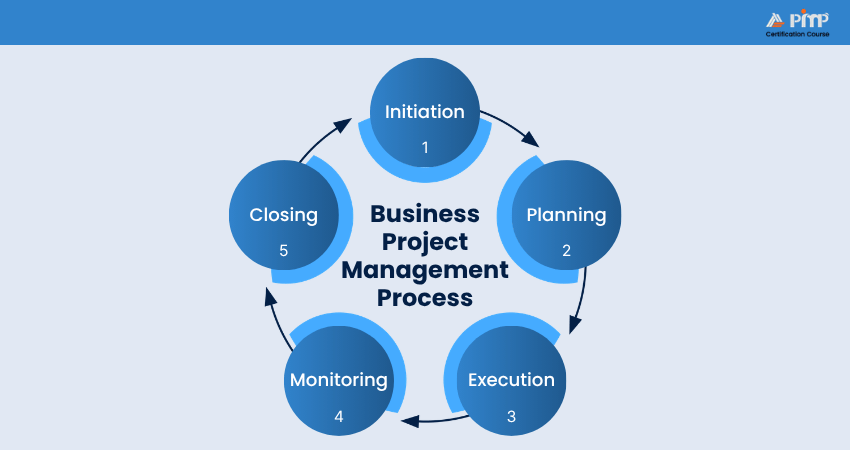
Business Project Management usually follows a structured process that guides projects from start to finish. Let's check the processes involved:
1) Project Initiation
The initiation phase is the beginning stage of a project. During this stage, the business evaluates the project idea and determines whether it aligns with business goals. This stage establishes the foundation for all future planning and execution.
Managers define the project’s objectives and identify the main stakeholders who will be involved. They may also prepare a business case that explains the benefits, costs, and potential risks of the project.
2) Project Planning
Planning is one of the most important stages in the project lifecycle. During this phase, Project Managers create a detailed roadmap for completing the project. The project plan includes task schedules, resource assignments, budgets, and risk management strategies.
Project Managers also establish communication plans to ensure that stakeholders remain informed throughout the project. Thus, a project plan provides clear direction for the team and reduces the chances of confusion later in the project.
3) Project Execution
The execution phase is when the project plan is implemented. Team members work on their assigned tasks while the Project Manager coordinates activities. They also monitor progress and provide guidance whenever challenges arise.
Execution also involves managing resources, resolving conflicts, and ensuring that quality standards are maintained. Project Managers need to regularly update stakeholders, address challenges, and ensure that team members collaborate effectively.
Understand the basics of Project Management through the
PMI Project Management Ready® Certification
– Register today!
4) Project Monitoring
Project monitoring takes place throughout the execution phase. During this stage, managers track the project’s performance and compare it with the original plan. They review timelines, budgets, and quality standards to ensure that everything is progressing as expected.
Monitoring also helps identify new risks and challenges that may appear during the project. If delays or problems occur, corrective actions are taken to resolve them. This provides better visibility over project performance.
5) Project Closing
Project closing is the final stage of the project lifecycle. During this stage, all project activities are finalized, and the deliverables are handed over to stakeholders or operational teams. Project Managers conduct final evaluations to ensure that objectives have been met.
Another important activity during project closing is reviewing lessons learned. These insights help organizations improve their future Project Management practices. It shows what worked well and what should be improved in future projects.
Types of Business Projects
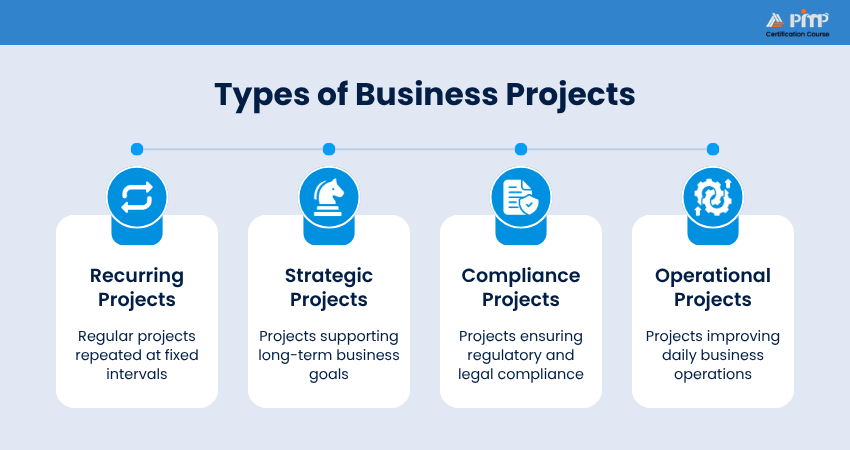
There are different types of projects that a business can work on. Here are some of the most common types of business projects:
1) Recurring Projects
Recurring projects are projects that happen regularly, like daily, weekly, monthly, or annually and often follow a predictable pattern. Examples include annual budgeting activities, seasonal marketing campaigns, or regular product updates.
2) Strategic Projects
Strategic projects are designed to support long-term organizational goals. These projects often involve significant investments and may transform the way a business operates. Examples include entering new markets or launching innovative products.
3) Compliance Projects
Compliance projects focus on meeting regulatory or legal compliance. Many businesses follow strict rules related to safety, data protection, financial reporting, or environmental standards. Examples include implementing data protection systems or achieving industry certifications.
4) Operational Projects
Operational projects focus on improving day-to-day business processes. These projects choose to increase efficiency, reduce costs, or enhance process optimisation. Examples are automating manual tasks, improving supply chain systems, or upgrading customer support tools.
Start building your Project Management expertise with
Certified Associate in Project Management (CAPM) ® Training
– Join now!
Skills for Business Project Management
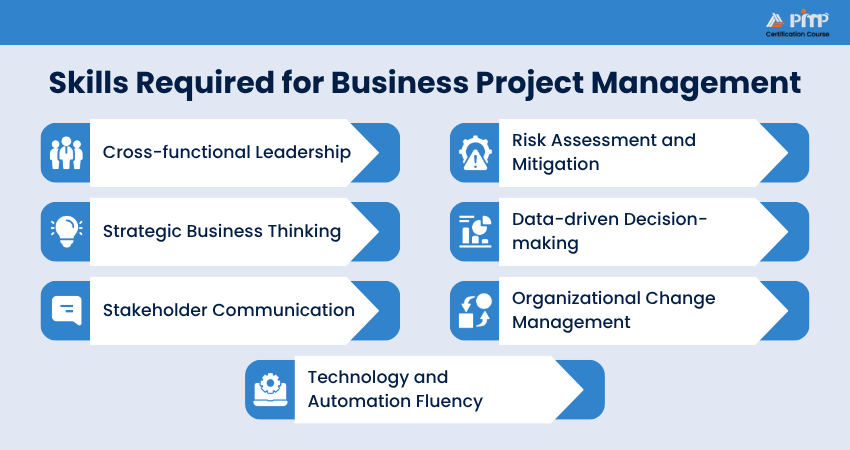
Business Project Management requires more than the technical knowledge of planning and scheduling. Project Managers need a combination of leadership, communication, and analytical skills to guide teams and deliver projects. The following are the mandatory skills:
1) Cross-functional Leadership
Business projects often involve teams from multiple departments. Project Managers have to coordinate these groups and ensure that everyone works towards the same objectives. Strong leadership helps maintain alignment and encourages collaboration across different functional areas.
2) Strategic Business Thinking
Project managers need to understand how projects contribute to the organization’s long-term goals. This means looking beyond daily tasks and recognising the long-term impact of the project. This helps them prioritize initiatives and ensure that project outcomes support business growth, efficiency, or innovation.
3) Stakeholder Communication
Projects involve numerous stakeholders, including executives, team members, clients, and external partners. Effective communication ensures that everyone remains informed and aligned throughout the project. It also helps manage expectations and resolve issues quickly during project execution.
4) Risk Assessment and Mitigation
Every project includes some level of uncertainty, and unexpected challenges may occur at any stage. Managers need the ability to identify potential risks and develop strategies to reduce their impact. This may involve preparing contingency plans, allocating additional resources, or adjusting timelines.
5) Data-driven Decision-making
Modern Project Management relies heavily on data and performance metrics. Project Managers need to use data to track progress, evaluate efficiency, and identify areas that need improvement. This helps them make informed decisions and improve overall project performance.
6) Organizational Change Management
Many business projects introduce changes to existing processes, technologies, or organizational structures. Managing these changes requires careful planning and employee engagement. Project Managers should help teams adapt to new ways of working while maintaining productivity and morale.
7) Technology and Automation Fluency
Technology plays an increasingly important role in Project Management. Tools for scheduling, collaboration, analytics, and automation help teams manage complex projects more efficiently. Managers who understand these technologies can streamline processes and improve project visibility.
Manage multiple complex projects with the
Program Management Professional (PgMP)® Certification
– Sign up soon!
Benefits of Business Project Management
Business Project Management offers several benefits for organizations that want to deliver projects efficiently and achieve their strategic objectives. Now, let’s check its benefits:
1) Increase Project Success Rate
Using a structured Business Project Management approach helps teams set clear goals, assign the right resources, and track progress regularly. When projects are well organized, teams understand their responsibilities and can work more efficiently. As a result, organizations are more likely to complete projects successfully.
2) Optimize Resource Utilization
Business Project Management helps organizations use their resources in a smarter way. This includes managing employees, time, tools, and budgets carefully to make the best use of available resources. It also helps organizations handle multiple projects at the same time without putting too much pressure on their teams.
3) Strengthen Communication and Collaboration
Projects often involve people from different teams and departments. Structured communication plans help keep team members and stakeholders informed about project progress. This improves teamwork, encourages collaboration, and helps teams solve problems more quickly.
4) Facilitate the Achievement of Enterprise Strategy
One of the most important benefits of Business Project Management is that it connects projects with the organization's overall strategy. Projects are planned and executed in a way that supports business goals. As a result, businesses can prioritize projects that directly support their strategic objectives.
Conclusion
Managing business projects effectively requires clear planning, strong coordination, and a structured approach. Business Project Management helps organize project initiatives, allocate resources, and ensure that projects are completed within the planned time and budget. In this way, your projects become capable of turning ideas into successful and measurable outcomes.
Strengthen your project leadership abilities with
Project Management Institute (PMI)® Certification
– Begin now!


 Back
Back

 Topics

 Courses


 10 Aug 2026

 Maria Thompson