Imagine launching a product that looks flawless on paper, meets every deadline, and stays within budget, yet still struggles in the market. Or picture having a brilliant product vision but no clear plan to bring it to life. These challenges highlight the critical difference between Product Management and Project Management.
Understanding Product Management vs Project Management clarifies the distinction between strategic vision and structured delivery. In this blog, we explore their differences in focus, timeline, metrics, and lifecycle. Read on to discover how both roles work together to drive real business success.
Table of Contents
1) What is Product Management?
a) Goals of Product Management
b) Benefits of Product Management
2) What is Project Management?
a) Goals of Project Management
b) Benefits of Project Management
3) Key Differences Between Product Management and Project Management
4) Conclusion
What is Product Management?
Product Management is a strategic, cross-functional role that oversees a product throughout its entire lifecycle, from early ideation and planning through launch and ongoing optimization. It defines the product vision, identifies target users, and ensures meaningful value delivery.
At its core, Product Management connects business strategy, user experience, and technology. It ensures products solve customer problems while supporting growth and revenue. Continuous feedback and analysis drive improvement and long-term success.
Goals of Product Management
Product Management aims to create quality products that meet customer needs and support growth. It aligns strategy and execution for lasting success. Key objectives include:
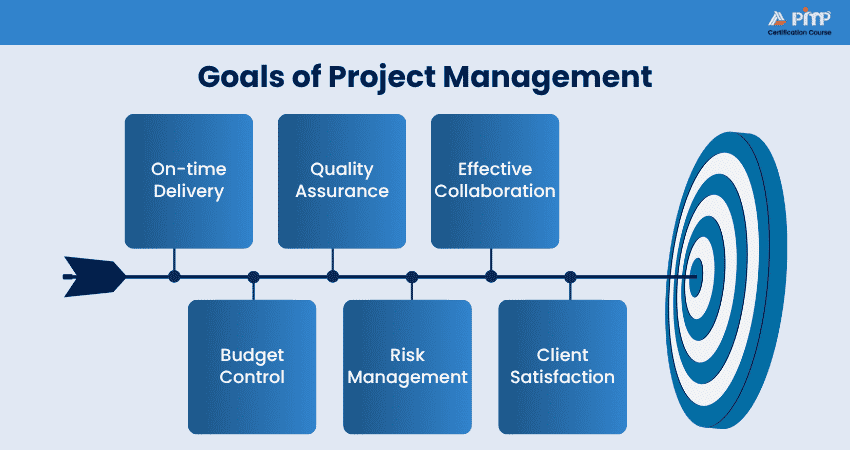
1) Customer Value & Satisfaction:
Identify user needs, reduce complaints, and improve quality
2) Strategic Alignment:
Align the roadmap with business goals to support growth
3) Product-market Fit:
Ensure the product meets the target audience’s needs
4) Adoption & Retention:
Enhance user experience to boost adoption and loyalty
5) Efficiency & Innovation:
Improve processes while encouraging innovation
6) Cross-functional Leadership:
Align design, engineering, sales, and marketing teams

Benefits of Product Management
Product Management ensures strategic direction and customer value. It aligns business goals with market needs and improves collaboration. Key benefits include:
1) Revenue Growth:
Aligns product initiatives with business goals to increase sales and profitability.
2) Customer-centric Focus:
Builds solutions that address real user needs and enhance satisfaction.
3) Faster Time-to-Market:
Prioritizes high-impact features to accelerate development and launch cycles.
4) Data-driven Strategy:
Uses performance metrics and insights to guide smarter decisions.
5) Improved Product Quality:
Promotes continuous improvement and innovation for stronger market success.
What is Project Management?
Project Management is the structured application of knowledge, skills, tools, and techniques to achieve specific objectives within defined constraints. It ensures projects are completed on schedule, within defined scope and budget, while upholding quality standards and managing risks effectively.
It bridges ideas and real-world results by converting plans into actionable steps. Through coordination of teams, resources, and processes, Project Management enables organizations to execute initiatives efficiently and transform concepts into measurable, successful outcomes.
Goals of Project Management
Project Management delivers projects on time, within budget, and to defined standards. It ensures efficient coordination and risk control while meeting stakeholder expectations. Key objectives include:
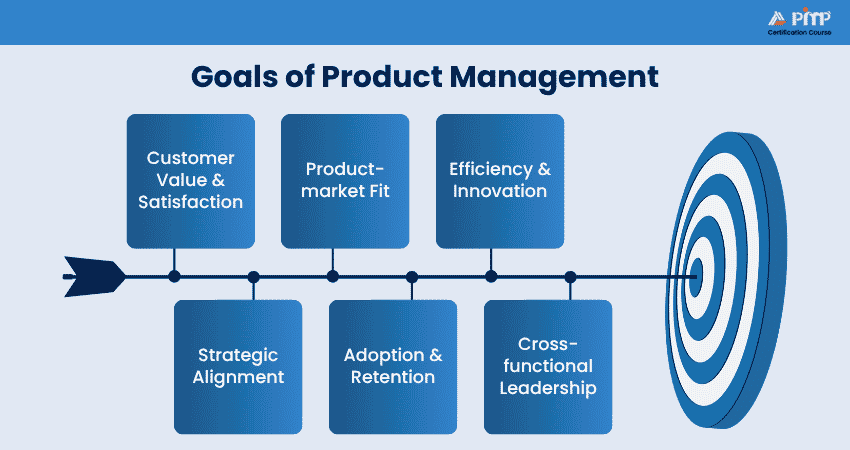
1) On-time Delivery:
Complete the project within the agreed schedule
2) Budget Control:
Manage costs to stay within approved financial limits
3) Quality Assurance:
Meet defined standards and performance expectations
4) Risk Management:
Identify and reduce potential project risks
5) Effective Collaboration:
Ensure smooth collaboration among stakeholders
6) Client Satisfaction:
Fulfil client requirements and expectations successfully
Benefits of Project Management
Project Management ensures structured planning and efficient execution to meet objectives. It improves coordination and controls scope and costs. Key benefits include:
1) Clear Roadmap & Prioritization:
Defines tasks, milestones, and priorities for smooth delivery.
2) Cross-functional Collaboration:
Aligns development, marketing, sales, and support teams.
3) Stakeholder Focus:
Ensures deliverables meet client and stakeholder expectations.
4) Cost & Schedule Control:
Monitors budget and timelines to avoid overruns.
5) Improved Efficiency:
Streamlines processes to reduce delays and wasted effort.
6) Better Business Outcomes:
Enhances the likelihood of successful and measurable results.
Lead Agile teams with confidence through the
PMI-ACP® Certification
– Join now!
Key Differences Between Product Management and Project Management
Product Management defines long-term product direction and value, while Project Management ensures efficient delivery of specific initiatives. Let us explore their differences in focus, timeline, metrics, and lifecycle:

![]()
1) Focus
Product Management concentrates on the “what” and “why,” shaping long-term product vision, strategy, and customer value across the entire lifecycle. Project Management focuses on the “how” and “when,” organizing resources, tasks, and timelines to deliver defined initiatives successfully.
2) Timeline
Product Management spans the full lifespan of a product, continuously evolving through updates, enhancements, and market adaptation. Project Management operates within a fixed timeframe, beginning at project initiation and concluding once agreed deliverables are completed and approved.
3) Metrics of Success
Product Management success is measured by long-term indicators such as customer adoption, user experience, revenue growth, market share, and profitability. Project Management success is evaluated through timely delivery, budget adherence, scope control, and stakeholder satisfaction.
4) Lifecycle
Product Management follows a continuous lifecycle, overseeing Product Development, launch, optimization, and improvement over time. Project Management follows a finite lifecycle with structured phases such as initiation, planning, execution, monitoring, and closure, ending when objectives are achieved.
Conclusion
Understanding Product Management vs Project Management helps organizations effectively balance strategy with execution. While Product Management drives long-term vision and customer value, Project Management ensures timely and efficient delivery. Together, they form a powerful combination that transforms ideas into successful outcomes and sustainable business growth.
Achieve global recognition and career growth with
Project Management Institute (PMI)® Certification
– Register today!


 Back
Back

 Topics

 Courses


 10 Aug 2026

 Maria Thompson