Many great ideas fail simply because they are not presented clearly. A strong Project Proposal helps your idea gain attention, approval and support. It transforms vision into action by clearly outlining the purpose and execution. Whether you’re pitching to stakeholders, applying for grants or launching a new initiative, learning How to Write a Project Proposal strengthens the way your ideas are received.
In this blog, we explain How to Write a Project Proposal, cover the different types and share a practical example that makes each concept easier to understand. Read on to create a stronger, more persuasive proposal.
What is a Project Proposal?
A Project Proposal is a formal document that outlines the scope of work, intended objectives, required resources, timelines, and projected costs. It serves as a foundation for securing approval, allocating budget and making sure all the stakeholders involved are aligned.
It also defines roles, measures success, and confirms deliverables, helping teams stay aligned throughout the project. Additionally, it helps decision-makers evaluate the feasibility, risks and overall value before committing to the project.
![]()
Structure of a Project Proposal
A strong Project Proposal uses a clear structure that allows stakeholders to understand and evaluate it efficiently. Here's a breakdown of the key sections that’ll help you learn how to write a proposal for a project:
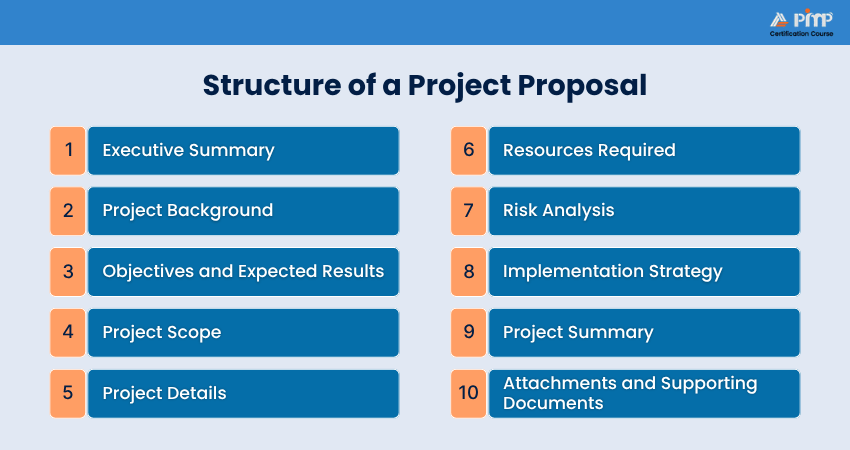
1) Executive Summary
The executive summary is a critical section, particularly for decision-makers with limited time. It must be concise, ideally no more than one page. This section presents a high-level overview of the project, including its objectives, anticipated impact and justification. It should clearly address:
a) The problem (or opportunity)
b) The proposed solution
c) The key benefits of the project
2) Project Background
This section explains why the project is being proposed. It outlines the current situation, existing challenges, improvement opportunities and the origins of the project idea. Key points include:
a) Contextual or historical data supporting the need
b) The originator of the initiative
c) The urgency for action
3) Objectives and Expected Results
This part defines what the project seeks to achieve. Objectives should be Specific, Measurable, Achievable, Relevant and Time-bound (SMART) and aligned with organizational or client priorities. It should also explain how success will be measured through KPIs, metrics, or deliverables. Expected outcomes must be clear and measurable.
4) Project Scope
The scope section clearly defines the boundaries of the project by specifying what is included and what needs to be excluded. This helps manage expectations, control the costs and avoid scope creep. Key elements include:
a) Inclusions and exclusions
b) Planned activities
c) Expected quality standards
5) Project Details
This section outlines how the project will be delivered. Providing the details demonstrates that the project has been carefully planned and is manageable. It should cover:
a) Schedule and milestones
b) Key deliverables
c) Roles and responsibilities
d) Tools and technologies
6) Resources Required
This section details all resources needed to deliver the project successfully. Each resource should be clearly justified, supported by estimates or budgets, to confirm feasibility Resources may include:
a) Human resources and specialists
b) Software and tools
c) Budget estimates
7) Risk Analysis
Every project involves risk. A structured risk assessment reassures stakeholders that potential challenges have been anticipated and planned for. It should outline:
a) Major risks
b) Likelihood and impact
c) Mitigation strategies
8) Implementation Strategy
This section explains how the project will move forward once approval is granted. A clear implementation strategy reflects strong governance and delivery confidence. It should include:
a) Immediate next steps
b) Stakeholder communication
c) Monitoring and reporting methods
9) Project Summary
The project summary provides a concise recap of the entire proposal. This section is useful for quick reference and presentation discussions, leaving readers with a clear overall understanding. It should highlight:
a) Objectives
b) Timeframes
c) Expected outcomes
10) Attachments and Supporting Documents
This final section contains supplementary material that supports the proposal without overloading the main content. Examples include templates, CVs, technical documents, analyses, or plans. Attachments enhance credibility and provide additional depth for stakeholders who require more detailed information.
Think beyond projects and become the Architect of programs. Sign up for our
Program Management Professional (PgMP)® Certification
now!
How to Write a Project Proposal?
To develop a persuasive proposal, it's vital to follow a methodical approach. Here are the essential steps for writing a Project Proposal from initial discovery through to final submission and follow-up:
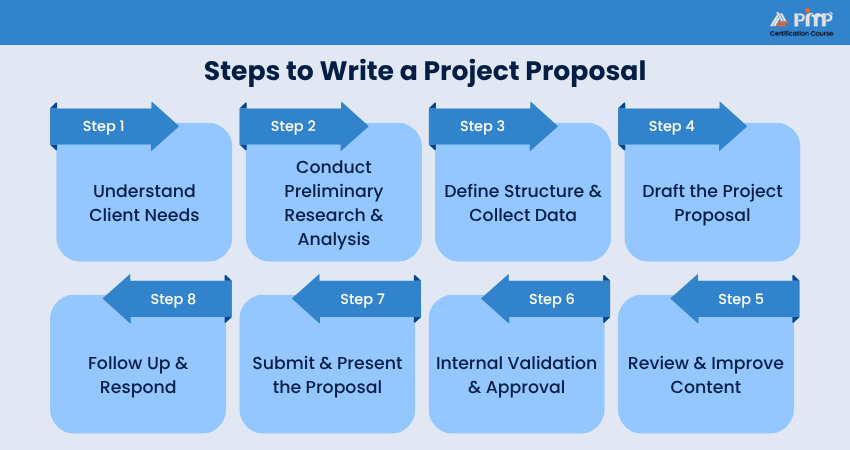
Step 1: Understand Client Needs
The process starts with active listening. Engage with the client or stakeholders to gain a clear understanding of their challenges, objectives and priorities. You can gather insights through interviews, surveys, workshops or internal reviews. A deep understanding ensures that the proposal is precisely aligned with expectations.
Step 2: Conduct Preliminary Research and Analysis
Review the market, competitors, available solutions and similar past projects. This research supports a practical, evidence-based proposal. Consider technical, financial, organizational and regulatory aspects to make sure the solution is realistic and viable.
Step 3: Define Structure and Collect Data
Organize the collected information using a standard proposal framework. Compile both the qualitative and quantitative data for each section, including background, scope, resources and the delivery approach. This step also involves shaping the executive summary and defining expected outcomes.
Step 4: Draft the Project Proposal
Start writing using a suitable proposal template. Keep the language clear, professional and focused on the outcome. Use headings, bullet points and tables to improve its readability. Collaboration tools can help you manage versions.
Step 5: Review and Improve Content
Once the draft is complete, review it carefully for accuracy and coherence. Check the grammar, flow and completeness. A peer review or Manager review can provide valuable feedback and help strengthen key messages.
Step 6: Internal Validation and Approval
Before submitting the proposal, confirm approval from all internal stakeholders, including Project Managers, technical leads and administrative teams. This ensures alignment on scope, timelines, budget and responsibilities while avoiding compliance issues.
Step 7: Submit and Present the Proposal
Deliver the proposal in the required format, such as PDF or Word. Wherever possible, support this submission with a presentation to highlight key points, address questions and reinforce confidence in the proposed solution.
Step 8: Follow Up and Respond
After submission, stay available for clarification and feedback. Monitor progress, respond promptly to any revision request and prepare the final approved version. Effective follow-up can significantly influence approval outcomes. Above all, maintain ongoing communication with the client or stakeholders to confirm the priorities and critical challenges throughout the process.
Kickstart your Project Management journey and make our Certified Associate in
Project Management (CAPM)® Training
your first big step - Sign up now!
What are the Benefits of a Strong Project Proposal?
A well-prepared Project Proposal delivers multiple advantages, including:
1) Drives Business Improvement:
From optimizing internal processes to introducing new functions or entering new markets, a strong Project Proposal supports innovation and continuous business growth.
2) Maintains Project Focus:
A clear proposal outlines all the required activities in a logical sequence. This enables teams to stay aligned, track progress and achieve scheduled milestones.
3) Identifies Risks Early:
Early review by the stakeholders helps uncover potential risks or gaps during the planning stage. This allows the issues to be addressed before they impact delivery.
4) Supports Effective Planning:
By clearly defining the budgets, resources and timelines, a solid proposal boosts strategic planning. It helps keep the deliverables on course for successful outcomes.
Different Types of Project Proposals
Project Proposals can take many forms, each tailored to the project’s purpose and target audience. Recognizing these types helps you shape your proposal effectively. These are the key types:
1) Solicited Project Proposals:
These are prepared in response to a formal Request for Proposal (RFP). The client sets precise requirements and invites submissions from potential providers. Organizations must follow the specified criteria and guidelines outlined in the RFP.
2) Unsolicited Project Proposals:
These are submitted without a formal request or prior invitation. Since the idea was introduced independently, the proposal must be highly persuasive.
3) Continuation Project Proposals:
These proposals provide stakeholders with progress updates on ongoing projects. They confirm continued agreement on scope, budget, timelines and delivery approach. This makes them an effective follow-up communication tool.
4) Renewal Project Proposals:
Renewal proposals are aimed at existing stakeholders. They highlight past successes and propose extending or renewing the collaboration to deliver further project outcomes.
5) Informal Project Proposals:
These are less structured and typically used for early-stage discussions or small initiatives. They focus on presenting core ideas, benefits and feasibility, often shared through emails or conversations.
6) Supplemental Project Proposals:
These are raised during project delivery when additional resources, funding or time are required. Their purpose is to request support to ensure successful project completion formally.
Don’t just manage projects, master the entire portfolio. Learn how with our comprehensive
Portfolio Management Professional (PfMP)® Certification
– Sign up now!
Project Proposal Example
Here’s an example of an ideal Project Proposal:
Title:
Digital Transformation Project for Customer Support Operations
Executive Summary:
This project aims to modernize ABC Company’s customer support operations through the implementation of an AI-enabled helpdesk platform and self-service knowledge base. The initiative will streamline Ticket Management, reduce response times and boost customer satisfaction. The project targets a 40% reduction in average response time and a 25% increase in customer satisfaction scores within six months of launch.
Project Background:
ABC Company has experienced rapid growth, leading to a significant increase in customer enquiries across multiple channels. Existing manual processes have resulted in delays, inconsistent responses, and rising operational costs. To maintain service quality and scalability, the organization has identified digital transformation of customer support as a strategic priority aligned with its long-term growth objectives.
Goals:
1) Reduce average customer response time by 40%
2) Improve customer satisfaction ratings by 25%
3) Increase first-contact resolution rate
4) Optimize support team productivity
Project Scope:
The project includes selecting and deploying a cloud-based helpdesk system, creating a customer self-service knowledge base, integrating live chat and email channels, and training support staff. It excludes phone system upgrades and CRM replacement.
Project Details:
1) Duration:
5 months
2) Channels:
Web support portal, email, live chat
3) Team:
One Project Manager, one IT Lead, two Support Specialists, one Data Analyst, one Training Coordinator
Resources Needed:
1) Budget:
£30,000 for software licensing and implementation, £10,000 for training and Change Management
2) Tools:
Zendesk, AI chatbot engine, Google Analytics, internal reporting dashboards
Risk Analysis:
1) Risk:
Low staff adoption of new system
a) Mitigation:
Early involvement, hands-on training sessions, phased rollout
2) Risk:
Integration delays
a) Mitigation:
Pre-implementation testing and dedicated technical support
Implementation Strategy:
1) Step 1:
Requirements gathering and vendor selection
2) Step 2:
System configuration and data migration
3) Step 3:
Staff training and pilot launch
4) Step 4:
Full rollout, performance monitoring and optimization
Project Summary:
This digital transformation initiative will amplify ABC Company’s customer support capabilities by improving efficiency, consistency and customer experience. By leveraging automation and self-service tools, the project will deliver measurable service improvements and support scalable business growth.
Conclusion
Knowing How to Write a Project Proposal is both a skill and a strategy. With the right structure, clear objectives and a compelling narrative, your ideas gain direction and credibility. By understanding the various proposal types and learning from real examples, you can turn every concept into an approved project that inspires confidence and drives meaningful results.
Great projects deserve visionary leaders. Our
Project Management Institute (PMI)® Certification
nurtures such leaders - Sign up now and bring your vision to life!


 Back
Back

 Topics

 Courses


 10 Aug 2026
 David Walter