Thinking about boosting your career with a Project Management certification? Two names you will hear often are APM and PMP. Both credentials can help you advance professionally, but they serve different career paths and experience levels. Choosing the right one depends on your long-term goals and how you plan to grow in Project Management.
In this blog, we explain what APM and PMP are and provide a clear APM vs PMP comparison. We also help you choose the best fit based on your career goals, industry focus, skills, and level of commitment. Read on to learn more!
What is APM?
The Association for Project Management (APM) is a UK-based professional body that sets standards for Project Management. The APM offers a range of qualifications, from beginner to advanced levels, making it suitable for anyone who wants to start or grow in Project Management.
It is well recognized in the UK and Europe. APM focuses on practical skills, project lifecycle knowledge, and creating well-rounded Project Managers who can manage small or large projects effectively.

Benefits of APM
APM qualifications offer strong advantages, especially in the UK and Europe. They build a solid Project Management foundation and open doors for long-term career growth. Here are the key benefits:
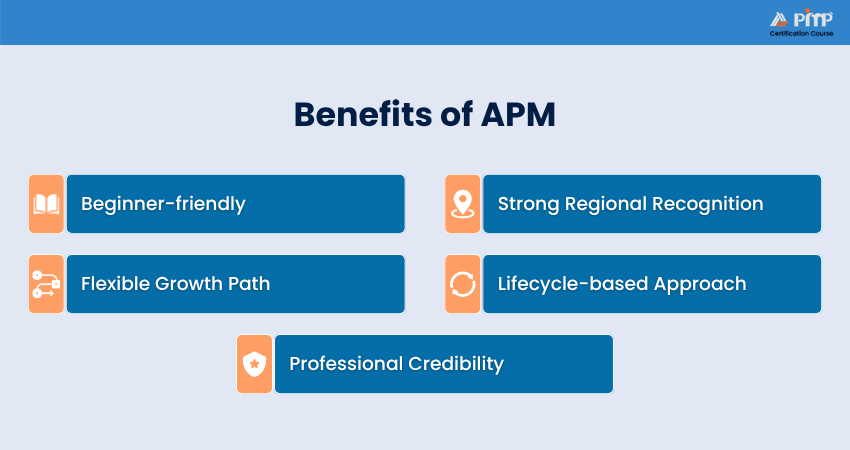
a) Beginner-friendly:
APM offers entry-level qualifications, making it accessible for newcomers starting a career in Project Management.
b) Flexible Growth Path:
With progression options such as PFQ, PMQ, and Chartered status, professionals can develop their skills step by step.
c) Strong Regional Recognition:
APM qualifications are widely respected by employers, particularly in established Project Management markets.
d) Lifecycle-based Approach:
APM covers the full project lifecycle, from initiation and planning through delivery and closure.
e) Professional Credibility:
Achieving Chartered Project Professional (ChPP) status enhances professional standing and career credibility.
Challenges of APM
While APM offers many benefits, it also comes with some limitations you should consider before choosing it. These challenges may affect your decision depending on your career goals and where you plan to work:
a) Limited Global Recognition:
APM is well-known in the UK and Europe but less valued internationally compared to PMP.
b) Employer Demand Outside Europe:
In regions like the US, the Middle East, or Asia, many organizations prefer PMP-certified candidates.
c) Exam Format:
Exam Format: APM exams can feel theory-heavy, with essay or written answers instead of multiple-choice, which some learners find challenging.
Excel at identifying and managing risks with our
PMI-RMP® Certification
– Join now!
What is PMP?
The Project Management Professional (PMP) certification is offered by the Project Management Institute (PMI), a globally recognized organization based in the United States. It is one of the most widely respected Project Management credentials worldwide.
PMP is often regarded as the gold standard for Project Managers. It shows that a professional understands global Project Management practices, tools, and frameworks. PMP is not an entry-level certification and requires prior Project Management experience before applying.
Benefits of PMP
The PMP Certification opens global opportunities and helps professionals stand out in competitive industries. Here are some of the benefits:
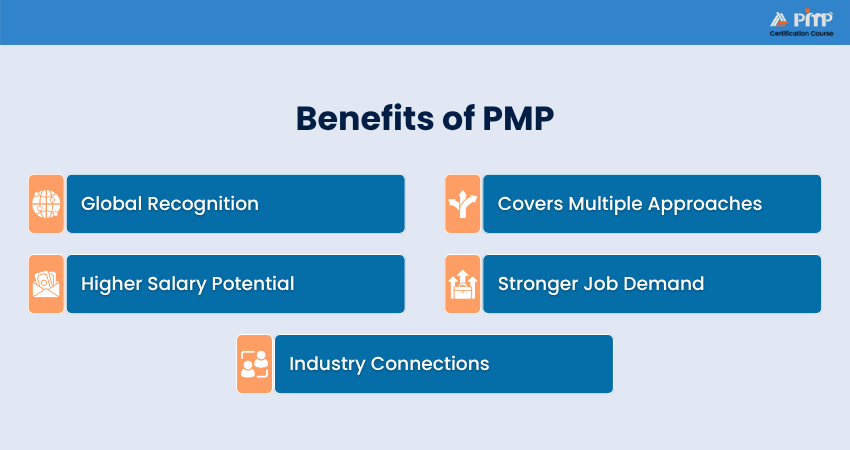
a) Global Recognition:
PMP is accepted and respected almost everywhere, making it valuable for international careers.
b) Higher Salary Potential:
PMP-certified professionals often earn more than non-certified Project Managers.
c) Covers Multiple Approaches:
It includes predictive (Waterfall), Agile, and hybrid methods, giving you wider skills.
d) Stronger Job Demand:
Many multinational companies list PMP as a requirement in their job postings.
e) Industry Connections:
PMI membership connects professionals with peers, experts, and industry events worldwide.
Challenges of PMP
While PMP offers big career advantages, it also comes with hurdles that you need to be ready for. Here are the challenges of PMP:
a) Strict Eligibility:
You must meet specific education and project experience requirements before applying.
b) Tough Exam:
The PMP exam is known for being difficult, with scenario-based and situational questions.
c) High Cost and Time:
Training, study materials, and the exam itself can be expensive and time-consuming.
d) Not Beginner-friendly:
PMP suits experienced professionals more than those just starting in Project Management.
Learn tools, frameworks, and Agile practices to succeed quickly. Join our
PMI-ACP® Certification
now!
APM vs PMP: In-depth Comparison
Now that we’ve seen the basics of both certifications, let’s compare them side by side. This will give you a clearer idea of how APM vs PMP differ, and which one may suit your career path better.
![]()
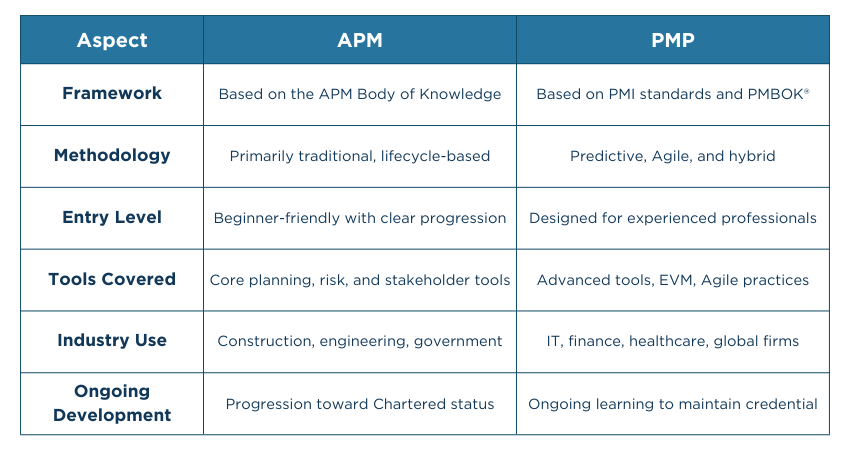
1) APM vs PMP: Definition and Core Concepts
a) APM is a Project Management certification that is widely recognized in the UK and across Europe. It has different levels, so you can start as a beginner and move up as you grow in your career. It is based on the APM Body of Knowledge, which explains the main ideas of Project Management.
b) PMP is a global certification from PMI. It is built on the PMBOK® Guide, which is known all over the world. PMP covers many methods, including Agile and hybrid, which makes it useful in many industries.
2) APM vs PMP: Project Management Methodology Used
a) APM mostly uses traditional methods, where projects are managed step by step. It looks at each stage of the project lifecycle, from planning to closing.
b) PMP teaches more than one way of working. It includes traditional Waterfall, Agile, and even hybrid methods. This makes it flexible for different types of projects.
3) APM vs PMP: Eligibility and Requirements
a) APM is easier to begin with and is well suited for those new to Project Management. Entry-level qualifications such as PFQ have no strict prerequisites, and higher levels are accessible to professionals as they gain experience over time.
b) PMP is designed for experienced Project Management professionals. It requires prior hands-on project experience and is intended for those who already manage projects and want to demonstrate advanced knowledge and professional capability.
4) APM vs PMP: Tools and Techniques
a) APM focuses on basic tools like project planning, scheduling, risk management, and working with stakeholders.
b) PMP covers a wider range. Along with the basics, it also includes advanced tools like Earned Value Management and Agile practices such as Scrum and Kanban.
5) APM vs PMP: Industry Focus
a) APM is most valued in industries like construction, government, and engineering. It’s a strong choice if you plan to build your career mainly in the UK or Europe.
b) PMP is used in IT, banking, healthcare, and international companies. This makes it ideal if you want to work on global projects or move across countries.
6) APM vs PMP: Continuous Professional Development
a) APM supports ongoing learning through workshops, courses, and events. It also allows you to work toward Chartered Project Professional (ChPP) status.
b) PMP requires you to keep your certificate active by earning 60 Professional Development Units (PDUs) every three years. This means you must continue learning and updating your skills.
Build core Project Management knowledge with our
Certified Associate in Project Management (CAPM) ® Training
– Join now!
Choosing Between APM and PMP for Career GrowthChoosing between APM and PMP depends on your career goals, industry focus, and the time and financial commitment you are willing to make. The following key factors can help you decide which certification is the right fit for your career growth:
1) Career Goals
If you want to build your career in the UK or Europe, APM is often the better choice. If your goal is to work in global companies or move abroad, PMP will give you wider recognition. Choosing the right one depends on where you see yourself in the next few years.
2) Industry Demand
Some industries prefer one certification over the other. APM is preferred in industries like construction, engineering, and government. PMP is preferred in IT, finance, healthcare, and multinational organizations.
3) Training Resources
APM has flexible and shorter training options, making it easier for beginners. PMP has many training courses and bootcamps worldwide, but the preparation is usually longer and requires more effort.
4) Skillset Alignment
APM is a good fit if you prefer structured, lifecycle-based Project Management. PMP is better if you want to learn multiple methods, including Agile and hybrid approaches. This means your choice depends on whether you want depth in one style or flexibility across many.
5) Cost and Time Commitment
APM is usually cheaper and takes less time at the beginner level. PMP is more expensive and requires months of study, but the long-term benefits are often greater. Think of it as choosing between a quicker start and a bigger investment in future rewards.
Conclusion
Both APM vs PMP Certifications can boost your career, but the right choice depends on your goals, industry, and future. APM is ideal for those focusing on the UK and Europe, while PMP offers global recognition. Think carefully about where you want your career to grow before making your decision. Choosing the certification that aligns with your long-term ambitions will help you build a stronger and more sustainable Project Management career.
Gain in-demand skills and transform your career with our
Project Management Institute (PMI)® Certification
– Join now!


 Back
Back

 Topics

 Courses


 10 Aug 2026
 David Walter