Technology is growing fast, and businesses need someone who can keep complex IT projects organized and on schedule. Every new system or upgrade requires planning, coordination, and clear communication. Developers build the technology, but without proper guidance, the work can quickly become confusing and delayed. This is where the IT Project Manager role comes in.
They organize tasks and make sure everyone in the team understands what needs to be delivered. As companies invest in digital solutions, the need for skilled IT Project Managers is increasing rapidly. In this blog, we will explore what is an IT Project Manager, the skills required, and why this position has become essential for modern organizations. Let's dive in!
What is an IT Project Manager?
An IT Project Manager is a professional responsible for planning, organizing, executing, and delivering technology projects. These projects may include software development, cloud migration, cybersecurity implementation, system upgrades, enterprise application deployment, etc.
Information Technology (IT) Project Managers are often referred to as technical Project Managers since they are involved in managing the entire lifecycle of a technology project. They usually do not write code or install servers. Instead, they lead the people who are involved in those works. They understand what the business wants and help the technical team build it correctly.
What is the Role of an IT Project Manager?
An IT Project Manager is responsible for guiding a technology project from the initial idea to final delivery. They make sure the project meets business needs, stays within budget, and is completed on time. They are involved in the following roles and responsibilities:
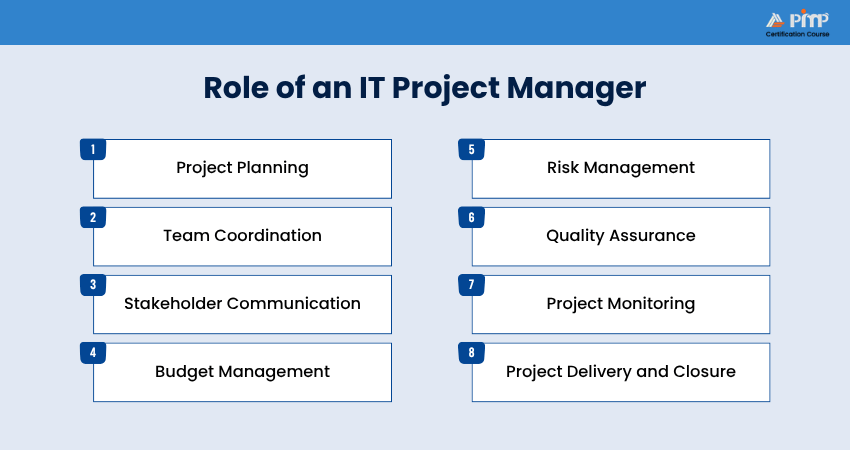
1) Project Planning:
They define project scope, goals, understand requirements, prepare timelines, and create a clear project roadmap, so the team knows what needs to be completed and when.
2) Team Coordination:
They assign tasks to team members while ensuring everyone understands their responsibilities and works together efficiently.
3) Stakeholder Communication:
They become the main contact between business stakeholders and technical teams, providing updates, clarifying expectations, and resolving misunderstandings.
4) Budget Management:
They estimate project costs, monitor spending, and ensure resources are used efficiently, so the project does not exceed the approved budget.
5) Risk Management:
They identify possible risks early, create backup plans, and solve issues quickly to prevent delays or project failure.
6) Quality Assurance:
They ensure the system is tested properly and meets performance, security, and user requirements before release.
7) Project Monitoring:
They track progress, compare actual performance with planned schedules, and make adjustments when required to keep the project on track.
8) Project Delivery and Closure:
They supervise deployment, collect feedback, confirm requirements are met, and document lessons learned for future projects.
Traits of an IT Project Manager
An IT Project Manager not only manages schedules and budgets but also leads people. Since technology projects involve different teams, deadlines, and changing requirements, personal qualities play a major role in project success. Here are the traits that you need to inculcate:
1) Effective Motivator and Communicator
An IT Project Manager works with Developers, Testers, clients, and Business Leaders. Each group has different expectations and technical understanding. A good Project Manager communicates clearly, explains tasks in simple terms, and keeps everyone informed. They motivate the team during tight deadlines, resolve conflicts, and maintain a positive working environment.
2) Embrace Accountability
Projects do not always go exactly as planned. Delays, technical issues, or requirement changes can occur at any stage. A strong IT Project Manager takes responsibility for the project instead of blaming others. They make decisions, manage risks, and quickly address problems. Their accountability builds trust with both team members and stakeholders.
3) Fully Committed to Success
Technology projects often require continuous monitoring and quick adjustments. A committed IT Project Manager stays focused on project goals, tracks progress regularly, and ensures tasks are completed properly. They support the team, handle pressure calmly, and work toward successful delivery, even when unexpected challenges appear.
Learn structured project planning and coordination with
Certified Associate in Project Management (CAPM) ® Training
- Register today!
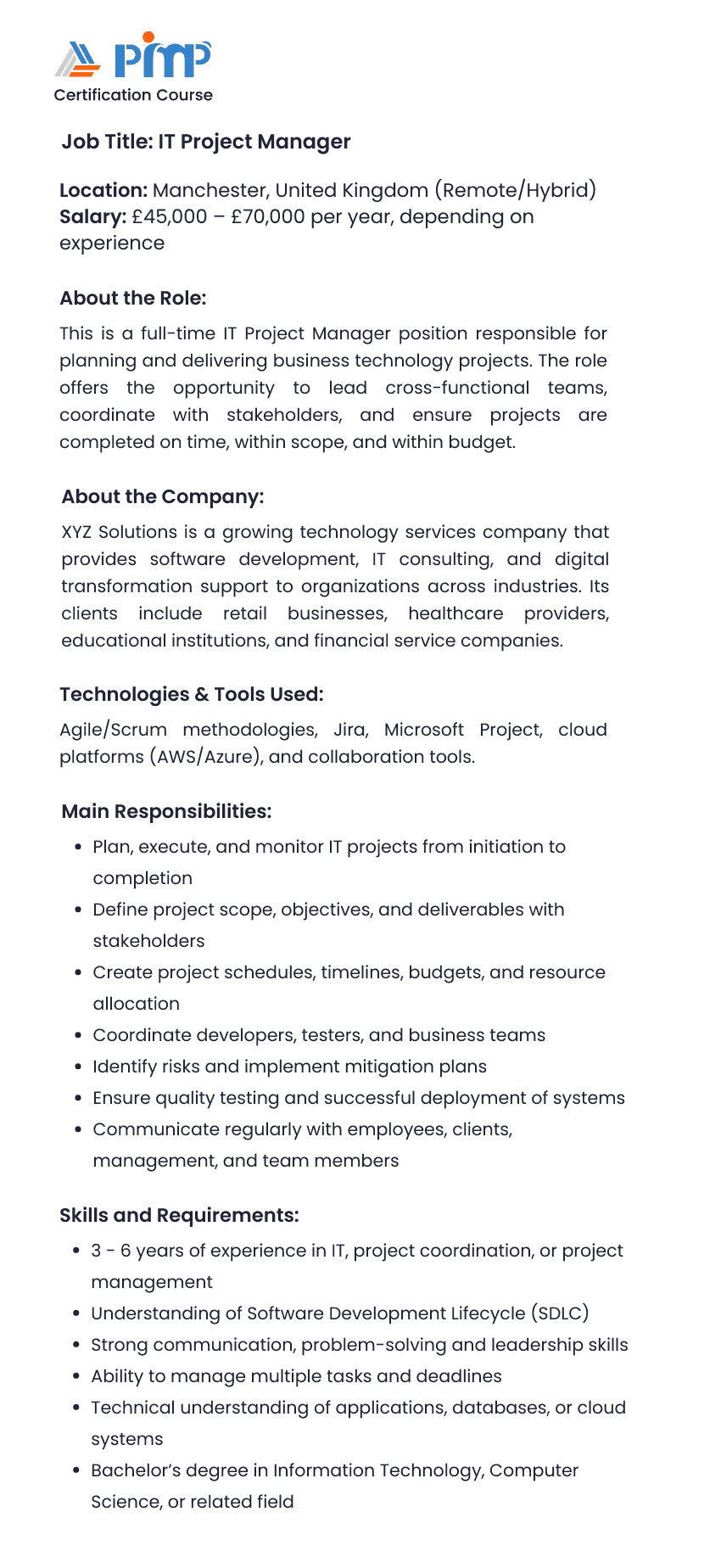
IT Project Manager Job Description Example
An IT Project Manager job description explains what organizations expect from a professional in this role. Reviewing a sample description helps you understand daily duties, employer expectations, and the qualifications typically needed before applying for the role. So, here is an example for your reference:
How to Become an IT Project Manager?
IT Project Managers usually reach this role by gaining experience, learning project processes, and developing leadership skills over time. Now, let’s check how you can enter that position:
1) Develop Relevant Skills
Start by building foundational knowledge in both technology and Project Management. Below are the skills that you need to develop:
Project Management Methodologies:
You need to learn different approaches used to manage projects. Because IT projects often change quickly, it is important to understand flexible methods that can adapt to new requirements. Common methodologies include Agile, Scrum, Kanban, and Lean.
Project Management Processes:
A Project Manager needs to understand the full project lifecycle. They also need to estimate budgets, identify risks, create schedules, assign tasks, and track progress to ensure the project is delivered on time and within scope.
Technical IT Skills:
A broad knowledge of IT systems is very helpful. You may need familiarity with areas such as cybersecurity basics, networks, databases, cloud computing, and software development processes. This is completely based on the business that you are going to work with.
Develop practical knowledge of project concepts with
PMI Project Management Ready® Certification
– Sign up soon!
2) Gain Experience
Experience matters more than theory in Project Management. So, after getting a relevant degree, you can begin a career in roles such as IT support, Business Analyst, Tester, System Administrator, or Software Developer.
Working within project teams helps you learn how tasks are organized, how teams collaborate, and what challenges commonly occur. After a few years, you can move into positions like Project Coordinator or Team Leader before becoming a Project Manager.
3) Consider Earning a Certification
Professional certifications help validate your knowledge and improve job opportunities. Certifications such as PMP or Scrum show employers that you understand structured Project Management practices.
4) Nail the Job Application Process
When applying for the job, highlight projects you contributed to, problems you solved, deadlines you met, and teams you supported. During interviews, employers often ask scenario-based questions, so be prepared to explain how you handle project delays or changing requirements. Strong communication and confidence are the keys to securing the position.
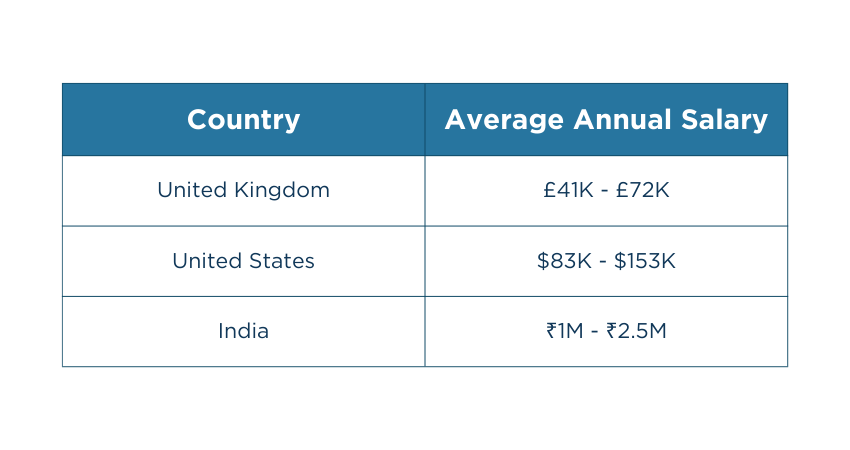
How Much do IT Project Managers Earn?
The IT Project Manager’s salary can vary depending on the location, experience, and industry. The size of the organization and the complexity of the projects also influence your salary. Let's check the average salary of an IT Project Manager in different locations:
Conclusion
An IT Project Manager plays a significant role in helping organizations successfully deliver technology solutions. They plan projects, coordinate teams, manage risks, and ensure systems are implemented smoothly without affecting business operations. By balancing technical understanding with leadership and communication skills, they keep projects organized and aligned with business goals.
Prepare yourself for real-world project challenges with
Project Management Institute (PMI)® Certification
– Start now!


 Back
Back

 Topics

 Courses


 10 Aug 2026
 David Walter