If you want a career where you can lead, influence decisions, and drive real results, Project Management is worth exploring. But one question arises. Is Project Management a Good Career?
In today’s fast‑paced business landscape, organizations are looking for professionals who can bring clarity to chaos, steer teams toward shared goals, and deliver outcomes that truly matter. If you are looking for a career that offers both impact and long-term growth, this blog will help you understand why Is Project Management a Good Career choice for you. Let's get started!
What is Project Management?
Project Management is the process of planning, organizing, and managing tasks to achieve a specific goal within a set timeframe and budget. It involves coordinating people, resources, andactivities to ensure thatmpleted successfully.
Project Management typically includes five stages such as project initiation, planning, execution, monitoring, and completion. These stages help ensure that work is structured, efficient, and aligned with the project’s objectives.
Is Project Management a Good Career?
Yes, Project Management is widely considered a good career. This is because organizations prioritize efficiency, Agility, and results-driven performance for their projects. Therefore, businesses need professionals who can handle complexity and deliver outcomes on time. Even more, Project Management roles can be highly rewarding for those who enjoy planning, organizing, leading teams, and solving problems in dynamic environments.
One of the strongest reasons behind its popularity is versatility. Project Managers are required in almost every industry, which means you are not restricted to a single domain. This flexibility allows professionals to explore different sectors and build diverse experiences.
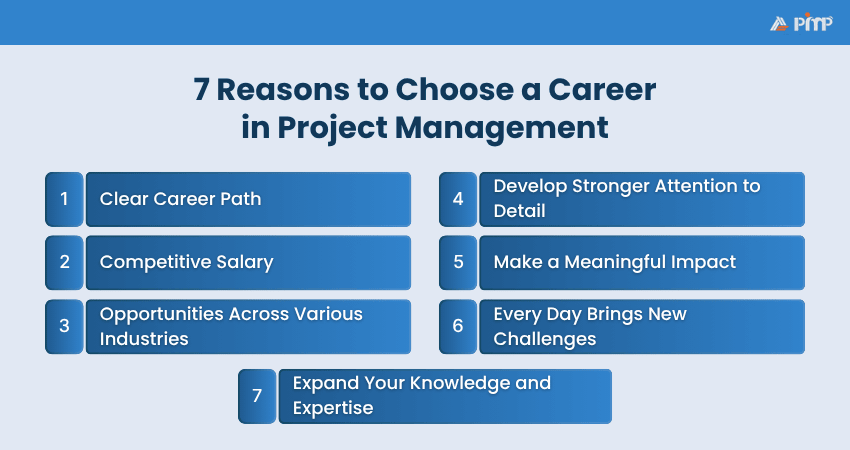
7 Reasons to Choose a Career in Project Management
Project Management has become one of the most attractive career options in recent years. It offers a mix of stability, growth, and variety, making it suitable for individuals with different interests and strengths. Below are seven key reasons why choosing a career in Project Management can be a great decision:
1) Clear Career Path
One of the benefits of Project Management is its well-defined and structured career path. You can start as a Project Coordinator or Junior Project Manager and gradually move into senior roles such as Program Manager or Portfolio Manager.
Also, with experience and relevant certifications, you can get into roles like Senior Project Manager, Program Manager, or even a Director. This structured path makes it easier to plan your career and set clear goals.
2) Competitive Salary
Project Management roles are known for offering competitive salaries. Since organizations rely heavily on successful project delivery, skilled professionals are highly valued and well compensated. As you gain experience and develop expertise, your earning potential increases.
According to Glassdoor, a Project Manager in the US can earn an average annual salary ranging from $65K to $143K, depending on their experience, industry, and location. Salaries can also increase further with certifications such as PMP® or Scrum, which enhance your credibility.
3) Opportunities Across Various Industries
Unlike many careers that are limited to a specific domain, Project Management is highly versatile. It is not limited to one industry. You can work in IT, construction, healthcare, finance, retail, or even creative industries.
This gives you the freedom and flexibility to explore different industries and even switch domains without starting from scratch. It also makes your career more secure and adaptable to market changes.
4) Develop Stronger Attention to Detail
Managing projects requires careful planning and monitoring. You need to keep track of timelines, budgets, and tasks while ensuring everything runs smoothly. You also need to stay organized and maintain clear documentation at every stage.
Over time, this helps you develop a strong attention to detail, which improves your decision-making and overall work quality. It is a skill that benefits both your professional and personal life.
5) Make a Meaningful Impact
Project Managers play a direct role in delivering successful project results. Whether it is launching a product, improving a system, or completing a major project, your work contributes to real outcomes and has a visible impact.
It also allows you to create value for customers, improve processes, and support team success, making your role both meaningful and fulfilling. This sense of contribution can be rewarding, as you can clearly see how your efforts help a company achieve its goals.
6) Every Day Brings New Challenges
In Project Management, no two projects will generally be the same. It means your work remains interesting and dynamic. Each day can bring new challenges, changes in plans, some unexpected issues, and shifting priorities.
This dynamic work environment keeps you engaged and helps you develop strong problem-solving and adaptability skills. It also pushes you to think quickly, make decisions under pressure, and continuously learn from different situations.
7) Expand Your Knowledge and Expertise
Project Management is a continuous learning journey. Project Managers work with different teams, tools, and industries, which helps them learn continuously. You gain knowledge in areas such as leadership, communication, planning, and decision-making.
This ongoing learning makes you more skilled and adaptable. It also keeps you aware of industry trends and new technologies. Over time, you build confidence in handling complex situations and leading diverse teams.
Learn the fundamentals of Project Management with PMI Project Management Ready® Certification – Register today!
How to Start a Career in Project Management?
Starting a career in Project Management may seem challenging at first, but with the right approach, it can be quite achievable. You do not always need a specific degree to begin but having a basic understanding of how projects work can give you a strong foundation. Here's how you can start a career in this field:
1) Learn the Basics
The first step is to understand the fundamentals of Project Management. Learn about project lifecycle, planning, execution, and common methodologies like Agile and Waterfall. This builds a strong foundation.
2) Get Relevant Education or Certification
While a specific degree is not always required, you can pursue relevant degrees in Business, Management, or Engineering to build a strong foundation. You can also take certifications like PMP® or CAPM to validate your project knowledge and enhance your career prospects.
3) Gain Practical Experience
Start small by managing tasks or mini projects in your current role. Internships, volunteer work, or team-based assignments can also help you gain hands-on experience.
4) Develop Key Skills
Focus on building skills such as communication, leadership, time management, and problem-solving. These are crucial for managing teams and handling project challenges.
5) Learn Project Management Tools
Become familiar with Project Management tools like Jira, Trello, Asana, or Microsoft Project. These tools help in planning, tracking, and managing projects efficiently.
6) Build a Strong Network
Connect with people in the Project Management field through platforms like LinkedIn, industry events, or online communities. Building a network helps you gain insights, learn from experienced professionals, and explore new career opportunities.
7) Apply for Entry-level Roles
Begin applying for entry-level roles such as Project Coordinator, Assistant Project Manager or Junior Project Manager. These roles provide valuable hands-on experience and help you build a strong foundation for career growth.
Strengthen your ability to manage large-scale projects with Program Management Professional (PgMP)® Certification – Join soon!
What are the Responsibilities of a Project Manager?A Project Manager plays a central role
in ensuring that a project is completed successfully from start to finish. They handle the planning and coordination of all aspects of a project while keeping it on time, within budget, and aligned with goals. Some of their key responsibilities include:
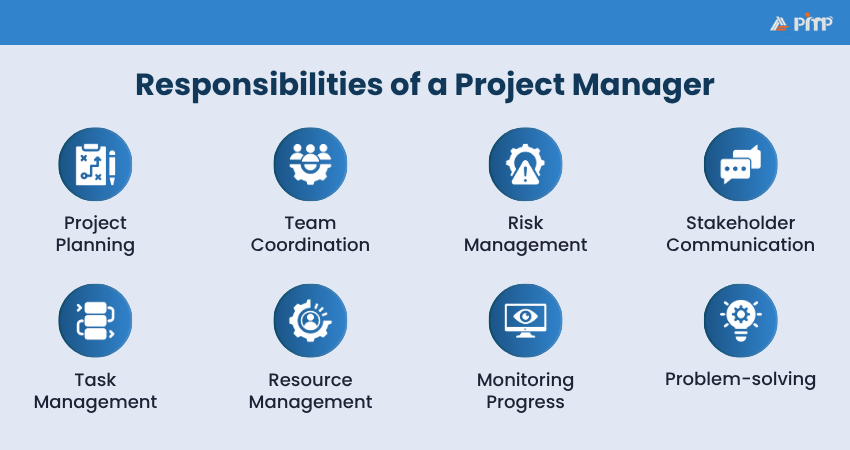
1) Project Planning: Defining the project scope, objectives, timelines, and deliverables.
2) Team Coordination: Ensuring smooth communication and collaboration within the team.
3) Risk Management: Identifying potential risks and preparing solutions in advance.
4) Stakeholder Communication: Keeping clients and stakeholders informed about progress.
5) Task Management: Breaking down work into simple tasks and assigning them to team members.
6) Resource Management: Managing people, budget, tools, and materials effectively.
7) Monitoring Progress: Tracking performance, timelines, and milestones.
8) Problem-solving: Handling challenges and making quick, effective decisions.
Key Requirements to Become a Project Manager
Becoming a successful Project Manager requires a mix of education, practical skills, and hands-on experience. Let's now check the key requirements to become a Project Manager:
1) Education and Training
While there is no strict educational requirement, most Project Managers have a background in Business, Management, Engineering, or Information Technology (IT). You can also enhance your knowledge through certifications such as PMP®, CAPM, or Scrum, which validate your understanding of Project Management practices.
2) Skills
Project Managers need a strong set of both technical and soft skills. Strong communication and leadership skills are particularly important, as you will be coordinating with multiple stakeholders. Other key skills include team building, time management, problem-solving, and decision-making as they help in managing teams and handling challenges.
3) Experience
Practical experience is essential in Project Management. Employers often look for professionals who have worked on real projects and can handle responsibilities effectively. You can gain experience by monitoring small projects, taking on leadership roles, or working in entry-level positions like a Project Coordinator.
Job Opportunity for Project Managers
Project Managers are in high demand across the world, as organizations continue to focus on efficiency, structured planning, and successful project delivery. There is a wide range of job roles available in this field and below are some of them:
1) Assistant Project Manager: Helps the Project Manager in planning, coordination, and day-to-day project activities.
2) Project Coordinator: Supports Project Managers by handling administrative tasks, scheduling, and communication.
3) Project Manager: Accountable for planning, executing, and completing projects within scope, time, and budget.
4) Program Manager: Oversees multiple related projects to ensure they align with broader organizational goals.
5) Product Manager: Defines product vision and strategy while coordinating development to meet customer needs.
6) Portfolio Manager: Coordinates a collection of projects and programs to maximize organizational value and performance.
Conclusion
Project Management stands out as a rewarding career, offering a strong balance of growth, stability, and variety. It gives you the opportunity to lead teams, solve real problems, and contribute to meaningful outcomes. So, Is Project Management a Good Career path? The answer depends on your personal interests and strengths. If you are ready to take responsibility, adapt to change, and keep learning, this path can lead to long-term success.
Build your future as a Project Manager with Project Management Institute (PMI)® Certification –


 Back
Back

 Topics

 Courses


 10 Aug 2026

 Veronica Davis