Projects tend to fail not because of poor planning or lack of skills, but because of unclear communication. When team members do not receive the right information at the right time, misunderstandings, delays, and missed expectations can arise. This is where a Project Communication Plan becomes crucial, helping teams organize how information flows throughout the project.
A well-structured Communication Plan for a project ensures that everyone knows what information will be shared, when it is shared, and through which channels. Setting clear communication guidelines helps teams stay aligned, manage stakeholders effectively, and keep projects running smoothly. In this blog, you will learn about the Project Communication Plan, its importance, components, benefits, and more.
What is a Project Communication Plan?
A Project Communication Plan is a document that defines how project information will be shared among team members and stakeholders. It outlines what information will be communicated, who will receive it, when updates will be provided, and which communication channels will be used.
At its core, a Project Communication Plan ensures communication is clear and consistent throughout the project lifecycle. It helps the right information reach the right people at the right time, reducing misunderstandings and preventing delays in projects.

The Importance of a Project Communication Plan
A Project Communication Plan plays an important role in keeping project teams and stakeholders informed throughout the project lifecycle. It ensures everyone clearly understands their responsibilities, project goals, and expectations, helping teams stay aligned and work more efficiently.
It also helps reduce project risks and control costs by enabling regular, clear, timely, and transparent updates and open communication channels. This allows teams to identify issues early, minimise delays and errors, and keep stakeholders informed, engaged, and confident in the project’s progress.
Key Components of a Project Communication Plan
A well-structured Project Communication Plan includes key components that ensure information is shared clearly and consistently throughout the project. These components help to define how communication will take place, who is involved, and how updates will be managed. Let’s explore these components below:
1) Stakeholder Identification:
Identify all stakeholders who need project updates, including team members and external parties, along with their roles and communication preferences.
2) Communication Objectives:
Clearly define the purpose of every communication activity, such as sharing project progress, discussing issues, or reviewing performance.
3) Communication Methods and Channels:
Specify the tools or platforms used to share information, such as emails, meetings, messaging platforms, or dashboards.
4) Frequency and Timing:
Determine how often communication will take place, such as daily updates, weekly meetings, or monthly reports.
5) Ownership and Responsibility:
Assign responsibility for delivering specific communications to ensure updates are shared consistently.
6) Templates and Tools:
Use standard templates and tools for reports, meeting notes, and updates to maintain consistency.
7) Feedback and Review:
Encourage feedback from stakeholders to ensure communication remains clear, relevant, and effective throughout the project.
How to Create Your Project Communication Plan?
Creating a Project Communication Plan involves defining how information will be shared, who needs to receive it, which tools will be used, and when updates should be delivered. Following clear steps ensure that communication remains organized, consistent, and effective. Let’s explore the steps below:
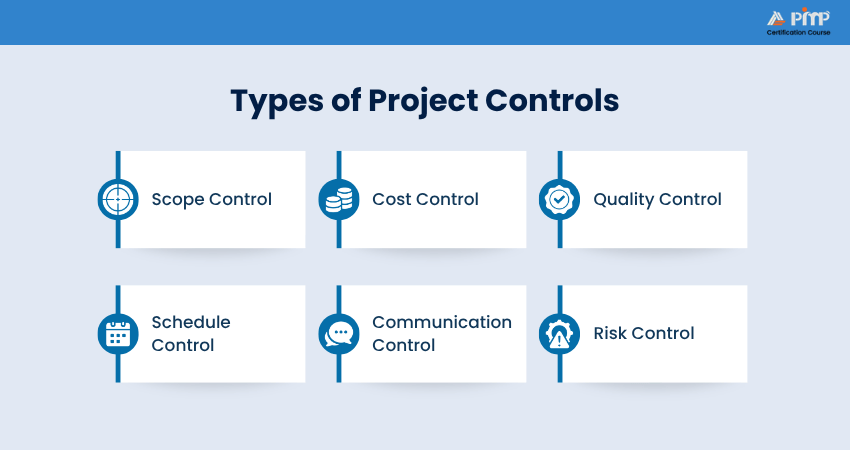
Step 1: Establish the Ground Rules
Establish clear communication rules for how the team shares information daily. This includes deciding which tools to use for different types of communication, what a proper update should include, and how quickly team members should respond to messages.
Step 2: Identify Your Target Audiences
Identify all stakeholders who require project updates, such as team members, executives, clients, or partners. Determine what information each group needs, how detailed it should be, and how often they should receive updates.
Step 3: Select the Right Tools
Select tools that are aligned with the communication needs of the project and stakeholders. For example, use messaging platforms for quick updates, emails for summaries, and video calls for detailed discussions.
Step 4: Develop a Communication Schedule
Define when updates will be shared, who will send them, and what information each update should contain. A clear schedule helps to ensure consistent communication and keeps stakeholders well-informed throughout the project lifecycle.
Benefits of Project Communication Plan
A Project Communication Plan is essential for successful Project Management. When communication is clearly structured, teams can work more effectively, spot issues proactively, and keep stakeholders informed. Let’s look at its key benefits below:
![]()
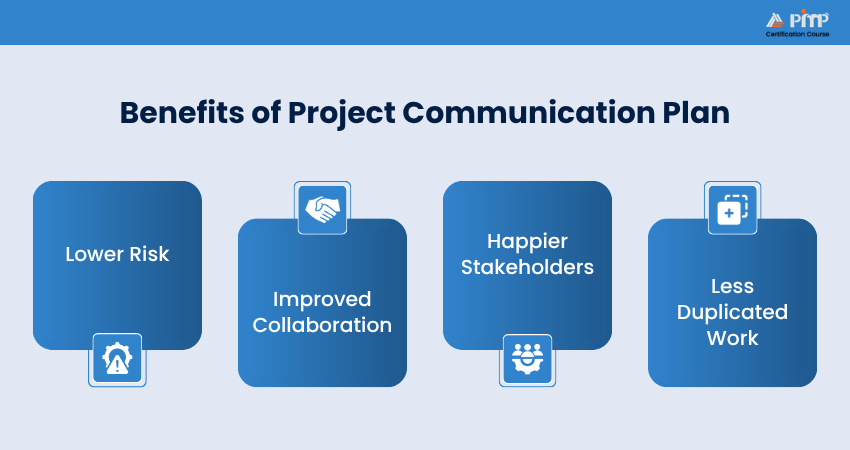
1) Lower Risk
Regular updates and clear communication processes help teams identify potential risks early. By sharing information consistently, teams can address issues before they grow into larger problems that may affect timelines or project outcomes.
2) Improved Collaboration
A clear Communication Plan defines who shares information, when updates are provided, and how communication will happen. This helps teams collaborate better and reduces confusion caused by scattered communication channels.
3) Happier Stakeholders
Consistent and relevant updates help stakeholders stay informed about project progress, decisions, and challenges. Clear communication builds trust, keeps stakeholders involved, and helps ensure smoother approvals and feedback throughout the project lifecycle.
4) Less Duplicated Work
When roles, responsibilities, and updates are clearly communicated, team members understand the tasks that need to be completed. This prevents teams from repeating work, missing important handovers, or overlooking key project details.
Common Challenges in the Project Communication Plan
While a Project Communication Plan helps organize information flow, project teams can still face communication challenges during execution. Let's look at them below:
1) Breaking Down Communication Barriers
Differences in technical knowledge, language, or cultural backgrounds can create misunderstandings among team members. Without clear and simple communication, important information may be misinterpreted or overlooked.
2) Information Management Strategies
Teams tend to receive large volumes of emails, messages, and updates. When information is scattered across different platforms, it becomes difficult to identify important updates, which can lead to missed details or confusion.
3) Global Team Coordination
Projects involving remote or global teams may struggle with time zone differences and limited real-time communication. This can slow down decision-making and make collaboration more complex.
4) Security and Confidentiality Measures
Projects that involve sensitive information must ensure secure communication channels. Without proper security practices, confidential data may be exposed or shared with the wrong stakeholders.
Develop advanced project scheduling skills with
PMI Scheduling Professional (PMI-SP)® Certification
today!
Best Practices for Project Communication Plan
Following best practices ensure that a Project Communication Plan remains effective throughout the project lifecycle. Let’s look at the best practices below:
1) Start Early:
Develop the Project Communication Plan during the project initiation phase, so communication processes are clear from the beginning.
2) Tailor Communication:
Adjust communication style and detail based on stakeholder needs. For example, executives may prefer concise summaries, while team members may require detailed updates.
3) Be Transparent:
Share both progress and challenges openly. Transparency builds trust and encourages proactive problem-solving within the team.
4) Automate Where Possible:
Use Project Management tools to automate reports, alerts, and dashboards to reduce manual effort and keep updates consistent.
5) Document Everything:
Record key decisions, discussions, and updates to maintain a clear reference for future reviews and project tracking.
6) Use Visuals:
Add visuals, such as charts, dashboards, and progress indicators, to make complex information easier to understand.
7) Establish Escalation Procedures:
Define clear steps for handling urgent issues so they can be addressed quickly and efficiently.
8) Monitor Effectiveness:
Regularly review the Project Communication Plan and adjust communication methods as the project evolves.
9) Encourage Open Dialogue:
Encourage an environment where team members feel comfortable sharing updates, concerns, and feedback.
10) Celebrate Success:
Highlight project milestones and achievements to maintain motivation and strengthen team collaboration.
Strengthen your Business Analysis expertise with
PMI-PBA® Certification
now!
Project Management Communication Plan Example
A Project Communication Plan outlines who communicates with whom, what information is shared, the method used, and how frequently updates occur. Let’s look at the example below:
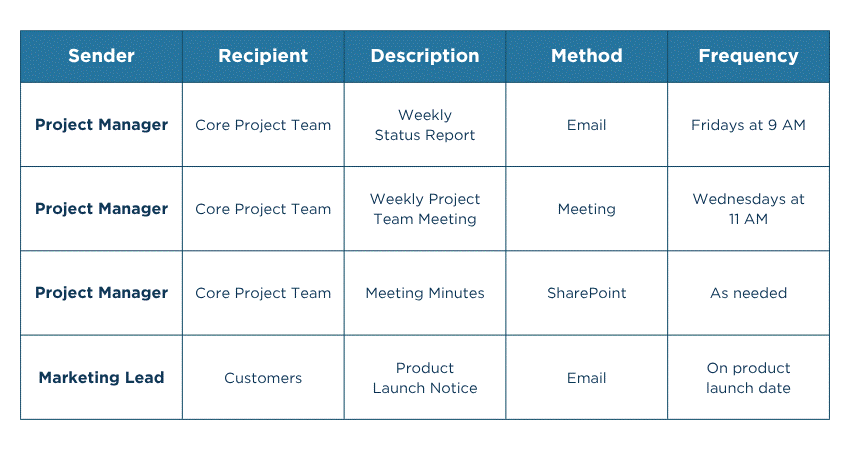
A Project Communication Plan should be created at the start of a project and maintained throughout its lifecycle. Clear communication schedules help ensure that teams and stakeholders receive timely updates about project progress, decisions, and key milestones.
When stakeholders understand how and when communication will occur, it builds trust and sets clear expectations. A well-structured Project Communication Plan helps teams coordinate effectively, avoid common communication issues, and keep the project running smoothly.
Conclusion
A well-defined Project Communication Plan helps teams stay aligned, keeps stakeholders informed, and ensures that important updates reach the right people at the right time. By establishing structured communication practices, project teams can minimize confusion, improve collaboration, and guide projects towards successful outcomes.
Build global project leadership skills and lead teams confidently with
Project Management Institute (PMI)® Certification
– Join now!


 Back
Back

 Topics

 Courses


 10 Aug 2026
 Maria Thompson