The success of a project often depends less on the plan and more on the people behind it. A project may have clear goals, advanced technology and a skilled team, but without stakeholder support, even the best strategies can struggle to succeed. Employees, customers, suppliers, investors and business leaders all play an important role in shaping project outcomes. This is where Stakeholder Management becomes essential.
It helps businesses build trust, manage expectations and reduce conflicts throughout a project or business activity. In this blog, we will explore what is Stakeholder Management, including its benefits, process and practical tips to achieve better business results. Let's get started!
What is Stakeholder Management?
Stakeholder Management is the process of identifying, analyzing, engaging and maintaining relationships with individuals or groups that can affect or be affected by a project, business activity or organizational decision. Its main objective is to ensure that stakeholders remain informed, involved and supportive throughout the lifecycle of a project or initiative.
Stakeholders may include internal groups such as employees, managers, executives and shareholders, as well as external groups like customers, vendors, suppliers and local communities. Each stakeholder often has different expectations, priorities and levels of influence.

Benefits of Stakeholder Management
Effective Stakeholder Management creates value for both organizations and stakeholders. Let's check the benefits it offers for every business:
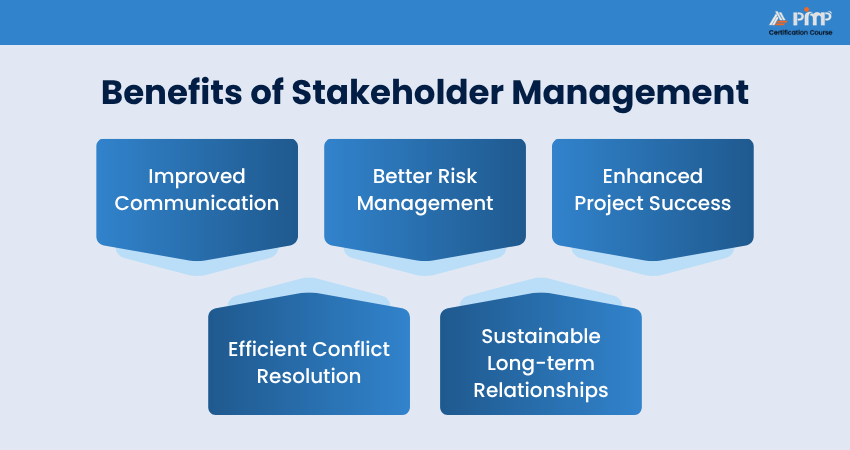
1) Improved Communication
One of the biggest advantages of Stakeholder Management is effective communication. Stakeholders who receive regular updates and clear information are more likely to trust the organization and support its decisions. It also creates opportunities for feedback and collaboration from everyone.
When businesses maintain transparent communication channels, stakeholders feel valued and respected. This leads to stronger engagement and greater cooperation throughout the project lifecycle.
2) Better Risk Management
Stakeholders often provide valuable insights into potential risks, operational issues or external challenges that may affect a project or business activity. By engaging stakeholders early, you can identify problems before they become major obstacles. This allows teams to create mitigation plans and reduce the impact of risks.
For example, suppliers may warn about delivery delays, customers may highlight usability concerns and regulatory bodies may point out compliance issues. Early awareness helps organizations make informed decisions and avoid costly mistakes.
3) Enhanced Project Success
Projects are highly expected to succeed when stakeholders remain engaged and supportive. Stakeholders who understand project objectives and benefits are more willing to contribute resources, provide feedback and cooperate during implementation. Their active involvement also helps teams make better decisions and avoid unnecessary delays.
Stakeholder Management also helps teams gain approvals faster, resolve issues efficiently and maintain alignment between business goals and stakeholder expectations. This improves project quality, increasing user satisfaction, and achieving desired outcomes.
4) Efficient Conflict Resolution
Conflicts are common in business environments because stakeholders often have different interests and priorities. Without proper management, disagreements can delay progress and damage relationships. Stakeholder Management helps organizations address conflicts early through open communication and active listening.
Resolving issues quickly prevents small misunderstandings from escalating into larger disputes. It also promotes a positive working environment and strengthens long-term collaboration while finding the root causes of disagreements.
5) Sustainable Long-term Relationships
Successful organizations understand the importance of maintaining long-term relationships with stakeholders. Trust and cooperation cannot be built overnight. Therefore, Stakeholder Management encourages continuous engagement rather than one-time communication. This, in turn, forms a mutual understanding between organizations and stakeholders.
By consistently addressing stakeholder concerns and demonstrating transparency, organizations can develop stronger partnerships over time. This leads to improved reputation, customer loyalty and stronger organizational resilience during challenging periods.
Upskill your project planning and teamwork skills through the
PMI Project Management Ready® Certification Training
– Register today!
The Stakeholder Management Process
Stakeholder Management is a structured process, and here are the steps to implement it:
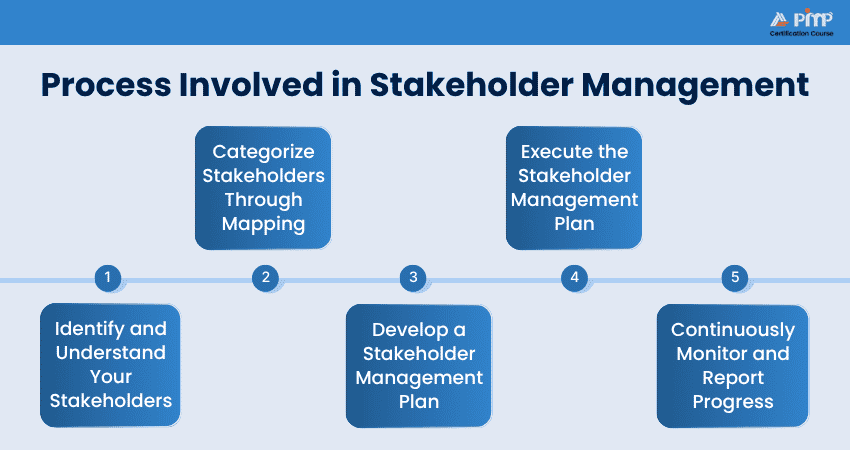
Step 1: Identify and Understand Your Stakeholders
The first step in a Stakeholder Management process is identifying all individuals, groups or organizations connected to the project or business activity. Thus, stakeholders may include:
1) Customers
2) Employees
3) Investors
4) Suppliers
5) Project sponsors
6) Government agencies
7) Local communities
8) Business partners
Once stakeholders are identified, you need to understand their interests, influence levels, expectations and concerns. This analysis helps teams determine which stakeholders require the most attention and communication.
Step 2: Categorize Stakeholders Through Mapping
After identifying the stakeholders, organizations usually categorize them using stakeholder mapping techniques. This helps teams evaluate stakeholders based on factors such as:
1) Level of influence
2) Interest in the project
3) Decision-making authority
4) Potential impact on project outcomes
A common method used in stakeholder mapping is the power-interest matrix, which divides stakeholders into categories such as:
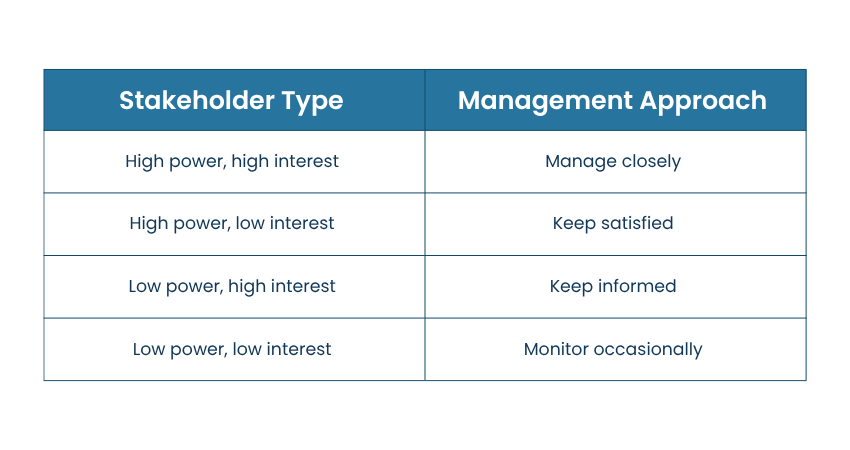
This approach helps businesses prioritize communication efforts and focus more on stakeholders who have a greater impact on project success.
Step 3: Develop a Stakeholder Management Plan
After categorizing your stakeholders, you need to create a Stakeholder Management plan. It outlines how stakeholders will be engaged throughout the project or business initiative. The plan typically includes:
1) Stakeholder communication strategies
2) Stakeholder engagement methods
3) Reporting schedules
4) Feedback collection processes
5) Conflict resolution procedures
6) Roles and responsibilities
The management plan should define how frequently stakeholders will receive updates and which communication channels will be used. Different stakeholders may require different approaches depending on their involvement and influence.
Step 4: Execute the Stakeholder Management Plan
Once the plan is developed, organizations have to actively implement engagement strategies and maintain ongoing communication with stakeholders. Effective execution requires strong communication skills, empathy and responsiveness. Stakeholders should feel that their opinions are acknowledged and valued. Hence, execution involves activities such as:
1) Conducting meetings
2) Sharing progress updates
3) Addressing concerns
4) Gathering stakeholder feedback
5) Managing expectations
It is equally important to remain flexible during execution because stakeholder expectations and business conditions may change over time.
Step 5: Continuously Monitor and Report Progress
Stakeholder Management is not a one-time activity. Organizations must continuously monitor stakeholder relationships and adjust strategies when necessary. This is because regular reporting helps stakeholders stay informed about project progress, milestones, risks and changes. Monitoring includes tasks such as:
1) Evaluating stakeholder satisfaction
2) Tracking communication effectiveness
3) Identifying emerging concerns
4) Measuring engagement levels
5) Reviewing project feedback
Transparent reporting builds credibility and strengthens stakeholder relationships. Continuous monitoring also allows businesses to respond quickly to new challenges or changing stakeholder expectations.
Advance your leadership and strategic management skills with
Program Management Professional (PgMP)® Certification Training
– Sign up soon!
Common Stakeholder Management Challenges and Ways to Handle Them
Managing stakeholders is not always simple because different people often have varied expectations, priorities and communication styles. Understanding the common challenges and learning how to handle them can help maintain stronger stakeholder relationships. Here are the most common challenges and how to handle them:
1) Poor Communication
Unclear or inconsistent communication can create confusion, misunderstandings and frustration among stakeholders. Organizations can handle this by maintaining regular updates, using simple language and ensuring transparent communication throughout the project.
2) Conflicting Stakeholder Interests
Different stakeholders often have different priorities and expectations, which may lead to disagreements. Businesses should encourage collaboration, listen to all viewpoints and find balanced solutions that support overall project goals.
3) Resistance to Change
Stakeholders may resist new processes, systems or organizational changes due to fear or uncertainty. Early involvement, proper training and honest communication can help reduce resistance and improve acceptance.
4) Unrealistic Expectations
Some stakeholders may expect faster results, lower costs or greater outcomes than what is possible. Organizations should clearly explain project goals, timelines, risks and limitations from the beginning to avoid disappointment later.
5) Limited Time and Resources
Managing every stakeholder equally can become difficult when resources are limited. Stakeholder mapping helps organizations prioritize important stakeholders and focus communication efforts effectively.
6) Lack of Stakeholder Engagement
Some stakeholders may lose interest or remain inactive during the project lifecycle. Regular communication, feedback sessions and involvement in decision-making can help improve engagement levels.
7) Cultural and Communication Barriers
Global projects may involve stakeholders from different cultures and backgrounds, which can affect communication styles and expectations. Businesses should respect cultural differences and adapt communication methods accordingly.
Explore the practical skills needed to manage projects with
Certified Associate in Project Management (CAPM) ® Training
– Begin anytime!
Tips and Best Practices for Stakeholder Management
Now, let’s check some of the tips and best practices to improve stakeholder engagement and project outcomes:
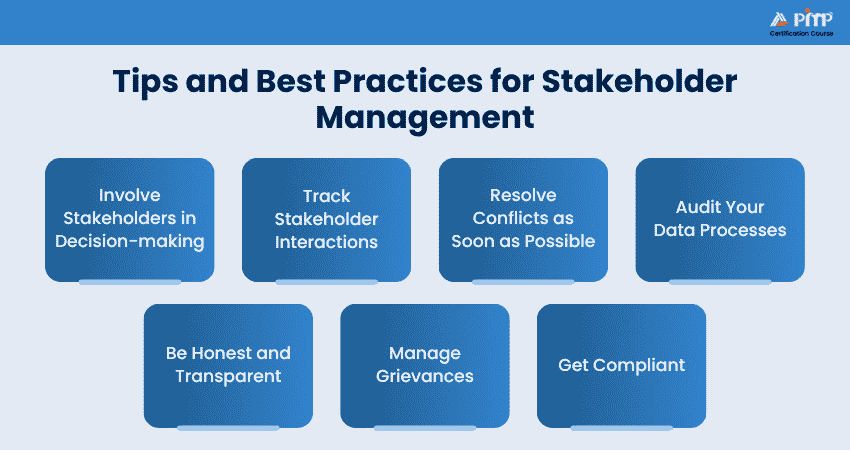
1) Involve Stakeholders in Decision-making
Stakeholders are more likely to support a project when they are included in important decisions. Organizations should ask for their opinions through meetings, discussions or feedback sessions. This helps businesses understand stakeholder concerns and make better decisions.
2) Track Stakeholder Interactions
Maintaining records of stakeholder communication is essential for effective relationship management. Businesses should have documents of stakeholder meetings, feedback, concerns and follow-up actions. This ensures that important information is not forgotten and helps teams communicate effectively with stakeholders.
3) Resolve Conflicts as Soon as Possible
Conflicts can slow down projects and damage stakeholder relationships if they are ignored. Organizations should solve disagreements quickly through open discussions, negotiation and proper communication. Timely conflict resolution helps maintain trust, reduce tension and improve collaboration among stakeholders.
4) Audit Your Data Processes
Data management plays an important role in Stakeholder Management. Organizations should regularly check whether stakeholder information is accurate, updated and secure. Reviewing data processes helps identify mistakes, outdated records or communication gaps. This data transparency also strengthens stakeholder confidence and business credibility.
5) Be Honest and Transparent
Honesty and transparency are fundamentals for successful Stakeholder Management. Stakeholders appreciate organizations that communicate openly about challenges, delays, risks and project changes. Attempting to hide problems often damages trust and creates larger issues later. Even when sharing difficult information, honesty shows your accountability.
6) Manage Grievances
Stakeholders may sometimes have complaints or concerns about a project or business activity. Businesses should establish clear grievance management procedures that allow stakeholders to report issues safely and receive timely responses. In such situations, you need to listen carefully to the concerns, respond quickly and try to solve issues fairly.
7) Get Compliant
Compliance with legal, regulatory, environmental and ethical standards is critical in Stakeholder Management. Non-compliance can damage reputation, create legal risks and weaken stakeholder trust. Thus, organizations should review compliance requirements and ensure that communication, reporting and operational practices align with applicable standards.
Conclusion
Stakeholder Management is a key factor in ensuring smooth business operations and project success. It improves communication, reduces risks, enhances collaboration and builds lasting relationships with people associated with your business. As businesses face rapid change and rising competition, Stakeholder Management is no longer optional. It is an essential strategy in ensuring long-term stability and success.
Improve your project delivery and management capabilities with
Project Management Institute (PMI)® Certification Training
– Join now!


 Back
Back

 Topics

 Courses


 10 Aug 2026
 Gary Moore