At first glance, projects and portfolios may seem like two sides of the same coin, but they serve very different purposes in business strategy. Understanding Portfolio Management vs Project Management is essential for organizations that want to balance long-term goals with successful project execution. While one focuses on delivering specific outcomes, the other looks at the bigger picture and ensures investments align with business priorities.
The conversation around Portfolio Management vs Project Management becomes even more important as organizations handle multiple initiatives at once. Knowing how these roles differ can improve decision-making, resource allocation, and overall business performance. In this guide, we’ll break down the key differences, responsibilities, and why both are essential for organizational success.
What is Portfolio Management?
Portfolio Management is the process of managing multiple projects, programs, and initiatives together to achieve an organization's strategic goals. It focuses on selecting the right investments and ensuring resources are allocated effectively across different business priorities. This approach helps organizations maximize value while balancing risks and opportunities.
Rather than concentrating on individual project tasks, Portfolio Management looks at the bigger picture and long-term business impact. Portfolio Managers evaluate performance, budgets, and risks to ensure initiatives remain aligned with organizational objectives. This helps businesses make informed decisions and maintain sustainable growth over time.
Why Businesses Use Portfolio Management?
Businesses use Portfolio Management to ensure projects and investments align with strategic goals and deliver measurable value. It helps organizations priorities initiatives, allocate resources effectively, and maintain visibility across multiple projects and programs.
Portfolio Management also improves decision-making by enabling leaders to assess risks, budgets, dependencies, and organizational capacity before approving new initiatives. This strategic approach helps businesses focus on high-value projects while improving operational efficiency and long-term planning.
What is Project Management?
Project Management is the process of planning, organizing, and managing resources to achieve specific project goals within a set timeframe and budget. It involves defining tasks, assigning responsibilities, and monitoring progress to ensure successful project completion. This structured approach helps teams stay organized and focused throughout the project lifecycle.
Project Managers oversee communication, risk management, and resource allocation to ensure work progresses smoothly. They coordinate team efforts, solve issues, and ensure deliverables meet quality standards and stakeholder expectations. By maintaining control over timelines and budgets, Project Management helps organizations complete projects efficiently and effectively.
Why Businesses Use Project Management?
Businesses use Project Management to improve project delivery, reduce operational risks, and ensure projects are completed on time and within budget. Effective Project Management provides structure, accountability, and clear communication throughout the project lifecycle.
Project Management also helps organizations improve collaboration, manage stakeholder expectations, control project costs, and maintain quality standards. By using established methodologies and frameworks, businesses can achieve consistent project outcomes and improve operational efficiency.
Key Differences Between Portfolio Management vs Project Management
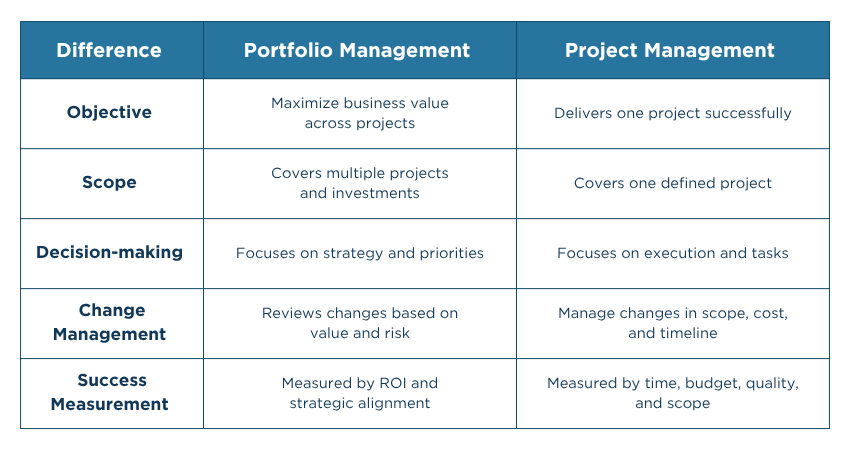
Although Portfolio Management and Project Management are closely related, they differ significantly in terms of objectives, scope, responsibilities, and how success is measured. Understanding these differences helps organizations manage both strategy and execution more effectively.
1) Objectives & Scope
Portfolio Management focuses on achieving long-term organizational goals by managing multiple projects and programs together. Its scope is broader and centered on aligning investments, resources, and initiatives with overall business strategy to maximize value and support organizational growth.
Project Management focuses on completing a specific project successfully within a defined scope, timeline, and budget. Its scope is limited to individual project deliverables, ensuring tasks, resources, and teams are managed efficiently to achieve project objectives.
2) Decision-Making
In Portfolio Management, decision-making is strategic and based on business priorities, investment value, risks, and organizational goals. Portfolio Managers decide which initiatives should be prioritized, delayed, or discontinued to maximize long-term business benefits.
In Project Management, decision-making is operational and focused on project execution. Project Managers make decisions related to scheduling, budgeting, task allocation, and issue resolution to ensure projects progress smoothly and meet deadlines.
3) Change Management
Portfolio Management handles changes by evaluating their impact on organizational strategy and business objectives. Portfolio Managers may adjust project priorities or reallocate resources to ensure the portfolio continues delivering maximum value.
Project Management manages changes within a specific project, such as updates to scope, budget, or timelines. Project Managers use structured processes to minimize disruptions and ensure changes do not negatively affect project outcomes.
4) How Success is Measured
Success in Portfolio Management is measured through strategic outcomes such as return on investment (ROI), business growth, and alignment with organizational goals. The focus is on delivering long-term value and maintaining an effective balance across initiatives.
Success in Project Management is measured by completing projects on time, within budget, and according to quality standards. Project Managers focus on meeting deliverables, stakeholder expectations, and achieving the intended project objectives.
Prepare yourself for real project environments with
PMI Project Management Ready® Certification Training
– Register today!
Portfolio Managers vs Project Managers: Key Responsibilities
Portfolio Managers and Project Managers have different responsibilities, but both are essential for organizational success. Portfolio Managers focus on strategic planning and investment decisions, while Project Managers ensure projects are executed efficiently and delivered successfully.
Responsibilities of a Portfolio Manager
Portfolio Managers focus on high-level business strategy and investment decisions. Their responsibilities typically include:
1) Strategic Alignment:
Ensures projects support organizational goals and long-term business objectives.
2) Investment Prioritization:
Evaluates and selects initiatives that provide the highest business value.
3) Risk Oversight:
Monitors risks across multiple projects and develops mitigation strategies.
4) Resource Allocation:
Distributes budgets, teams, and resources effectively across initiatives.
5) Performance Monitoring:
Tracks portfolio performance and return on investment (ROI) regularly.
Portfolio Managers work closely with senior leadership to ensure organizational investments support long-term business objectives.
Responsibilities of a Project Manager
Project Managers focus on planning and delivering individual projects successfully. Their responsibilities often include:
1) Project Planning:
Defines project scope, timelines, and deliverables clearly.
2) Team Coordination:
Manages teams and resources to ensure smooth project execution.
3) Budget and Risk Control:
Monitors project costs, risks, and overall progress.
4) Stakeholder Communication:
Maintains clear communication with clients, teams, and stakeholders.
5) Successful Delivery:
Ensures projects are completed on time, within budget, and according to requirements.
Project Managers are responsible for day-to-day project execution and maintaining operational efficiency throughout the project lifecycle.
Align strategy, investments, and project outcomes with
Portfolio Management Professional (PfMP)® Certification Training
– Sign up soon!
How Does a Portfolio Manager Different from a Project Manager?
A Portfolio Manager differs from a Project Manager mainly in terms of focus and responsibility. Portfolio Managers oversee multiple initiatives and ensure they align with the organization's strategic goals. They focus on prioritization, investment value, and overall business impact. Their decisions influence the direction of organizational growth and long-term planning.
Project Managers, on the other hand, are responsible for delivering individual projects successfully. They manage schedules, tasks, budgets, and team coordination to ensure project objectives are achieved. While Portfolio Managers work at a strategic level, Project Managers operate at a more tactical and execution-focused level. Both roles are essential for organizational efficiency and success.
Conclusion
Exploring Portfolio Management vs Project Management is essential for organizations aiming to balance strategy with execution. While Portfolio Management focuses on long-term business value and prioritization, Project Management ensures individual projects are delivered successfully. Both play equally important roles in organizational growth and efficiency. By recognizing their differences and strengths, businesses can improve decision-making, optimize resources, and achieve stronger overall performance.
Equip yourself for today’s project challenges with
Project Management Institute (PMI)® Certification Training
– Join now!


 Back
Back

 Topics

 Courses


 10 Aug 2026
 James Smith