Every project begins with an idea but turning that idea into a successful outcome takes more than good intentions. Deadlines can slip, tasks can overlap, and teams can lose focus without a clear direction. That’s where a Project Plan comes in. It acts as a practical roadmap, outlining what needs to be done and when each task should be completed.
Whether you are leading a small initiative or managing a complex business project, a well-structured plan helps you organize resources, reduce risks, and stay on track. In this blog, you will learn what a Project Plan is, why it matters, its key benefits, and the phases involved. Read on to gain clarity and plan with confidence.
What is a Project Plan?
A Project Plan is a structured document that outlines essential elements needed to successfully execute a project. It includes objectives, scope, schedule, assignments, and resources, serving as a detailed guide for the team.
By clearly defining what needs to be done, who is responsible, and when tasks should be completed, the plan ensures that everyone is working in alignment. This helps to identify potential risks, allocate resources, and track progress against milestones.
Why is a Project Plan Important?
A Project Plan is important because it brings clarity and structure to the project's lifecycle. Defining objectives, scope, timelines, and responsibilities ensures projects are broken down into manageable parts, making execution smoother and more efficient.
Beyond execution, a Project Plan helps to optimize resources, track goals, and reduce risks through early identification and mitigation strategies. It maintains alignment among team members, reduces stress, and impacts employee retention by creating a more organized work environment.
What are the 5 Phases of a Project Plan?
The five phases of a Project Plan include:
1) Initiation:
Defines project goals and objectives, considers feasibility, and determines how success will be measured
.
2) Planning:
Establishes the project's scope, outlines tasks, and assigns responsibilities to team members.
3) Execution:
The longest phase where deliverables are created, and the plan is put into action with the adjustments as per the project’s needs.
4) Monitoring and Management:
Runs alongside execution to ensure the project stays on track, manages risks, and measures performance.
5) Closing and Review:
Closes up contracts, delivers final output to the client, and evaluates successes and failures for future improvement.
What are the Components of a Project Plan?
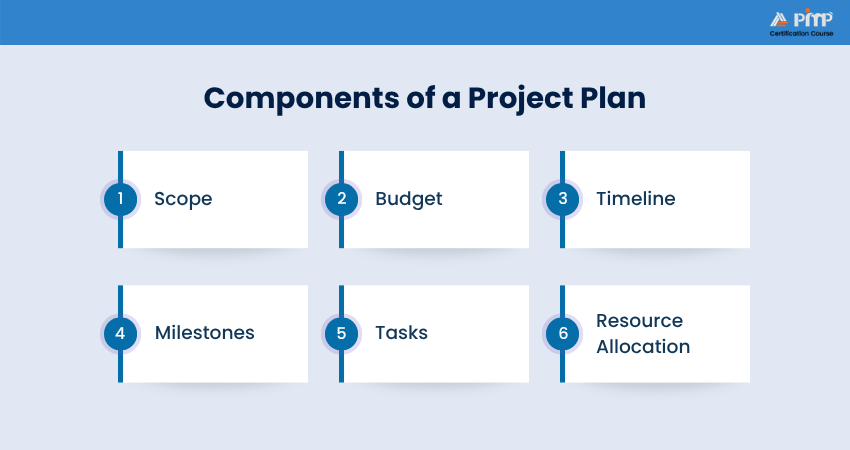
The main components of a Project Plan include:
1) Scope:
The project scope defines what the team will deliver and outlines the boundaries of the work. It is shaped by stakeholder expectations, customer requirements, and the organization’s vision.
2) Budget:
Refers to the total cost of the project, including staffing, materials, and resources. It helps ensure that funding is available before the project begins and prevents cost overruns.
3) Timeline:
It shows how long the project and its phases will take. It includes scheduled milestones to track progress and manage deadlines, ensuring tasks are completed in sequence.
Some additional components of the Project Plan include:
1) Milestones:
Represent major checkpoints within the project. They help track progress and indicate where key phases are completed, making reporting to stakeholders clearer.
2) Tasks:
Refers to breaking the project into smaller, manageable actions. Each task is assigned to team members based on their roles and skills to improve efficiency and accountability.
3) Resource Allocation:
Outlines the people, tools, equipment, and materials needed for a project. It specifies roles, responsibilities, and workload distribution, and properly allocates resources.
Stand out and grow faster in your Project Management career with
Certified Associate in Project Management (CAPM) ® Training
– Join now!
How to Write a Project Plan in 6 Steps?
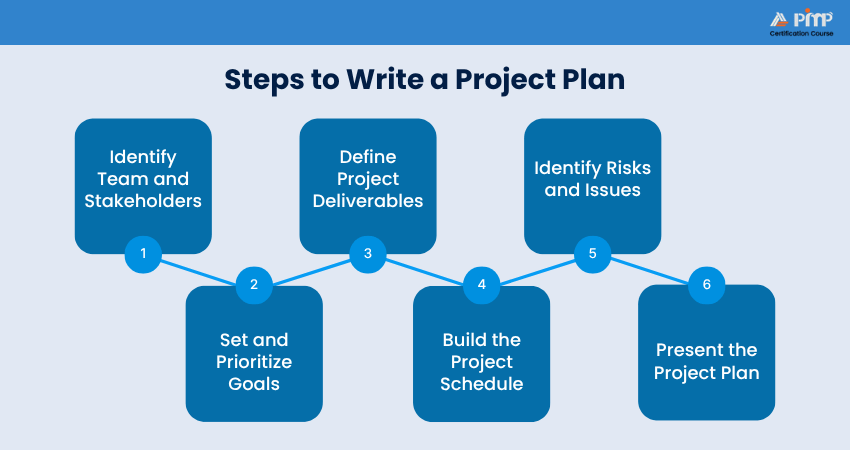
Let’s look at the key steps required to write an effective Project Plan:
Step 1: Identify Team Members and Meet Key Stakeholders
Begin by assembling the project team and meeting with key stakeholders to understand their expectations, needs, and desired outcomes. This helps to define the project’s scope, budget, and timeline. Also, asking the right questions early reduces miscommunication and ensures everyone is aligned before work begins.
Step 2: Set and Prioritize Project Goals
Evaluate stakeholders based on urgency, impact, resources, and associated risks. Then create clear and actionable goals using Specific, Measurable, Achievable, Relevant, and Time-bound (SMART) criteria to ensure each aligns with stakeholder expectations. Also, prioritizing goals helps you focus on what matters most and supports efficient decision-making.
Step 3: Define Project Deliverables
Break down the project into specific deliverables that represent the tangible outputs your team must produce. Estimate tentative due dates for each deliverable and work backwards to identify the dependent tasks needed to complete them, including buffer time. This helps to stay ahead of delays and maintain control over the project timeline.
Step 4: Develop the Project Schedule and Organize Tasks
Once deliverables are clear, expand them into detailed tasks and assign these to team members based on skills and availability. Estimate tasks of durations, resources required and clarify individual responsibilities to prevent overload. Also, involve your team in this process to ensure accuracy in planning and strengthening accountability.
Step 5: Identify Issues and Conduct a Risk Assessment
Every project faces potential challenges, which is why identifying risks early, such as upcoming leaves or seasonal constraints. Conduct risk assessments to determine how each task could affect the project and outline mitigation strategies. Tackling high-risk proactively helps to keep the project stable.
Step 6: Present the Project Plan to Stakeholders
Finally, present the Project Plan to stakeholders and explain how it addresses their needs and resolves any conflicts. Ensure the plan is accessible, transparent, and stored in a centralized platform. Also, a clear and well-communicated plan builds trust and sets the foundation for successful execution.
Learn Project Management tools and techniques with
PMP® Training
– Join now!
What are the Benefits of Project Planning?
Some of the key benefits of a Project Plan are given below:
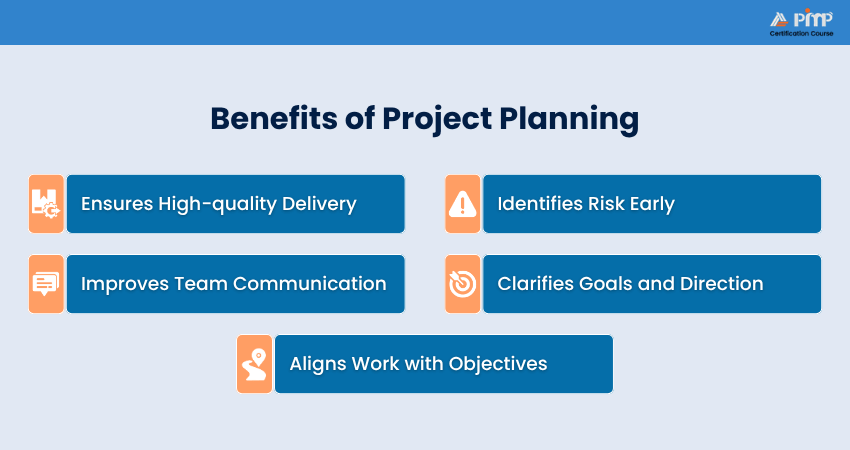
1) Ensures Efficient and High-quality Delivery
A solid Project Plan keeps the team focused on deadlines, budgets, and quality standards. Mapping out resources, tasks, and timelines in advance helps teams to work efficiently and minimize costly delays.
2) Improves Team Communication
Project Plan provides a clear communication framework that ensures everyone understands their responsibilities, priorities, and interdependencies. This alignment prevents misunderstandings and enables seamless collaboration.
3) Identifies Risk Early
A strong Project Plan forces the team to think ahead, anticipate obstacles, and identify potential risks. This proactive approach allows for early mitigation strategies, reducing disruptions during execution.
4) Clarifies Goals and Direction
Project Planning helps to articulate the vision, purpose, and objectives of the project in a way that the entire team can understand. When team members know why the work matters, they are motivated and aligned in their efforts.
5) Keeps Work Aligned with Objectives
A structured Project Plan serves as a roadmap that guides everyone toward the final goal, reducing distractions, and preventing scope creep. It ensures that daily activities remain aligned with the project’s intended outcomes.
What are the Challenges in Project Planning?
Although the Project Plan offers important benefits, it comes with its own set of challenges, such as:
1) Unclear Objectives and Scope
When project goals are vague or constantly shifting, teams struggle to create and organize a Project Plan. With scope changes and widening requirements, it makes it difficult to set accurate timelines, resources, and deliverables.
2) Communication Breakdowns and Information Silos
Effective Project Planning requires seamless communication. Without a central platform for sharing updates and information, messages can get lost, decisions can be delayed, and collaboration slows down.
3) Stakeholder Management Challenges
Stakeholders may have different priorities or expectations. This can create conflict during planning. Also, misalignment in communication can stall decision-making and affect the project's direction.
4) Resource Allocation Constraints
Limited access to key resources, such as manpower, tools, or budget, can complicate the planning process. If tasks depend on scarce resources, scheduling becomes difficult, and delays are more likely to occur.
Build the right skills for becoming an Agile change maker with
PMI-ACP® Certification
now!
Project Planning Software Tools
Project planning software enables teams to organize work, collaborate effectively, and manage workloads. Let's look at the best tools below.
1) Asana
Asana is a great choice for small businesses seeking simple and powerful task management. It offers features, such as task assignments, time tracking, and file sharing, for projects organized. This is helpful for planning workloads and staying aware of upcoming deadlines.
2) ClickUp
ClickUp is a cloud-based platform that helps teams manage projects, tasks, and performance in a centralized platform. It supports task creation, progress tracking, and assigns work to team members with ease. Also, it allows integration with different applications, such as Google Docs.
3) Freedcamp
Freedcamp is designed for individuals or teams juggling multiple projects. It includes tools, such as task lists, calendars, and file sharing, to help organize work efficiently. Its collaborative features make it easy for team members to work together in real time.
4) Hive
Hive is a simple-to-use Project Management tool suitable for teams of any size. It offers task management, time tracking, and progress reporting to keep projects on track. The platform integrates easily with tools, such as Slack or Google Drive, to improve workflow.
5) Scoro
Scoro combines robust Project Management features, such as Gantt charts and issue tracking. Teams can comment on tasks, assign responsibilities, and collaborate directly through built-in communication tools, making it ideal for complex projects.
6) Trello
Trello uses a card and board system that makes managing tasks visually intuitive and flexible. It helps to organize projects using cards representing tasks, ideas, or milestones. Its sharing and collaboration options make it easy for team members to contribute from anywhere.
7) Wrike
Wrike is a comprehensive Project Management tool designed to manage projects from start to finish. It features time tracking, resource management, and a clean interface that makes Project Planning straightforward.
Plan smarter, deliver faster, and improve scheduling with
PMI Scheduling Professional (PMI-SP)® Certification
now!
Project Plan Examples
The example below shows how a project plan brings structure and direction to execution:
1) Quarterly Content Project Plan of StyleWave
1) Project Overview:
The project aims to develop and implement a fall-season content strategy for StyleWave. The objective is to promote the new collection, engage customers, and boost sales from July to September. The plan covers content activities that need to support the brand’s seasonal push.
2) Scope Statement:
The Project includes ideation, creation, and distribution of content across multiple channels. Deliverables include blog posts, social media content, newsletters, and promotional videos.
3) Work Breakdown Structure:
a) Content Ideation:
Generate themes, topics, and content formats.
b) Content Creation:
Produce blog posts, social media designs, videos, and newsletters.
c) Content Distribution:
Publish across social media, email, and blog platforms.
d) Performance Tracking:
Analyze content performance to guide future planning.
4) Project Schedule:
a) Content Ideation:
July 2026
b) Content Creation:
July to August 2026
c) Content Distribution:
August to September 2026
d) Performance Tracking:
September 2026
5) Budget and Resource Plan:
a) Total budget:
100,000
b) Ideation:
10,000
c) Creation:
60,000
d) Distribution:
20,000
e) Performance Tracking:
10,000
6) Quality Management Plan:
Each platform follows its own content playbook for publishing and analytics. Weekly review meetings will be held throughout the ideation, creation, and tracking to maintain quality and consistency.
7) Communication Plan:
The content team will meet weekly for status updates. Also, bi-monthly progress reports will be shared with stakeholders, and senior management will receive updates during monthly committee meetings.
8) Change Management Plan:
Any request to revise the scope, timeline, or budget must be submitted in writing and approved by the Project Manager and the steering committee before execution
9) Project Governance:
A steering committee comprising senior executives will oversee the project and approve major decisions. The Project Manager will supervise the content team and act as a liaison between the team and the committee.
Conclusion
A strong Project Plan is the cornerstone of a project. It gives teams the structure, clarity, and direction they need to deliver impactful results. With clearly defined goals, proactive risk management, and seamless communication, organizations keep projects on track and maintain alignment. Regardless of the project size or complexity, thoughtful planning strengthens teams to work smarter, stay focused, and drives measurable success.
Advance your Project Management career with
Project Management Institute (PMI)® Certification
today!


 Back
Back

 Topics

 Courses


 10 Aug 2026
 Maria Thompson