If you've ever wondered what keeps agile teams organized and focused, wonder no more. It's the Product Backlog that serves as the ultimate roadmap for turning ideas into reality. It’s a dynamic, prioritized collection of tasks that fuels development and drives value. From defining features to tracking progress, the backlog ensures clarity and alignment across the team.
In this blog, we’ll explore what a Product Backlog really is, why it matters, and how it can transform your workflow. As you read on, you’ll see how it functions as the heartbeat of Agile teams, capturing ideas, improvements, fixes, and future possibilities in one evolving space!
Table of Contents
1) What Is a Product Backlog?
2) Who Uses Product Backlogs?
3) How to Create a Product Backlog?
4) Product Backlog Example
5) How to Prioritize Product Backlog Items?
6) How to Manage a Product Backlog?
7) Benefits of Product Backlog Refinement
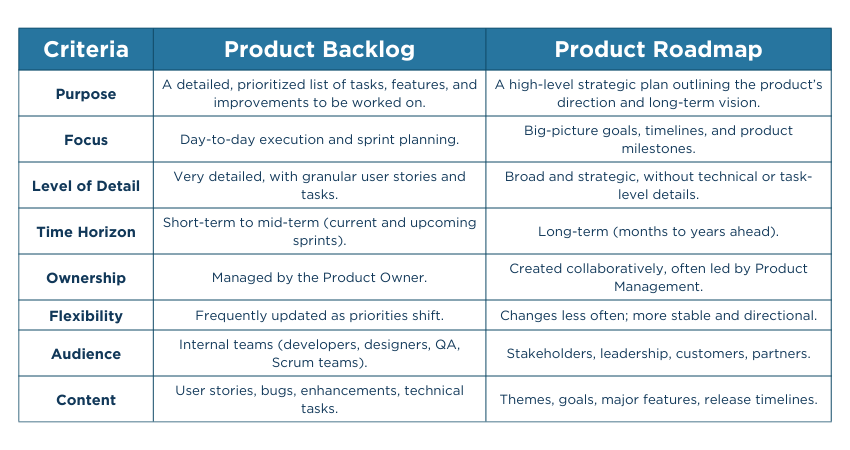
8) Differences Between a Product Backlog and Product Roadmap
9) Conclusion
What is a Product Backlog?
A Product Backlog is an organised list of all the work required to build or improve a product. It includes features, enhancements, bug fixes, and technical tasks arranged by priority. Managed by the Product Owner, it keeps teams focused on delivering the highest-value items first. The backlog is updated continuously as new insights, customer needs, or changes emerge, ensuring the product moves in the right direction.
A Product Backlog also serves as a central reference point for the entire Agile team. It helps everyone understand what needs to be done next and why it is important. By breaking work into clear, manageable items, it supports better planning, faster decision-making, and smoother collaboration throughout the development process.

Who Uses Product Backlogs?
Product Backlogs are used by a wide range of teams involved in product development, especially those following Agile and Scrum practices.
1) The Product Owner uses the backlog to prioritize work and align it with customer needs and business goals.
2) Scrum Teams rely on it to plan sprints and understand upcoming tasks.
3) Development teams refer to tracking features, technical work, and improvements.
4) Stakeholders and managers also use the backlog to gain visibility into progress, priorities, and future product direction.
How to Create a Product Backlog?
A Product Backlog is more than just a task list; it's the pathway for the business to know where its products are heading. Here are the key steps you can incorporate to create a Product Backlog:

1) Develop a Product Roadmap
Since Product Backlogs are derived from a Product Roadmap, it's important to create one first. To create it, you first need to understand how your products will evolve over time. Likewise, you can develop this Roadmap most efficiently and accurately.
2) List Product Backlog Items
Following that, list all the items that need to be included in the Product Backlog from that specific Roadmap. This is analogous to listing the Grocery items purchased from a store. However, try to make it as concise and detailed as possible, yet easier for the stakeholders to understand.
3) Prioritize the Backlog
Then, choose the most important and prioritized tasks that need to be completed first. If you get confused, just remember the user's intent and how it brings value to them. Go down towards the non-essential tasks and put the least priority task at the end. This way, you can help team members get a precise glimpse of their goals.
4) Keep the Backlog Updated
Monitor these lists regularly and ensure they are aligned with the ongoing market demands and user intent. Make necessary changes if required. Try keeping this list as updated as possible.
Join our
Portfolio Management Professional (PfMP)® Training
to upscale your Portfolio Management skills!
Product Backlog Example
There’s no universal formula for building the perfect backlog. Your backlog will naturally vary based on your product’s complexity, its stage of growth, the size of your team, etc. Here are some widely applicable examples of methods for organizing your backlog to make it cleaner and easier for teams to work with:
Example 1: A Backlog with Sections
1) A backlog shouldn’t contain hundreds or thousands of items, but having around a hundred is fairly standard. The problem is that with this many entries, it’s easy to lose track of their purpose or leave them untouched for long periods without scheduling them for future sprints.
2) To create a better structure, many teams divide their backlog into organized sections. Some product managers group items by focus areas or milestones, while others prefer tagging work by Version, Epic, or Component and then arranging sections according to upcoming sprint scopes.
3) Another effective method is to structure sections based on refinement status or workflow, using categories such as:
a) Current Sprint
b) Ready for Planning
c) Ready for Grooming
d) Backlog
4) In this workflow, you begin by adding clear product requirements and descriptions to new backlog items. Once these details are prepared, the task moves into “Ready for Grooming” as part of the next refinement session. After refinement, it shifts to “Ready for Planning,” indicating the team can confidently include it in an upcoming sprint.
Example 2: A Backlog with Well-placed Components and Epics
The drawback of relying on segmentation alone is that it allows you to organize items based on just one criterion. Modern Product Backlog tools solve this limitation by offering multiple ways to classify and cross-reference work. You can use the following features to maintain a highly organized and intuitive backlog:
1) Components
Components identify the part of the product affected by a feature or task. They help clarify where the work belongs and who should handle it.
For example, in a web application, you might divide components into Frontend, Backend, API, or Database.
2) Versions / Releases
The versions of document, which features improvements or fixes, belongs to a specific product release. They offer two major benefits:
1) Improved Sprint and Release Planning: If a release is scheduled in two weeks, your team can ensure all tasks tagged for that version are included in the upcoming sprint.
2) Better Traceability and Debugging: When an issue arises in production, version tracking helps you trace which tasks were part of that release.
For example, if users encounter CAPTCHA errors in version 1.3.2 but the CAPTCHA configuration update happened in 1.3.1, you instantly know the issue isn't new, helping you decide between rolling back or issuing a hotfix.
3) Epics
Epics represent large bodies of work that span multiple features, tasks, or user stories. They provide structure to complex initiatives by grouping related work under a shared objective. A well-defined epic helps teams understand the broader outcome they’re aiming for.
For example, an epic like “Improve User Onboarding” may contain stories for redesigning the sign-up flow, implementing guided tutorials, enhancing user analytics, and improving error handling.
Example 3: A Backlog with the Right Level of Detail in Each Section
This practice is often highlighted in Agile and product management literature. Unlike many theoretical concepts, this one proves genuinely effective in real-world scenarios. The idea is simple:
1) Items near the top of your backlog should contain rich detail and ideally have gone through at least one refinement session. This ensures they’re ready for upcoming sprints.
2) Items at the bottom should remain loosely defined, as new insights about your product, users or priorities may render them outdated or unnecessary before they ever move upward.
Example 4: Keep Your Backlog Clean
1) Maintaining a clean backlog often feels like a tedious chore, but it is essential.
2) Ignoring old items or delaying periodic reviews directly affects the clarity and usefulness of your backlog.
3) It’s natural to hesitate before deleting tasks, especially when they represent appealing ideas. But if you know deep down they’ll never be implemented, it’s better to remove them.
4) Sometimes, outdated items come from stakeholders who barely remember adding them. Even when you ask, they’ll likely say the request still matters. But if it’s been sitting untouched for six months or more, and no one followed up, it’s probably not urgent.
5) Help them understand that keeping the backlog focused is more valuable, and confidently remove those forgotten items.
How to Prioritize Product Backlog Items?
Prioritizing Product Backlog items is the foremost duty of any Scrum Master. They need to be aware of which features the clients and stakeholders want to see in their items:
1) Refine Product Backlog Items
Before beginning with the prioritizing, first add the details about the specific products, such as product description, size, goals, and related metrics. This makes it easier for the Agile professionals to get an overview of what tasks must be completed first.
2) Organize Tasks by Urgency and Importance
Then, list those tasks on the basis of their importance and the value they can bring to the product. Incorporate the most important first and the ones that can provide better functionality for the product as well as for the user experience.
3) Tackle Complex Tasks First
At times, the team might be inclined to perform the more manageable tasks first and leave the complex tasks for later, which is not the right strategy. You must tackle the most complicated tasks first, making it easier to complete the less complex tasks quickly.
4) Complete Tasks in Focused Sprints of Time
It's important to complete these tasks in focused Sprints instead of long intervals (typically ranging from a few weeks to a few months). Sprints divide the tasks into small time frames, and then a review meeting happens to analyze the flaws in the process. This makes it easier for the team to foster productivity and helps achieve better-quality tasks.
5) Communicate With Your Team
Lastly, have regular communication with your team members and provide feedback to help improve the product’s quality and completion time. Make changes, if necessary, further helping team members to grow professionally.
How to Manage a Product Backlog?
Managing a Product Backlog is important for Scrum Masters and Agile Leaders. You may have fulfilled all the necessary steps, but for long-term sustainability, you must manage it effectively. Here are the necessary steps you must follow:
1) Backlog Reviewing:
Review the backlog before each product iteration to ensure no outdated items remain and customer feedback is properly integrated. This step keeps the backlog aligned with current priorities and user needs.
2) Backlog Grouping:
With time, the list will get bigger. Group those lists into near-term and long-term items to make them more manageable. You must focus on near-term items beforehand; although they aren’t as important as urgent items, they play a crucial role in the process. Long-term items are the items the team perceives as valuable on a scale.
3) Prioritize Tasks if Necessary:
As a Scrum Master or team leader, regularly check for gaps, outdated entries, or shifting priorities. If certain tasks gain higher importance due to business needs or technical dependencies, adjust their priority accordingly to ensure the team always works on high-value items.
Benefits of Product Backlog Refinement
Product Backlog refinement (or Product Backlog grooming) is among the most crucial strategies for any Scrum and Agile team. It not only keeps everything systematic but also allows team members to stay aligned with the overall product goal. Here are the crucial benefits of Product Backlog Refinement below:

1) Keeps the Project Organized
When the tasks and features are communicated clearly to the team member, they are likelier to perform their functions more efficiently. This further keeps everything in order and under a pre-defined timeline and budget.
2) Ensures the Product Remains on Track
By including all the required items in the Backlog list and ordering them correctly, you can ensure that the most relevant tasks are completed first. This helps build a solid foundation in product development and keep all tasks on track.
3) Enhances Stakeholder Engagement
Disorganized work would confuse team members in the tasks they need to perform. Consequently, a clear Product Backlog refinement ensures each team member is aware of their expectations and allotted responsibilities for the targeted product goal.
4) Helps Product Teams Achieve Goals Faster
Efficient Product Backlog Refinement helps the team to perform tasks faster through seamless Sprints, increments, and maximized productivity. When they can access the information, they are more likely to work with better performance.
Differences Between a Product Backlog and Product Roadmap
Both Product Backlogs and product roadmaps act as pathways towards achieving specific tasks by listing key items. However, they differ in their targeted goal and approach. Here are the key distinctions:
Deliver value-driven Scrum framework results with our Scrum Product Owner Certification
- Join now!
Conclusion
A well-crafted Product Backlog goes beyond merely organizing work and empowers teams to stay focused and driven by customer value. It helps organizations ensure adaptability and continuous improvement. Ultimately, a strong backlog becomes the guiding force that transforms ideas into impactful product experiences and sustained growth.
Become a skilled Scrum Master- Sign up for our Scrum Master Certification today!


 Back
Back

 Topics

 Courses


 10 Aug 2026

 David Walter