Imagine your team starts each day with a brief, focused meeting that sets the tone for a productive sprint. This is the essence of the Daily Scrum. But how can you ensure these meetings are truly effective? What best practices can transform a routine check-in into a strong tool for team alignment and progress?
In this blog, we’ll explore the best practices for running a Daily Scrum, ensuring your team stays on track and addresses obstacles promptly. Without further delay, let’s get started!
What is the Daily Scrum?
The Daily Scrum is a short, time-boxed Agile meeting held every day before starting the team’s work. It brings the Scrum Team together to review progress, discuss what has been completed, outline what will be worked on next, and highlight any obstacles that may affect delivery.
The goal of this Daily Scrum is to ensure everyone stays aligned with the sprint objectives. This meeting typically lasts for 15 minutes and focuses on improving team coordination, alignment, and transparency.

![]()
Importance of Daily Scrum
The Daily Scrum is vital for boosting team coordination and communication. This concise, focused meeting provides a structured setting for the team to align on progress and obstacles, enhancing several key areas:
1) Progress Transparency
: Team members gain a clear understanding of each other’s tasks, fostering accountability and mutual support.
2) Impediment Identification
: Issues and potential roadblocks are identified early, permitting the team to address them promptly and avoid project delays.
3) Focused Collaboration
: By keeping discussions relevant and concise, the team can concentrate on solutions rather than lengthy debates.
4) Goal Alignment
: The meeting aids in reaffirming and refocusing efforts towards the sprint goals, ensuring everyone is aligned and moving in the same direction.
Key Participants in the Daily Scrum
The Daily Scrum involves specific roles that work together to keep the team aligned and focused on sprint goals. Below are the following roles:
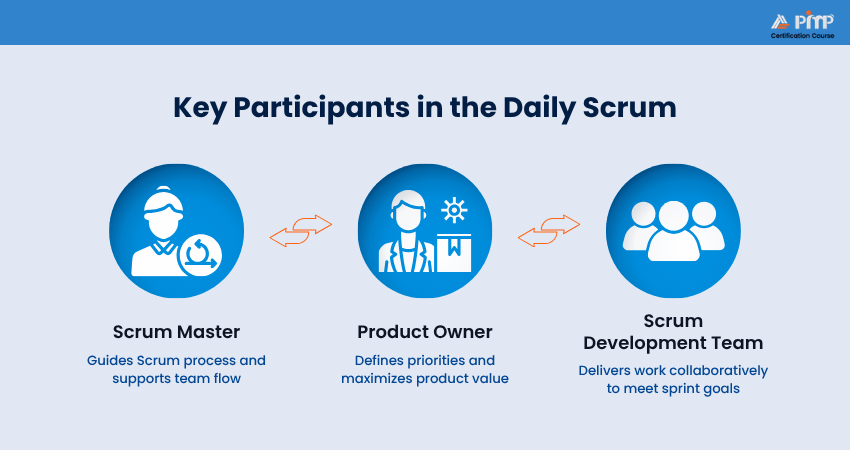
1) Scrum Master
The Scrum Master facilitates the Daily Scrum by ensuring the meeting follows Scrum principles and stays within the 15-minute time box. They help remove obstacles raised by the team and encourage a focused, productive discussion. While they do not control the meeting, they support the team in staying aligned and effective.
Key Traits of a Scrum Master:
1) Facilitative rather than authoritative
2) Observant and attentive to team dynamics
3) Calm and neutral in discussions
4) Solution-oriented mindset
5) Strong communicator and listener
2) Product Owner
The Product Owner may attend the Daily Scrum to stay informed about the team’s progress and challenges. Although they usually listen rather than lead, their presence helps clarify priorities if needed. This visibility allows them to better manage the product backlog and upcoming work.
Key Traits of a Product Owner:
1) Strategic and value-focused thinking
2) Clarity in priorities and goals
3) Customer-centric perspective
4) Decisive when guidance is needed
5) Open to feedback from the team
3) Scrum (Development) Team
The Scrum Team is the core participant in the Daily Scrum. Team members share updates on completed work, planned tasks, and any blockers. Their active involvement promotes transparency, accountability, and collaboration to achieve sprint goals. This helps the team stay aligned, adapt quickly to changes, and maintain consistent project progress.
Key Traits of a Scrum Development Team:
1) Collaborative and self-organising
2) Accountable for shared outcomes
3) Transparent in communication
4) Adaptive to change
5) Proactive in raising issues
Join our
Scrum Developer Training
and integrate Agile practices into your development process!
Daily Scrum Standup Meeting Structure
The Daily Scrum standup follows a simple and structured format designed to keep the team focused and aligned. Here's how it happens:
1) Start With a Round of Updates
The meeting typically begins with each team member sharing a brief update on their progress. This includes what was completed since the last meeting and what they plan to work on next. The aim is to keep everyone informed and aligned, not to dive into detailed discussions.
Key Tips:
1) Speak briefly and focus only on relevant progress
2) Avoid detailed explanations or technical discussions
3) Prepare updates in advance to save time
4) Stick to work that related to sprint goals
5) Listen actively to teammates’ updates
2) Addressing Impediments
Team members highlight any obstacles or challenges that may slow down their work. These impediments are noted so they can be resolved after the meeting, often with support from the Scrum Master. This ensures issues are visible without disrupting the flow of the Daily Scrum.
Key Tips:
1) Clearly state blockers without assigning blame
2) Focus on what is needed to resolve the issue
3) Note impediments for follow-up after the meeting
4) Encourage transparency to spot issues early
5) Let the Scrum Master handle escalation and support
3) Keep it Time-bound
The Daily Scrum is strictly time-boxed to 15 minutes. Keeping it short encourages focus and discipline, ensuring updates remain concise. A time-bound meeting respects everyone’s schedule and maintains the energy and effectiveness of the sprint routine.
Key Tips:
1) Avoid focusing on the same topics
2) Limit individual updates to one or two minutes
3) Have detailed discussions for later sessions
4) Avoid multitasking during the meeting
5) Use a timer if the meeting consistently runs over
Three Questions of the Daily Scrum
A common approach for the Daily Scrum format includes each team member providing updates on the following:
1) What actions did you take yesterday to help the team move closer to the sprint goal?
2) What tasks will you focus on today to support the team’s progress toward the sprint goal?
3) Are there any obstacles hindering your progress or the team’s progress toward the sprint goal?
Drive your product vision into success - Join our
Scrum Product Owner Certification
today!
Key Benefits of Daily Scrum Meetings
Daily Scrum meetings offer several practical benefits that help teams work more effectively. Those benefits include the following:
1) Improved Transparency
1) Keeps all team members informed about ongoing work
2) Creates visibility into progress and challenges
3) Encourages honest and open communication
4) Reduces misunderstandings within the team
5) Aligns everyone with sprint goals
2) Enhanced Collaboration
1) Strengthens teamwork through daily interaction
2) Encourages shared responsibility for outcomes
3) Improves coordination between team members
4) Builds trust and mutual understanding
5) Supports a culture of continuous cooperation
3) Quick Issue Identification
1) Helps identify any issues at an early stage
2) Prevents small issues from becoming major delays
3) Enables faster decision-making
4) Allows timely support from the Scrum Master
5) Keeps the sprint on track and focused
Challenges in Daily Scrum Meetings
Daily Scrum meetings, while beneficial, can sometimes present challenges that hinder their effectiveness. Here are some common challenges faced during Daily Scrums:
1) Using the Meeting as a Status Update
The primary goal of this meeting is for the Developers to answer their three key questions and make necessary adjustments to stay on track with the sprint goal. It should not be used as a status update for the Product Owner, Scrum Master, or other stakeholders.
2) Turning it Into a Problem-solving Session
Attempting to resolve blocks within the 15-minute timeframe can cause the meeting to run over. The Scrum Master should ensure the team stays focused and defers problem-solving outside the Daily Scrum.
3) Focusing on a Task Board
The Daily Scrum is meant for discussion, not just tracking progress. If the team spends too much time looking at a task board, they might miss the opportunity to talk about necessary adjustments to their work.
Daily Scrum Tips
Daily Scrum meetings are essential for keeping your team aligned and focused on their goals. Here are a few tips to help you conduct effective Daily Scrums:
1) Complete the Daily Scrum in a Time Box
A 15-minute time frame is typically used to keep the team focused and efficient. Team members should share concise updates and use the session to inspect progress toward the Sprint Goal and adjust their plan.
2) Conduct the Meeting at the Same Time and Place Every Day
This approach ensures consistency and regularity, fostering the Scrum values of commitment and focus.
3) Include the Same Team Members in Each Daily Scrum Meeting
Having a rotating cast of participants can lead to disruptions, as some may lack context from previous meetings and need updates.
4) Choose the Right Format
Teams might opt for an informal conversation, a series of questions to inspect progress, or a “walk the board” approach, where they review each item in the Sprint Backlog on a dashboard. Mature teams might have a brief conversation to adjust the plan.
Daily Scrum vs Stand up: What's the Difference?
Understanding the differences between Daily Scrum and Stand-up meetings can help you choose the right approach for your team’s needs. While both are short, regular meetings aimed at improving team communication and coordination, they have distinct characteristics and purposes. Here’s a breakdown of their key differences:
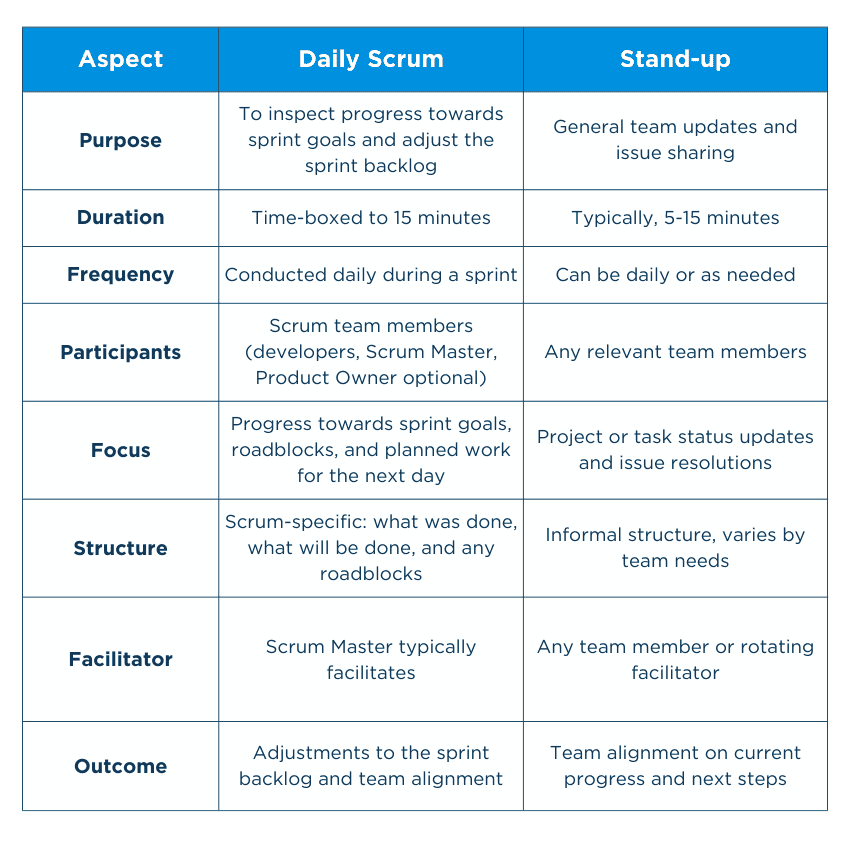
1) Framework: The Daily Scrum is unique to the Scrum methodology, while Stand-Up meetings can be utilized in any Project Management framework.
2) Focus: The Daily Scrum is dedicated to tracking sprint progress towards the sprint goal, whereas Stand-Ups often provide broader updates without a specific framework.
3) Duration: The Daily Scrum is strictly limited to 15 minutes, while Stand-Up meetings can vary in length based on the team’s requirements.
4) Participants: The Daily Scrum includes only the Scrum team (Developers, Scrum Master, and Product Owner), whereas Stand-Ups can involve a wider range of participants, including stakeholders.
5) Content: The Daily Scrum revolves around three key questions (What was done? What will be done? Any blockers?), while Stand-Ups may cover more general progress updates without a structured format.
Conclusion
The Daily Scrum keeps Agile teams focused, aligned, and moving in the right direction. More than just a routine meeting, it creates a shared understanding of progress, priorities, and challenges, allowing teams to adapt quickly and work collaboratively. By keeping it short, purposeful, and team-driven, organizations can use this as a powerful tool to support successful sprint execution and consistent project delivery.
Learn how successful Agile teams work with
Scrum Certification
– Register today!


 Back
Back

 Topics

 Courses


 10 Aug 2026

 Veronica Davis