Ever wondered how successful projects stay on track despite challenges? The answer often lies in Project Risk Management, which helps teams identify, analyze, and prepare for unexpected issues that could affect outcomes. With the exact approach, you can reduce delays, avoid cost overruns, and protect your project from performance setbacks.
In this blog, we will explore how Project Risk Management supports smooth project delivery through its importance, key steps, types, and practical ways to stay ahead of potential issues. You will gain clear insights into managing uncertainty effectively at every stage of the project. Let’s get started!
What is Project Risk Management?
Project Risk Management is the methodology of finding, analyzing, and responding to any potential risks that could affect the success of a project. It involves understanding the factors that might negatively impact a project and taking proactive steps to mitigate them. Risks are inevitable in any project, and having a risk management plan ensures that these challenges are handled before they become problems.
By identifying risks early,
Project Managers
can avoid delays, extra costs, or performance issues. The goal of Project Risk Management is to make sure the project is on track and meets its objectives.
Why Project Risk Management is Important?
Project Risk Management is essential for several reasons:

Preventing Project Failure
Risk identification is important in preventing severe problems which can cause project failure if not addressed earlier. Some problems may be anticipated and resolved before they cause trouble, thereby maintaining the workflow of the teams that are involved in the project. Managing risks is important in order to maintain better control of the projects in their implementation phase.
Cost Control
Some risks are unpredictable and thus cause additional expenses. However, these can be managed in order to reduce added expenses. Such situations allow teams to allocate their budgets more efficiently and thus cut unnecessary costs. This makes the cost of the project more predictable, hence keeping the financial aspect of the project more stable.
Improving Decision-making
This awareness of potential risks helps Project Managers to be wiser in their future decisions. This would enable them to strategize properly in such a way that measures are taken in a way that would have the least effects. This helps to make the progress of a project faster and easier during its different phases of the life cycle.
Increasing Confidence
A properly articulated risk management plan increases the confidence of the stakeholders and the people involved. When risks are managed effectively, all the stakeholders feel more comfortable about the project’s course of action. This results in the formation of strong teamwork and good support for the project in the organization.
How to Use Project Risk Management?
Project Risk Management should be used at the beginning of a project and continued throughout its life cycle. This includes the planning phase, execution, and even the final stages of the project. It’s important to keep revisiting the Risk Management plan as the project evolves.
Risk Management isn't just for large or complex projects. Even small projects can benefit from risk planning. In fact, the earlier risks are identified, the easier it is to handle them before they escalate.
Types of Project Risk Management
Projects can encounter various risks, but some are more common than others. These include:
Schedule Risk
Schedule risk occurs when a project takes longer than planned. Delays can happen for reasons such as resource unavailability, miscommunication, or unexpected challenges. Managing schedule risks involves keeping track of deadlines and having backup plans for potential delays.
Performance Risk
Performance risk is when the project’s outcomes do not meet expectations. This could happen if the team lacks the right skills or if the project's goals were unrealistic from the start. To manage performance risks, it's essential to clearly define the project goals and ensure the team has the necessary resources.
Cost Risk
Cost risk arises when the project exceeds its budget. This can happen due to unforeseen expenses or poor financial planning. Project Managers control cost risks by monitoring and adjusting the budget in order
To Become a Program Manager
, build leadership and strategic planning skills. and be ready to adjust the budget if necessary.
Six Steps in Project Risk Management
Here are six essential steps involved in Project Risk Management:
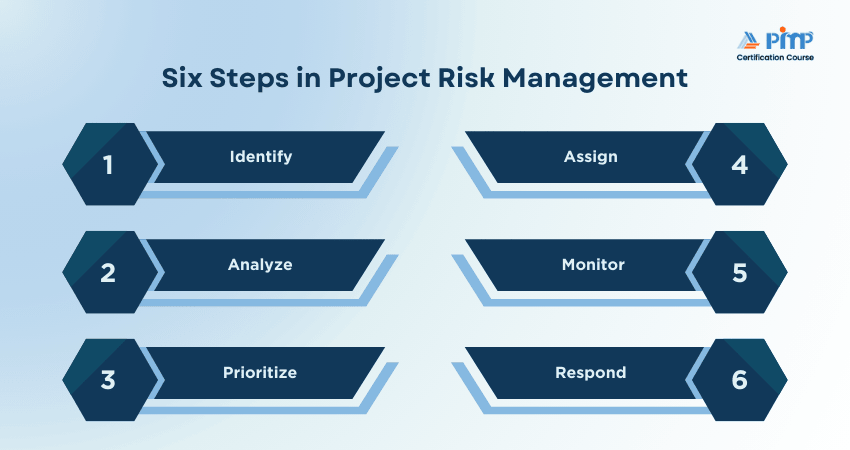
Step 1: Risk Identification
Identifying risks is the first key step in managing them. It means reviewing the project’s goals, timelines, and resources to spot anything that could go wrong. Teams can use brainstorming, checklists, expert input, and SWOT (Strengths, Weaknesses, Opportunities, and Threats) analysis to uncover risks such as delays, budget overruns, or performance issues. Clear risk identification ensures better planning and smoother project delivery.
Step 2: Risk Analysis
After identifying risks, the next step is to analyze their likelihood and potential impact. This helps prioritize which risks need urgent attention. Some risks may have minor effects, while others may be unlikely but highly damaging. Analysis can be done using qualitative ratings (high, medium, low) or quantitative methods that use numerical data to assess probability and impact.
Step 3: Risk Prioritization
After analyzing risks, they should be prioritized into high, medium, or low categories. This helps teams focus on the risks that need immediate attention and could cause the most impact. Tools such as risk matrices, scoring methods, Pareto analysis, and decision trees support this process by highlighting the most critical risks for effective management.
Step 4: Assign an Owner to the Risk
Each risk should be assigned to a specific person who will monitor it and act if it occurs. Ownership ensures someone is accountable for watching the risk, identifying issues early, and leading the response. Ideally, this person has the right skills, but the key is that every risk has a clear owner so it does not go unmanaged.
Step 5: Risk Response Planning
When a risk actually occurs, the project team must respond immediately according to the risk response plan. This may involve adjusting the schedule or budget, implementing contingency actions, and communicating changes to stakeholders. Having a clear response plan ready helps reduce disruption and keeps the project on track by guiding timely decisions and actions when risks materialize.
Step 6: Risk Monitoring and Control
Monitoring means continuously tracking risks from the moment they are identified until the project is complete. Even if a risk seems under control, it must be reviewed daily to ensure it remains manageable. Ongoing check-ins, clear communication, and updates from risk owners help detect changes early and keep the project protected.
Strengthen your Risk Management capabilities with
PMI-RMP® Certification
for proactive and successful project delivery.
Benefits of Project Risk Management
Good Risk Management helps teams prepare for challenges before they happen. It supports smarter choices, smoother delivery, and stronger trust among stakeholders. By planning ahead, teams can handle issues with confidence and keep projects moving in the right direction. Some of the advantages include:
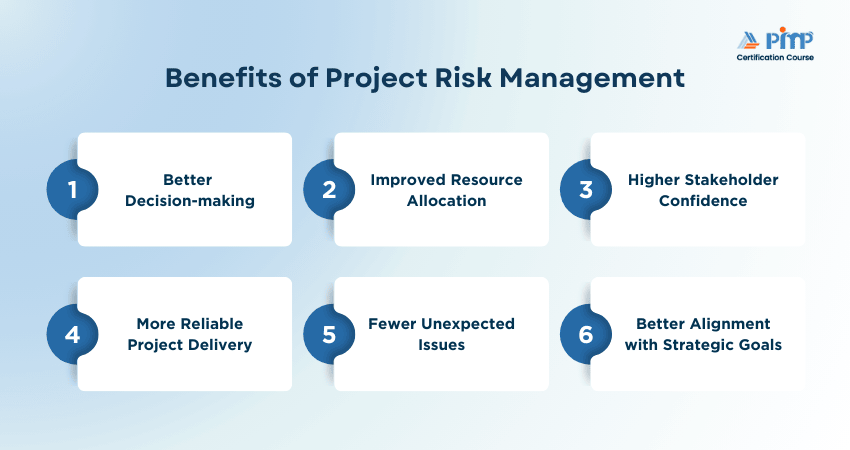
1) Better Decision-making:
Risk awareness helps leaders choose actions that protect project goals and reduce potential problems.
2) Improved Resource Allocation:
Teams can place time, budget, and people where they are needed most, avoiding waste and delays.
3) Higher Stakeholder Confidence:
Stakeholders feel more assured when they know risks are being monitored and controlled.
4) More Reliable Project Delivery:
With fewer delays and cost issues, the project is more likely to stay on schedule and meet expectations.
5) Fewer Unexpected Issues:
Identifying risks early reduces sudden disruptions and keeps the team focused during execution.
6) Better Alignment with Strategic Goals:
Risk planning helps the project stay connected to organizational objectives and long-term success.
Advance your career and gain the skills to lead projects confidently. Join our
PMI Project Management Ready® Certification
today!
Challenges in Project Risk Management
Even with strong planning, managing project risks can be challenging. Teams often struggle to identify risks early, stay consistent, and keep everyone aligned. Here are the issues that can slow progress and reduce overall project success:
1) Difficulty in Identifying all Risks:
Some risks remain hidden or emerge later due to limited information.
2) Poor Communication Among Stakeholders:
When updates and concerns are not shared, risks may go unnoticed or unmanaged.
3) Inaccurate Risk Assessment:
Incorrect probability or impact estimates weaken planning and response strategies.
4) Lack of Resources:
Limited time, budget, or skilled staff affects the ability to manage risks effectively.
5) Constantly Changing Project Conditions:
Scope changes or external shifts introduce new risks that require quick adaptation.
Tips to Reduce Risks in Project Management
Reducing risks is critical for project success. Here are five practical tips to help:
1) Crafting a Risk Management Plan
It is important that a Risk Management plan is put in place right from the initial stages of any project. This action plan should include all potential risks, steps that will be taken to fix those risks, and the specific person responsible for managing each risk.
2) Regularly Updating the Risk Register
A register is a document that lists all potential risks, their likelihood, impact, and the actions to manage them. Updating this document regularly ensures risks are actively monitored throughout the project.
3) Analyzing the Risk Event
Before taking any action, thoroughly analyze the event to understand the cause and impact. This ensures that the response is appropriate and doesn't create additional problems.
4) Adopting a Proactive Approach
Being proactive means addressing risks before they become issues. This includes regularly reviewing the project plan, holding meetings to discuss risks, and ensuring the team is aware of potential challenges.
5) Enhancing Project Management Skills
A skilled Project Manager is better equipped to handle risks. Investing in training and development can help managers improve their Risk Management abilities, leading to better project outcomes.
Conclusion
Project Risk Management is an important part of project success. Identifying risks, analyzing them, and having a plan in place helps teams stay on track, avoid extra costs, and achieve project goals. By following these, Project Managers can handle risks effectively and reduce the chances of failure. Remember, every project will have risks, but with the correct approach, they can be managed effectively.
Strengthen your project skills with
Project Management Institute (PMI)® Certification
and advance toward leadership roles today.


 Back
Back

 Topics

 Courses


 10 Aug 2026

 Veronica Davis