Do you believe project success is all about leadership? In reality, the support role also plays a key part. Behind every well-delivered project, there is someone alongside the Manager ensuring tasks are aligned, communication flows smoothly and deadlines are met without confusion. That is exactly what every Assistant Project Manager does.
If you enjoy organizing work, supporting teams and keeping projects on track, this role can be a great starting point. In this blog, we'll explore the Assistant Project Manager Job Description, their responsibilities and the steps you can take to build a successful career in this field. Let's dive in!
What is an Assistant Project Manager?
An Assistant Project Manager (APM) plays a supporting yet significant role in ensuring that projects run smoothly from start to finish. They work closely with Project Managers to coordinate tasks, manage resources and keep timelines on track.
In many organizations, an Assistant Project Manager acts as a link between different teams, clients and Managers. They help ensure that information is shared clearly and tasks are completed on time. They also support daily project activities such as tracking progress, maintaining project documents and updating reports.
What Does an Assistant Project Manager Do?
An Assistant Project Manager is involved in almost every phase of the project lifecycle. From initial planning to final delivery, they contribute their part. Here are the main tasks of an Assistant Project Manager:
1) Project Planning Support:
They assist in creating project plans, setting timelines and defining tasks. This helps ensure that the project starts with a clear structure and direction.
2) Task Coordination:
They coordinate with team members to assign tasks and ensure everyone knows their responsibilities. This keeps the workflow organized and efficient.
3) Progress Tracking:
They monitor the progress of the project and check if tasks are completed on time. They also report updates to the Project Manager.
4) Communication Management:
They act as a point of contact between teams, stakeholders and Managers. This ensures smooth communication and avoids misunderstandings.
5) Documentation Handling:
They maintain project documents, reports and records. Proper documentation helps track project activities and supports decision-making.
6) Risk Identification:
They help identify potential risks and issues early. This allows the team to take action before problems affect the project.
7) Meeting Coordination:
They organize meetings, prepare agendas and record minutes. This ensures discussions are structured and outcomes are documented.
8) Budget Support:
They assist in tracking project costs and budgets. This helps keep spending under control and within limits.
9) Quality Monitoring:
They ensure that project tasks meet required standards and guidelines and maintain the project quality.
10) Stakeholder Updates:
They provide regular updates to stakeholders about project status. This keeps everyone informed and aligned with project goals.
Skills Required for Assistant Project Manager
To perform well as an Assistant Project Manager, you need a mix of technical knowledge and soft skills. Since the Assistant Project Manager Job Description involves handling multiple tasks, coordinating with teams and supporting project delivery, having the right skill set is essential. Let’s check those skills:
1) Communication Skills:
They must communicate clearly with team members, stakeholders and Managers. Good communication goes a long way to avoid confusion and keeps everyone aligned.
2) Time Management:
Managing many tasks and meeting deadlines is essential. Strong Time Management ensures that projects stay on schedule.
3) Organization Skills:
They need to organize tasks, documents and resources efficiently. This helps keep the project structured and easy to manage.
4) Problem-solving Skills:
They should be able to identify issues and find quick, practical solutions. This helps prevent delays and keeps the project moving forward.
5) Attention to Detail:
Paying attention to small details is important to avoid errors. Accuracy in reports and documentation ensures smooth project execution.
6) Teamwork and Collaboration:
They must work well with different teams and support group efforts. Strong collaboration improves overall productivity.
7) Leadership Skills:
Even in a support role, they may guide team members or take initiative when needed. This helps in managing tasks effectively.
8) Technical Skills:
Being familiar with Project Management tools like MS Project, Asana, or Jira is important. These tools help in planning, tracking and managing projects.
Obtain the knowledge you need to handle projects with
Certified Associate in Project Management (CAPM) ® Training
– Register today!
Average Salary for an Assistant Project Manager
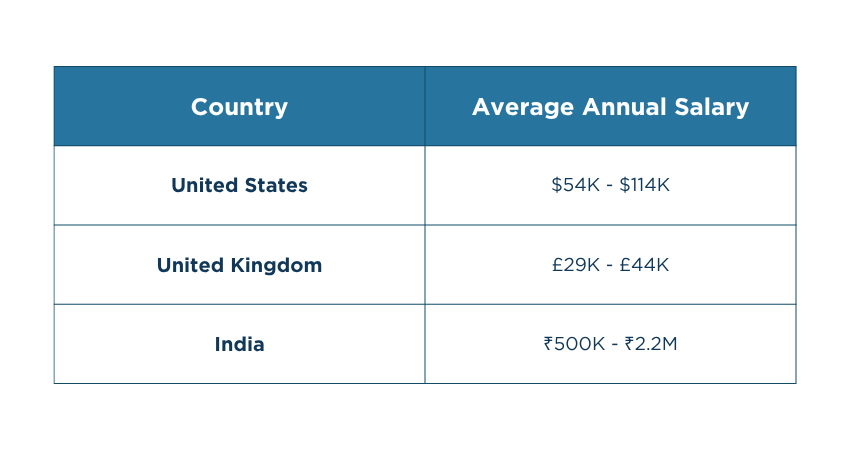
An Assistant Project Manager's salary can vary depending on factors such as location, industry, experience, and organization size. In general, this role offers competitive compensation, especially considering it is often an entry or mid-level position.
Let's check the average annual salary of an Assistant Project Manager in various locations:
Source:
Glassdoor
How to Become an Assistant Project Manager?
Becoming an Assistant Project Manager involves a mix of education, experience and skill development. Let’s check the process involved in it:
1) Earn Your Degree
Most Assistant Project Manager roles require at least a bachelor’s degree. Common fields of study include Management, Business Administration, Engineering, or Information Technology (IT). A degree provides a strong foundation in organizational principles and project concepts.
However, it is not always mandatory. Some professionals enter the field through vocational training or by gaining relevant work experience in administrative or coordination roles.
2) Gain Experience
Experience is one of the most important factors when applying for this role. Entry-level positions such as Administrative Assistant, Project Coordinator or Team Assistant can provide valuable exposure to project environments.
Internships and part-time roles can also help you understand how projects are managed and give you practical insights into workflows, tools and team dynamics.
3) Build Key Skills
Developing the right skill set is essential for career progression. Focus on improving leadership, communication, organization and problem-solving abilities. Learning to use Project Management software and tools can also give you a career advantage. Even more, working on real projects, even in a small capacity, can help you build confidence and demonstrate your capabilities to potential employers.
4) Consider Certifications or Training
Certifications can enhance your profile and improve your career prospects. Popular options include
PMP®
and
Certified Associate in Project Management (CAPM)®
. These certifications not only validate your knowledge but also show your commitment to professional development.
They can also give you a better understanding of structured Project Management methods and industry standards. This makes it easier to handle real projects with confidence.
Prepare yourself for future project roles with
PMI Project Management Ready® Certification
– Sign up soon!
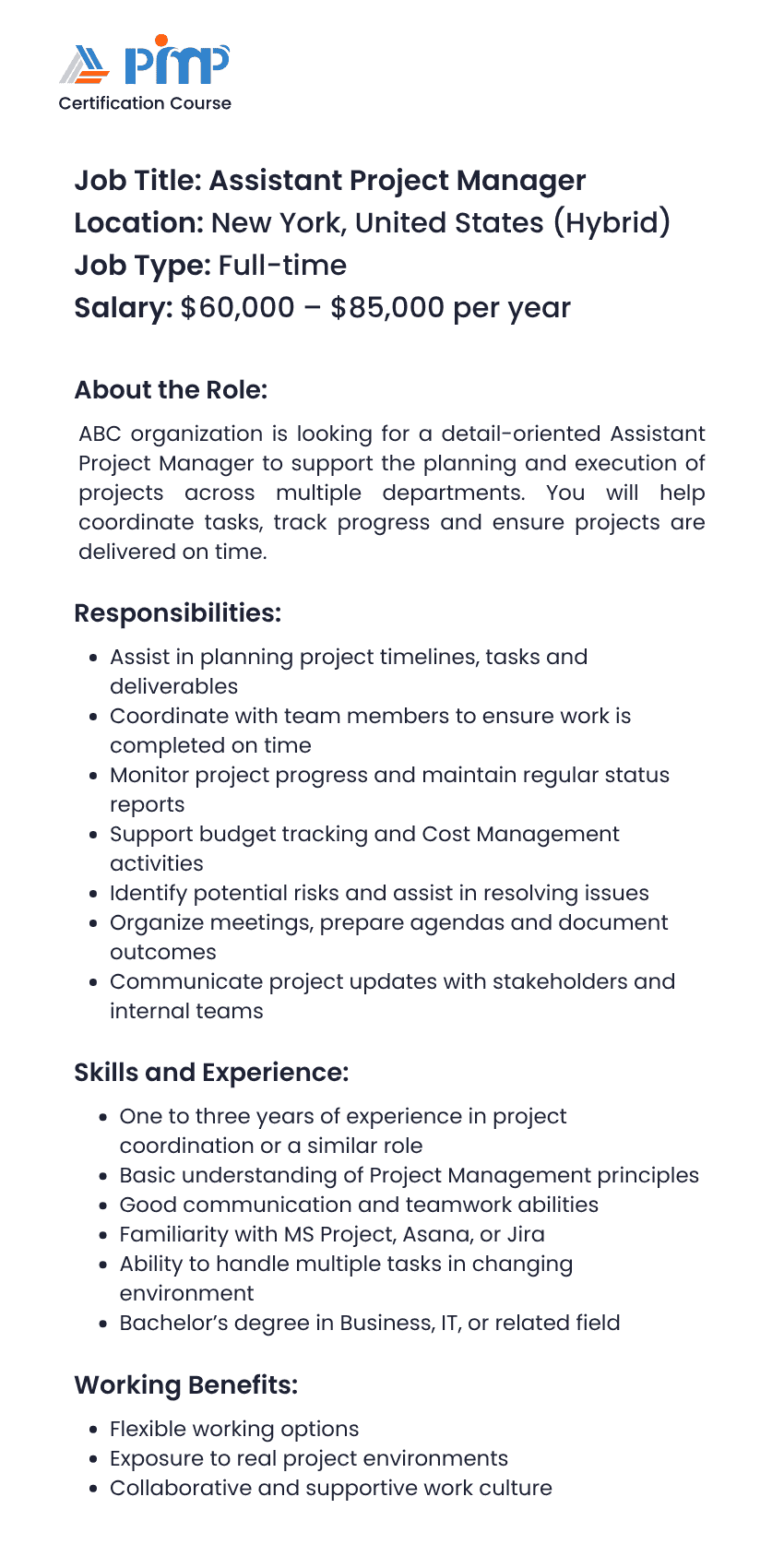
Example of Assistant Manager's Job Description
Now, let’s check an example of how the Job Description of an Assistant Manager will be:
Assistant Project Manager vs Project Manager
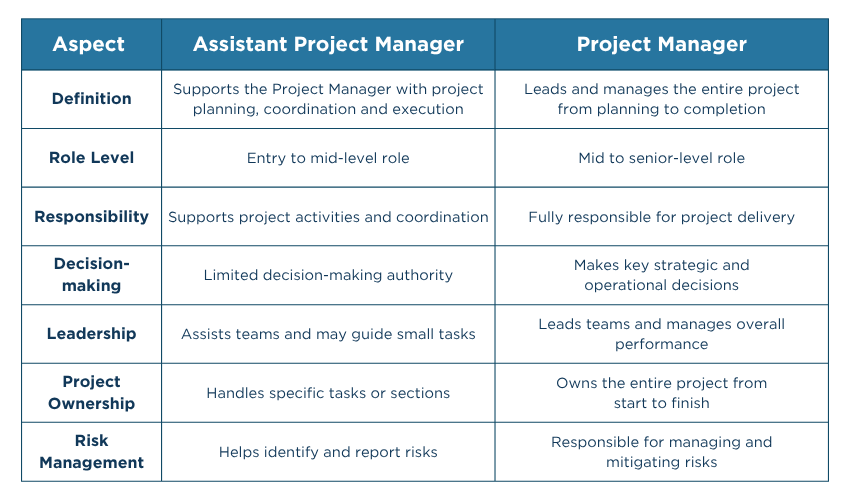
While both roles are closely related, there are key differences between an Assistant Project Manager and a Project Manager. An Assistant Project Manager focuses on supporting tasks, coordinating activities and assisting with planning and execution. They work under the supervision of a Project Manager and handle specific responsibilities within the project.
On the other hand, a Project Manager holds full responsibility for the project. They make strategic decisions, manage budgets, lead teams and ensure successful project delivery. The role requires greater experience, leadership skills and accountability. Here is a detailed difference between Assistant Project Manager and Project Manager:
Best Practices for Succeeding as an Assistant Project Manager
Being an Assistant Project Manager is not just about completing tasks, it is about working smart and staying prepared. With the right approach and habits, you can handle responsibilities more efficiently and build a strong career path. Here are the best practices that you can follow:
1) Stay Organized:
Use Project Management tools and systems to track tasks and deadlines.
2) Communicate Effectively:
Keep stakeholders informed and ensure clarity in all communications.
3) Be Proactive:
Identify possible issues and address them before they escalate.
4) Learn Continuously:
Stay updated with industry trends, tools and methodologies.
5) Build Relationships:
Strong professional relationships can improve collaboration and project outcomes.
6) Take Initiative:
Go beyond assigned tasks and contribute ideas that add value to the project.
Conclusion
The Assistant Project Manager Job Description offers a unique opportunity for hands-on experience in Project Management while contributing to the success of projects. With the right skills, education, and mindset, this role can be a powerful foundation for a successful career. Whether you are just starting your career or looking to grow in Project Management, this role provides a great entry point into Project Management.
Enhance your Project Management expertise with
Project Management Institute (PMI)® Certification
– Join now!


 Back
Back

 Topics

 Courses


 10 Aug 2026
 Maria Thompson