Every successful project has defined moments as the points where progress becomes visible, and direction becomes clear. These moments are known as Project Milestones. Rather than focusing on day-to-day tasks, milestones highlight the achievements that truly move a project forward.
From the first approval to the final delivery, milestones act as signposts that guide teams, align stakeholders, and keep everything on track. In a world where projects can quickly become complex, milestones bring clarity, control, and confidence. Understanding how to use them effectively can be the difference between a project that struggles and one that succeeds seamlessly.
What Are Project Milestones?
Project Milestones are key points in a project timeline that indicate the completion of significant phases, deliverables, or decisions. They act as checkpoints rather than tasks, helping teams track progress and ensure the project is moving in the right direction.
Unlike regular activities, milestones do not consume time or resources directly. Instead, they represent achievements such as completing a project plan, finalizing requirements, or receiving stakeholder approval. These markers provide a clear snapshot of project progress and help teams evaluate whether objectives are being met at each stage.

Why Are Project Milestones Important?
Project Milestones play a crucial role in successful project execution by providing structure, visibility, and accountability. They help teams stay aligned with goals while ensuring progress is measurable and controlled throughout the project lifecycle. Below are the key reasons why milestones are important:
1) Helps in Tracking Progress Effectively: They offer clear checkpoints that allow Project Managers to measure whether tasks are being completed on time and according to plan. This visibility reduces uncertainty and improves decision-making.
2) Enhances Communication Among Stakeholders: By defining key events, teams can align expectations and ensure everyone understands the project’s progress. This transparency helps avoid confusion and miscommunication.
3) Improves Risk Management: Milestones make it easier to identify delays or bottlenecks early, allowing teams to take corrective action before issues escalate. This proactive approach reduces the possibility of a project failure.
4) Support Motivation and Accountability: Achieving milestones gives teams a sense of accomplishment and encourages consistent progress. It also helps assign responsibility for key deliverables, ensuring ownership across the project.
How to Set, Track and Use Project Milestones?
Milestones play a vital role in Project Management, and it is essential that every team member understands how to use them effectively. A well-defined milestone approach helps measure progress, maintain alignment with stakeholders, and keep teams motivated throughout the project lifecycle. Below is a simple and practical approach to setting, tracking, and using Project Milestones:
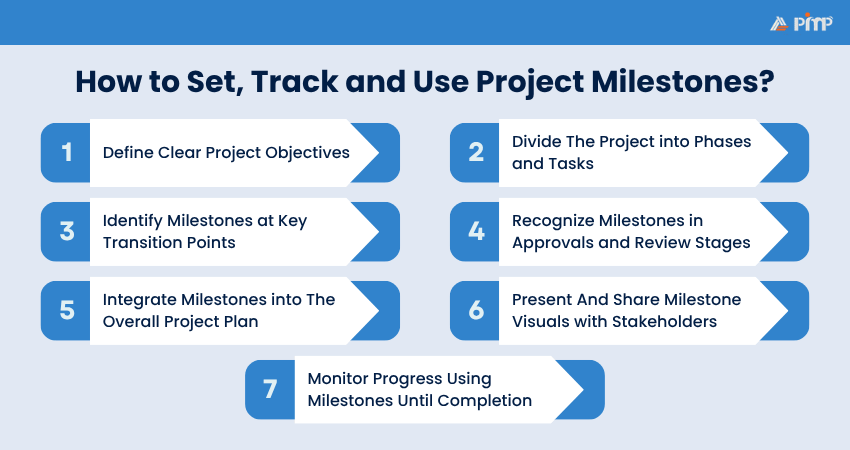
1) Define Clear Project Objectives
Start by establishing clear project goals, as these form the foundation for identifying meaningful milestones. Without clearly defined objectives, it becomes difficult to measure progress or determine success. Ensure objectives are specific, measurable, and aligned with organizational priorities to create a strong basis for milestone planning.
2) Divide The Project into Phases and Tasks
Break the project into smaller phases and tasks to create a structured workflow. This segmentation makes it easier to identify key transition points where milestones should be placed. Each phase should represent a key stage in the project lifecycle, such as planning, execution, or delivery, making progress easier to track and manage.
3) Identify Milestones at Key Transition Points
Identify milestones at key transition points where one project phase ends, and another begins. These may include approval of the project plan, completion of design, finalization of resources, testing approval, or client sign-off. Marking these transition points ensures teams can confirm readiness, maintain control, and move forward with clarity.
4) Recognize Milestones in Approvals and Review Stages
Approvals and reviews are critical stages in any project. Assigning milestones to these points ensures decisions are completed on time and without delays. This strengthens accountability and keeps the project progressing smoothly without unnecessary interruptions.
5) Integrate Milestones into The Overall Project Plan
Milestones should be incorporated into the project schedule alongside tasks and timelines. This integration ensures that they are visible and considered during planning and execution. Using tools such as Gantt charts help visualize milestones within the broader timeline, improving tracking and coordination.
6) Present And Share Milestone Visuals with Stakeholders
Visual representation of milestones improves understanding and communication. Sharing milestone charts or dashboards with stakeholders ensures everyone is aligned and aware of project progress. This transparency builds trust, strengthens collaboration, and aligns expectations across all parties involved.
7) Monitor Progress Using Milestones Until Completion
Regularly track milestone progress to ensure the project remains on schedule. Monitoring allows teams to identify delays, address challenges, and make necessary adjustments. Consistent tracking ensures milestones remain effective at checkpoints that guide the project towards successful completion.
Start your Project Management journey with PMI Project Management Ready® Certification- Register now!
Examples of Project Milestones
Project Milestones can vary depending on the type and scope of a project. While the specific milestones differ across industries, their purpose remains the same, to mark key achievements and ensure steady progress. Below are some common examples across different scenarios:
1) In a Software Development project, milestones may include completing requirements analysis, finalizing system design, developing a prototype, and launching the final product. Each of these represents a critical stage that ensures the project progresses systematically from concept to delivery.
2) In construction projects, milestones might involve obtaining permits, completing the foundation, finishing structural work, and handing over the completed building. These checkpoints ensure that each phase is completed before moving to the next.
3) For marketing campaigns, milestones can include campaign planning, content creation, campaign launch, and performance review. These milestones help track the progress of marketing activities and ensure timely execution.
4) In product development, milestones may include idea validation, prototype testing, product launch, and market feedback analysis. These checkpoints help ensure that the product meets customer needs and business goals.
5) Across all these examples, the key purpose of milestones remains the same to provide clear checkpoints that guide progress and ensure successful project delivery.
What Are the Key Characteristics of Effective Project Milestones?
Setting and managing Project Milestones requires a structured and practical approach. Below are key steps to ensure milestones are effective and aligned with project goals:
1) Practical and Attainable
Milestones should be realistic and achievable within the given resources and timeframe. Setting overly ambitious milestones can lead to delays and frustration. Practical milestones keep teams motivated, focused, and confident in achieving project goals.
2) Clear and Measurable
Each milestone should have a clearly defined outcome that can be measured. This clarity helps teams understand what needs to be achieved and allows project managers to track progress accurately. Measurable milestones eliminate ambiguity, improve accountability, and support better performance evaluation.
3) Aligned with Overall Objectives
Milestones must directly support the project’s overall goals. They should represent meaningful progress rather than arbitrary checkpoints. Alignment ensures that every milestone contributes to the successful completion of the project.
4) Defined Within a Timeframe
Milestones should be associated with specific deadlines to ensure timely completion. Without a clear timeframe, it becomes difficult to track progress or maintain accountability. Time-bound milestones help keep the project on schedule.
What Are the Common Mistakes in Project Milestones?
Despite their importance, Project Milestones are often misused or poorly implemented. Below you will find some common mistakes in Project Milestones:
1) One common mistake is setting too many milestones, which can create unnecessary complexity and confusion. It is important to focus on key events rather than tracking every minor activity.
2) Another mistake is defining milestones without clear outcomes. Vague milestones make it difficult to measure progress and can lead to misinterpretation among team members.
3) Failing to align milestones with project objectives is also a major issue. If milestones do not contribute to overall goals, they lose their purpose and value.
4) Ignoring stakeholders’ involvement can also be a common mistake, leading to misalignment and delays. Milestones should be communicated clearly and properly to all stakeholders to ensure shared understanding.
5) Finally, not tracking milestones regularly reduces their effectiveness. Without monitoring, milestones cannot provide meaningful insights or support for decision-making.
Enhance your leadership impact with our Program Management Professional (PgMP)® Certification - Join now!
Best Practices for Tracking and Managing Project Milestones
Milestones are a key element of effective Project Management, and it is important that every team member understands how to use them correctly. Applying the right practices ensures milestones remain meaningful, measurable, and aligned with project objectives. Below are simple and practical ways to create and manage milestones effectively:
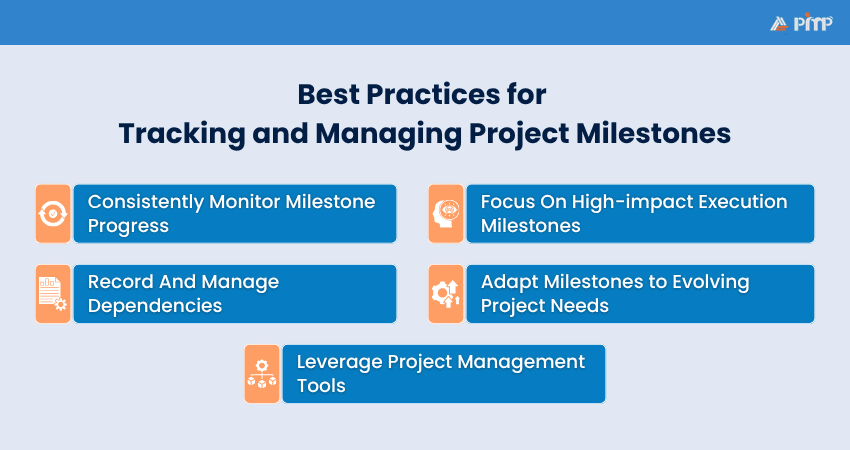
1) Consistently Monitor Milestone Progress
Regular tracking ensures milestones are achieved on time while allowing teams to quickly identify and address any delays. This proactive approach improves decision-making, enhances accountability, and keeps all stakeholders aligned. It also helps maintain project momentum, optimize resource utilization, and significantly reduces risks that could impact overall project success.
2) Focus On High-impact Execution Milestones
Prioritize milestones that represent meaningful progress, major deliverables, or critical decision points in the project lifecycle. Focus on events such as phase completions, approvals, or key outcomes that directly impact project success. Avoid overloading the project with minor checkpoints, as this can create complexity and reduce focus on what truly matters.
3) Record And Manage Dependencies
Many milestones depend on the completion of earlier tasks, making it essential to identify and manage dependencies early. Understanding these relationships helps teams plan effectively. By tracking dependencies, Project Managers can allocate resources efficiently, anticipate risks, minimise bottlenecks, and ensure smoother transitions between project phases.
4) Adapt Milestones to Evolving Project Needs
Projects are dynamic, and milestones may need to be adjusted as circumstances evolve, such as changes in scope, resources, timelines, or stakeholder requirements. Regularly reviewing and refining milestones ensures they remain realistic, achievable objectives. This flexibility allows teams to respond to unexpected challenges, minimize disruptions, and maintain progress without compromising overall goals.
5) Leverage Project Management Tools
Using tools such as Gantt charts, dashboards, and collaboration platforms helps track milestones effectively and maintain structured oversight. These tools provide real-time visibility into progress, enable early detection of delays, and improve coordination by aligning tasks, deadlines, and responsibilities across teams.
Conclusion
Project Milestones are essential for managing complex projects effectively. They provide structure, improve visibility, and ensure teams stay aligned with project goals. By acting as checkpoints, milestones help track progress, manage risks, and maintain accountability throughout the project lifecycle. When implemented correctly, milestones not only improve project efficiency but also enhance communication and decision-making. Organizations that use milestones strategically can deliver projects on time, meet objectives, and achieve better outcomes.
Boost your professional credibility with our PMP® Certification – Register now!


 Back
Back

 Topics

 Courses


 10 Aug 2026

 Gary Moore