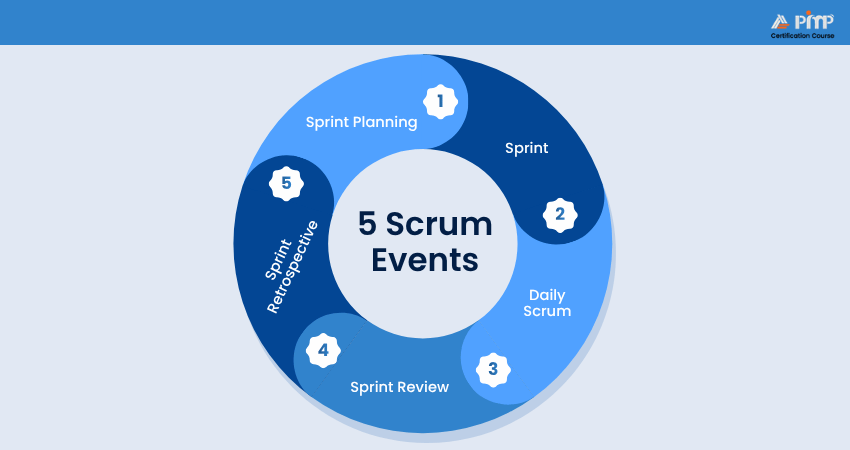
Struggling with project chaos? Missing deadlines and dealing with scattered communication? Scrum Events offer a solution by providing a structured framework that brings order and effectiveness to Project Management. These carefully designed meetings serve as the backbone of successful Agile teams, ensuring everyone stays on track and collaborates seamlessly.
In this blog, we'll walk you through the five fundamental Scrum Events that can revolutionize your team's performance in 2026. Read on to learn more about how these events can boost clarity, accountability, and overall team performance.
Scrum Events promote regular inspection and adaptation. Meeting frequently, Scrum teams improve transparency in their work, identify problems proactively, and remove obstacles that slow progress. This steady rhythm helps teams to stay aligned, improve collaboration, and deliver value faster.
1) The Sprint
The Sprint is the fundamental element of the Scrum framework. It is a box-timed event, usually lasting between two and four weeks, where the Scrum team focuses on delivering a usable and deployable product increment. Maintaining a consistent sprint length helps teams to establish a steady working rhythm and plan efficiently.
Short, regular sprints allow faster feedback from customers and stakeholders. This prevents work from dragging on, keeps everyone engaged, and enables teams to make improvements. Each new sprint starts immediately after the previous one ends, ensuring momentum.
2) Sprint Planning
Sprint Planning aims to organize the tasks for the upcoming Sprint. During this event, your Scrum Team determines which Product Backlog items to deliver and how to achieve them. The team sets a Sprint goal that explains the purpose of delivering these items, providing a clear focus.
Sprint Planning isn’t just about choosing Product Backlog items; it’s about planning the Sprint’s work. If your team isn’t discussing the production process for the selected items, they’re not fully utilizing the Sprint Planning event.
Build great products and deliver faster with Scrum Developer Certification today!
3) Daily Scrum
The Daily Scrum targets to enhance the possibilities of handing over a finished and usable increment that aligns with the Sprint Goal. During the Daily Scrum, developers track their progress towards this goal and plan their obligations for the next 24 hours. This assembly is strictly timeboxed to fifteen minutes, and it’s vital to stick to this restriction.
The Daily Scrum isn't always meant for hassle-fixing. Instead, it’s a discussion board for the group to perceive, but no longer resolve impediments. If a trouble calls for more time to cope with, the relevant team of individuals must convene as soon as feasible, possibly right after the Daily Scrum, to work on an answer.
4) Sprint Review
The Sprint Review’s purpose is for the team to discuss their completed work during the Sprint and plan the next steps. This event lets the Scrum Team and stakeholders/customers review the delivered work and its progress towards the Product Goal, making necessary adjustments.
While a demo might be included, the Sprint Review is not just a demo. It’s a crucial inspect-and-adapt event where the team collects feedback that the Product Owner can use to update the Product Backlog and forecast. The Sprint Review is timeboxed to four hours to respect attendees’ time and maintain productivity.
5) Sprint Retrospective
The Sprint Retrospective aims to boost the Scrum Team’s effectiveness. As the very last event in a Sprint, the team critiques how the Sprint went in terms of people, interactions, procedures, equipment, and their Definition of Done. All Scrum Team participants, including the Scrum Master, Developers, and Product Owner, take part.
While there may be no set agenda, it's crucial that at the end of the Retrospective, the team identifies one or two upgrades to put in place their strategies, tools, interactions, or Definition of Done.
Achieve your product vision with confidence - sign up for our Scrum Product Owner Certification today!
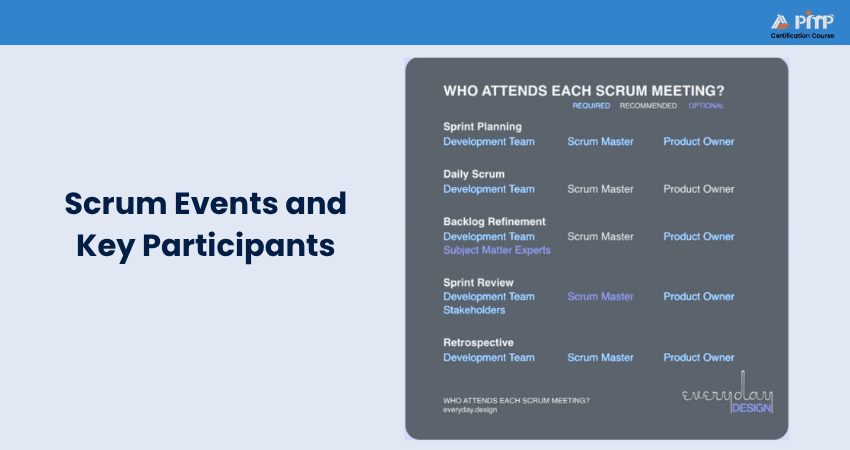
Who are the Participants in Each Scrum Event?
The Scrum framework includes three roles and four main events. The table below outlines who attends each event in Scrum:
Conclusion
Scrum Events help teams create structure, bring clarity, and a reliable rhythm that keeps the work moving forward. These events encourage open communication, early problem-solving, and continuous improvement to keep teams focused and deliver real value. As teams head into 2026, learning about these events will be useful for navigating change, meeting customer needs, and building high-performing Scrum teams.
Learn Scrum in a practical way and build real-world projects with Scrum Certification – Join now!


 Back
Back

 Topics

 Courses


 10 Aug 2026

 Veronica Davis