Have you ever walked out of a meeting feeling misunderstood or unheard? In the workplace, disagreements are more common than we think. With different opinions, personalities, and pressures, small misunderstandings can escalate into bigger problems. This is where Conflict Resolution becomes essential, helping people manage tension calmly and turning disagreements into productive conversations.
It is not about winning an argument but about finding common ground. It strengthens relationships, improves teamwork, and builds trust within organizations. In this blog, you will learn about what is Conflict Resolution, its importance, benefits, resolution strategies, and more to help you manage difficult situations with confidence and create positive outcomes.
What is Conflict Resolution?
Conflict Resolution is the process of resolving disputes constructively to find solutions that benefit all parties involved. It focuses on understanding different perspectives, fostering dialogue, and preventing Conflicts from escalating into larger issues.
Why Conflict Resolution is Important?
Conflict Resolution is important for creating a positive and productive workplace. Applying the right techniques helps teams navigate disagreements constructively and turn them into growth opportunities. Its importance can be seen in several key areas:
1) It promotes open communication, allowing issues to be discussed honestly and transparently.
2) It encourages active listening, helping individuals understand different perspectives.
3) It supports constructive feedback, fostering mutual respect, and cooperation.
4) It enables proactive intervention, preventing minor disagreements from escalating.
5) It ensures fairness through a neutral and balanced approach.
6) It strengthens teamwork and builds long-term workplace trust.
How Conflict Resolution Work?
Conflict Resolution is essential for maintaining a positive work environment and fostering collaboration. Conflicts can lead to stronger relationships, improved problem-solving, and better team dynamics when handled effectively. Below are key strategies that help in managing workplace Conflicts constructively.

1) Active Listening
Active listening is a fundamental skill in Conflict Resolution, ensuring that all parties feel heard and understood. It involves fully concentrating, understanding, and responding thoughtfully to the speaker without interruptions or assumptions. By practising active listening, Conflicts can be de-escalated, and solutions can be reached more effectively.
1) Focus on the speaker without distractions
2) Acknowledge the other person’s emotions and perspective
3) Summarize key points to confirm understanding
4) Avoid interrupting or formulating a response before they finish speaking

Advance your Project Management career with
CAPM Certification Training
– Join today!
2) Using “I” Statements
Using "I" statements helps prevent blame and defensiveness in conversations, making Conflict Resolution more constructive. It allows individuals to express their thoughts and feelings without attacking or accusing others, fostering a more open and productive discussion.
1) Focus on personal feelings rather than blaming others
2) Clearly express needs and concerns
3) Encourage mutual problem-solving
4) Reduce defensiveness and hostility

3) Managing Emotions Effectively
Emotional regulation is crucial for productive Conflict Resolution, as uncontrolled emotions can escalate disagreements. Managing emotions effectively allows individuals to approach Conflicts with clarity, composure, and a problem-solving mindset.
1) Take deep breaths before responding
2) Identify personal emotional triggers
3) Step away if needed to regain composure
4) Focus on the issue rather than personal attacks

Build a strong Project Management foundation with
Certified Associate in Project Management (CAPM) ® Training
now!
4) Clear and Respectful Communication
Effective Conflict Resolution depends on clear and respectful communication, ensuring all parties express their concerns constructively. Miscommunication often leads to unnecessary Conflicts, so clarity and mutual respect are key to resolving disputes.
1) Use precise language to avoid misunderstandings
2) Be mindful of tone and body language
3) Encourage an open exchange of ideas
4) Show respect even when disagreeing

5) Being Assertive
Assertiveness balances passive and aggressive, allowing individuals to express their thoughts confidently while respecting others. Being assertive ensures that Conflicts are addressed fairly and effectively without escalating tensions.
1) Express thoughts clearly and confidently
2) Respect the perspectives of others
3) Stand firm on important issues without being aggressive
4) Maintain a calm and composed demeanour

6) Offering Apologies When Needed
Acknowledging mistakes and offering genuine apologies can help resolve Conflicts and rebuild trust. A sincere apology demonstrates accountability and a willingness to repair relationships, fostering a healthier work environment.
1) Accept responsibility for any mistakes made
2) Express regret genuinely and without excuses
3) Offer solutions to prevent recurrence
4) Move forward with a focus on positive change

Learn Agile practices and lead adaptive, high-performing teams with
PMI-ACP® Certification
today!
The Benefits of Effective Conflict Resolution
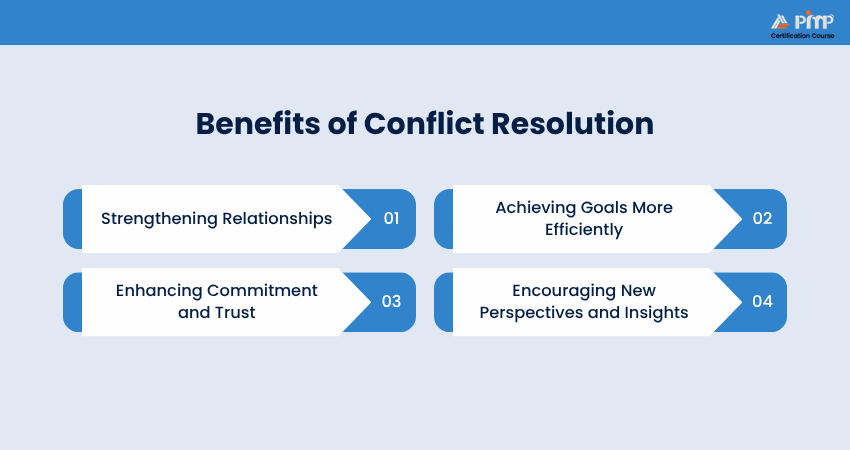
Here are the key benefits of resolving Conflicts effectively:
1) Strengthening Relationships
Conflict Resolution plays a vital role in strengthening workplace relationships. It fosters mutual understanding and respect by encouraging open and honest discussions that clarify misunderstandings before they grow. When disagreements are handled constructively, resentment and long-term grudges are avoided stronger bonds between colleagues are created.
2) Achieving Goals More Efficiently
Conflict Resolution helps teams achieve goals efficiently by removing obstacles that slow progress. It improves productivity and focus, while clear communication makes decision-making and execution smoother. Additionally, reduced tension supports better problem-solving, ensuring projects move forward with greater clarity and efficiency.
3) Enhancing Commitment and Trust
When conflicts are resolved fairly and transparently, trust in leadership and among team members grows. Employees feel valued when their concerns are acknowledged and addressed respectfully. This transparent approach to Conflict Resolution increases commitment, boosts morale, and strengthens engagement.
4) Encouraging New Perspectives and Insights
Conflict Resolution encourages new perspectives and insights within a team. Different viewpoints spark creativity and innovation when discussed constructively. By resolving conflicts positively, organizations promote continuous learning and develop stronger problem-solving skills, creating a dynamic workplace that benefits from varied approaches and fresh ideas.
Lead multiple projects strategically and deliver enterprise level success with
Program Management Professional (PgMP)® Certification
now!
How to Resolve Workplace Conflicts in Five Steps?
A structured approach to Conflict Resolution ensures fair outcomes and prevents disputes from escalating. Below are the key steps to resolving workplace Conflicts efficiently.

1) Recognizing the Conflict
Identifying a Conflict early helps prevent it from growing into a larger issue. Acknowledging disputes allows all parties to address them openly and work towards a constructive solution.
1) Observe changes in team dynamics and communication
2) Identify tension, misunderstandings, or disagreements
3) Encourage open discussions about concerns
4) Avoid ignoring or downplaying emerging Conflicts
5) Distinguish between personal and work-related issues
6) Create a safe space for addressing Conflicts
2) Analyzing the Situation
Understanding the root cause of the Conflict is essential for finding an effective resolution. A detailed analysis ensures that solutions address the underlying issues rather than just the symptoms.
1) Gather facts from all parties involved
2) Identify the needs and concerns of each side
3) Assess how the Conflict affects workplace relationships
4) Consider any past Conflicts that may influence the situation
5) Remain neutral while evaluating the circumstances
6) Focus on facts rather than assumptions or emotions
3) Developing a Resolution Strategy
A well-planned resolution strategy provides a roadmap for addressing Conflicts fairly and constructively. The goal is to create a solution that benefits all parties involved.
1) Explore multiple possible solutions before deciding
2) Involve all relevant stakeholders in the discussion
3) Focus on a win-win outcome for both sides
4) Set clear expectations for behavior and communication
5) Ensure the solution aligns with company policies and values
6) Seek guidance from mediators or HR if necessary
4) Executing the Solution
Implementing the agreed-upon solution requires clear communication and commitment from all parties. Ensuring accountability helps resolve Conflicts successfully.
1) Communicate the resolution plan to everyone involved.
2) Assign responsibilities for implementing the solution.
3) Monitor progress and address any emerging issues.
4) Encourage continuous dialogue to maintain clarity.
5) Foster collaboration to strengthen working relationships.
6) Ensure all parties adhere to agreed-upon actions.
5) Reviewing and Assessing the Outcome
Evaluating the effectiveness of the resolution ensures that the Conflict has been fully addressed. A review process helps prevent future disputes and strengthens workplace harmony.
1) Check if the resolution has met the expected outcomes
2) Gather feedback from those involved
3) Identify lessons learned for future Conflict Resolution
4) Recognize any improvements in team dynamics
5) Adjust Conflict Resolution strategies if needed
6) Document the resolution process for future reference
Drive organizational value by aligning projects with business strategy by joining the
Portfolio Management Professional (PfMP)® Certification
now!
Key Conflict Resolution Strategies
Different resolution methods ensure that workplace disagreements are managed fairly, fostering a positive and productive environment. Below are key strategies for addressing workplace Conflicts.
Informal Resolution
Informal resolution involves addressing Conflicts through open discussions and mutual understanding without formal procedures. This approach helps prevent small issues from escalating into more serious disputes.

Formal Resolution
Formal resolution is necessary when Conflicts cannot be resolved informally or involve serious concerns such as policy violations, discrimination, or misconduct. This approach ensures fairness and adherence to company policies.

Mediation
Mediation is a voluntary Conflict Resolution method where a neutral third party facilitates discussions between Conflicting parties. This approach encourages cooperation and problem-solving.

Arbitration
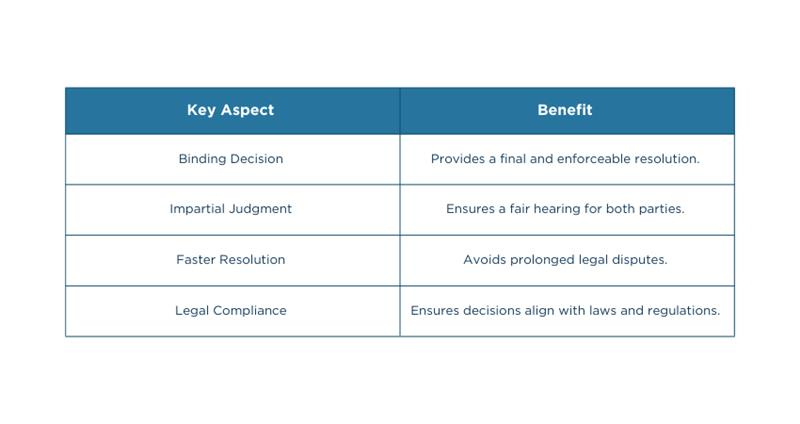
Arbitration is a structured Conflict Resolution method where an impartial third party, known as an arbitrator, makes a binding decision after reviewing the evidence and arguments from both sides. This process is often used when other resolution methods fail or involve legal matters.
Collaborative Problem-solving
Collaborative problem-solving focuses on finding solutions that address the interests of all parties involved. Employees can transform Conflicts into opportunities for innovation and growth by working together.

Advance your project career with proven expertise by joining
Project Management Institute (PMI)® Certification
– Join now!
Five Conflict Resolution Skills in the Workplace
Developing strong Conflict-resolution skills is crucial for maintaining a positive and productive work environment. These skills help individuals navigate disagreements effectively, ensuring workplace harmony and collaboration.
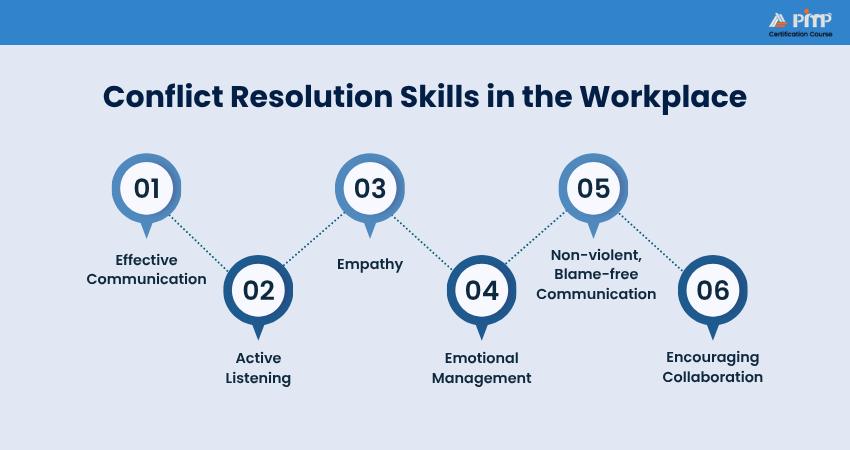
1) Effective Communication
Clear and respectful communication is key to resolving Conflicts constructively. It allows individuals to express concerns openly while maintaining a positive, solution-focused dialogue.
1) Use clear and concise language to avoid confusion
2) Maintain a respectful tone to encourage productive discussions
3) Listen actively before responding to fully understand the issue
2) Active Listening
Active listening ensures that all parties feel heard and understood, preventing misunderstandings. It involves focusing on the speaker, acknowledging their perspective, and responding thoughtfully.
1) Give full attention to the speaker without distractions
2) Show empathy by validating the other person’s feelings
3) Clarify misunderstandings to ensure accurate communication
3) Empathy
Empathy is the ability to understand and share the feelings of others. In Conflict Resolution, it helps individuals look beyond their own perspective and recognize the emotions of others involved.
1) It strengthens professional relationships by promoting mutual understanding
2) It reduces misunderstandings by encouraging perspective-taking
3) It supports collaborative problem-solving through compassion and respect
4) Emotional Management
Emotional Management is the ability to control and regulate emotional reactions during tense situations. It allows people to stay calm and focused, even when disagreements become challenging.
1) It promotes self-awareness and reflection before responding
2) It prevents defensive or impulsive reactions during conflict
3) It supports rational thinking and constructive communication
5) Non-violent, Blame-free Communication
Non-violent and blame-free communication focuses on expressing thoughts and feelings respectfully without criticizing others. It encourages connection, empathy, and understanding rather than confrontation.
1) It promotes clear expression of needs without assigning blame
2) It encourages active listening and respectful dialogue
3) It helps build trust and mutual respect during disagreements
6) Encouraging Collaboration
A collaborative approach to Conflict Resolution fosters teamwork and positive relationships. It ensures that all parties work together to find the best possible solution.
1) Promote teamwork to encourage shared problem-solving
2) Identify common ground to build a mutual understanding
3) Value diverse perspectives to find innovative solutions
Conclusion
In workplaces, disagreements are inevitable, but how we handle them defines the strengths of relationships and the success of teams. Conflict Resolution transforms tensions into understanding and challenges into opportunities for growth. Developing these skills and applying them with the right strategy builds trust, collaboration, and creates a workplace where differences lead to progress.
Take your business analysis skills to the top with
PMI-PBA Certification
– Register now!


 Back
Back

 Topics

 Courses


 10 Aug 2026

 Veronica Davis