Resource Management is the art of making the most of what you have to achieve what you want. From people and time to budgets and tools, it's about shaping how organizations turn plans into results. When managed well, resources drive efficiency, profitability, and sustainable growth.
In this blog, we explore What is Resource Management, its key benefits, the core process behind it and the best practices that help teams stay balanced, productive and ready for future demands. So read on and become the pillar of efficient Resource Management!
What is Resource Management?
Resource Management is the process of planning, allocating, scheduling, and optimizing people, time, budget, and assets to achieve specific objectives efficiently. Its primary aim is to ensure the right resources are available at the right time, in the right quantity, to support successful task and project delivery.
For example, when building a soccer ground, Resource Management involves assigning a skilled workforce, scheduling equipment and materials, allocating land appropriately, and setting aside sufficient budget reserves. This coordinated approach helps maintain progress, manage risks, and complete the project within planned timelines and costs.

The Importance of Resource Management
A good grasp on What is Resource Management is important for a business to survive and thrive in the long run. Here is the importance of Resource Management listed below:
1) Project Resource Management:
Resource Management is useful in managing projects. It helps streamline the key stakeholders’ work by minimizing repetitive tasks and reducing the project budget.
2) Enterprise Resource Management:
The way you manage business resources greatly affects how they will function on a long-term scale. This goes true when you are in resource-intensive industries, from manufacturing to professional services.
3) Project Portfolio Resource Management:
The importance of Resource Management increases for Project Portfolio Management. The main reason behind this is that Portfolio Managers, Program Managers, and Project Management Offices (PMOs) must ensure they allocate resources effectively for multiple projects.
The Benefits of Resource Management
Resource Management delivers several day-to-day advantages that directly support project success and organizational growth:
1) Increasing Project Profit Margins
Proper Resource Management allows for more accurate project estimation. Underestimating required resources often leads to schedule delays and additional costs, such as overtime or expensive Contractors, which reduce profitability.
Using Resource Management software helps create detailed plans for each project phase, balancing costs against budgets and profit targets. This allows organizations to provide reliable quotes and improve forecasting accuracy across future projects.
2) Improving Resource Utilization
People are both the greatest asset and the largest investment for most organizations. Resource Management aims to allocate work properly so that individuals deliver maximum value through productive, billable tasks.
With a clear view of availability, Managers can assign and reassign work efficiently, keeping the workloads balanced and projects on schedule. This not only controls budgets but also improves employee wellbeing and client satisfaction.
3) Informing Recruitment Activity
Sustainable growth depends on having the right skills available at the right time. Insufficient resources can limit new opportunities, while excess capacity increases costs and reduces margins.
Strong Resource Management supports capacity planning by highlighting future demands. This insight helps HR teams to recruit proactively, ensuring that the business is prepared to take on new work with confidence.
4) Improving Future Forecasts
Project-based organizations often rely on estimates informed by fragmented data. This can lead to gaps between predicted and actual outcomes. Resource Management software consolidates historical performance data, helping teams assess estimation accuracy over time.
These insights improve future forecasting around schedules, costs and profitability. This allows organizations to plan with greater certainty and reduced risk.
5) Boosting Employee Engagement
Good Resource Management recognizes individual skills, strengths and preferences, thus assigning work that feels purposeful and aligned with capabilities. High-performing organizations balance business needs with employee wellbeing. Strategic Resource Management maximizes the contribution of knowledge workers. This enables organizations to fully harness talent and creativity to deliver high-quality results.
Turn every project vision into victory with our range of
Project Management Institute (PMI)® Certifications
– Sign up now!
Types of Resource Management
Now that you have a proper understanding of What is Resource Management and its benefits, let’s explore its types. Resource Management comes in various types depending on the projects, departments and companies' requirements:
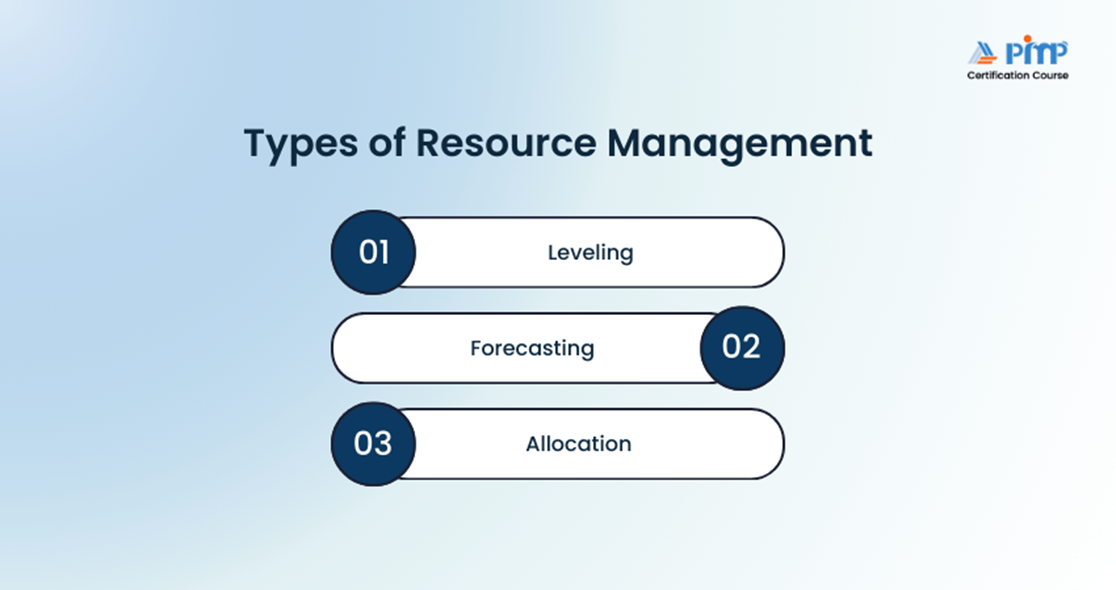
1) Leveling
Leveling Resource Management involves utilizing the resources that aren’t used effectively. These resources are then leveraged efficiently through various means. This is true when you have fewer resources than required and strict task deadlines.
2) Forecasting
Forecasting (as per the name) predicts the required resources and the potential problems that might occur for a certain task. This can be achieved by understanding the project’s scope and goals. Following that, you will need to identify resources to be used for efficient work progress.
3) Allocation
Allocation is defined as maximizing the specific resource usage. This helps you leverage these resources completely, further keeping you on time and within budget.
The Resource Management Process
The Resource Management process begins from the Project Planning stage and continues until its closure. The whole process is called the Resource Management Life Cycle. Here are the key processes involved in the Resource Management Life Cycle:
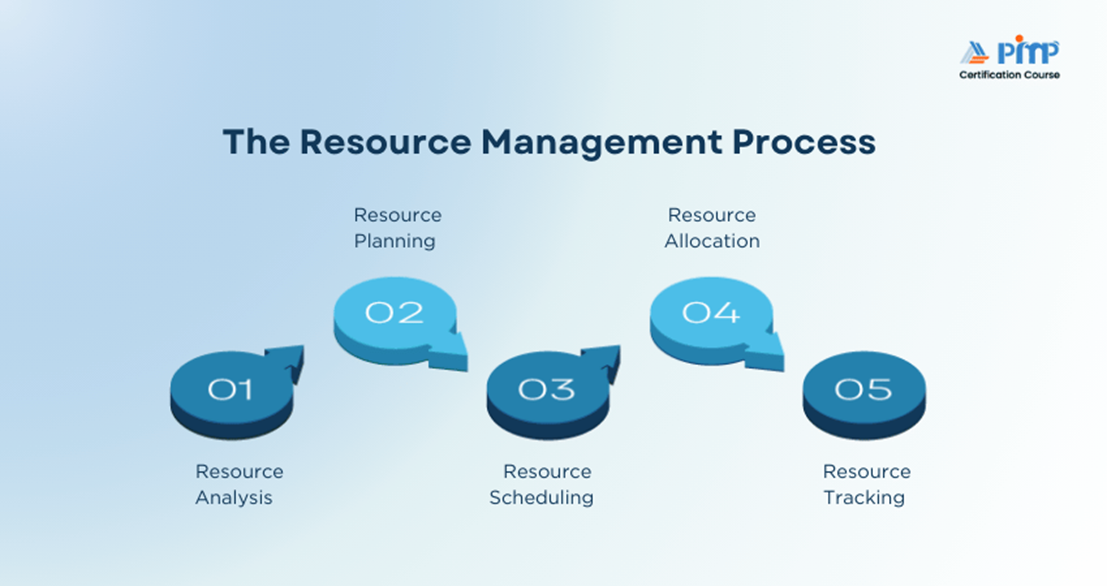
1) Resource Analysis
The Resource Management Life Cycle begins with a Resource Analysis, where the availability of the required resources is measured and whether they’re sufficient to fulfil the demand of the entire project. This stage is critical and forms the foundational stage for the succeeding processes.
2) Resource Planning
Next, the resource requirements and how they will be met for the project are measured. It helps the team to possess vital information, such as project resource descriptions, general guidelines, and quantities needed.
3) Resource Scheduling
This stage involves the availability of the resources at the right time. When these resources are constantly utilized, they become depleted. Thus, to counter this issue, the resource schedule must be accurate to further minimize the lead time.
4) Resource Allocation
In Resource Allocation, the right resource is picked for the particular task. In the previous stage, the supply chain should be maintained. This stage involves choosing the right resources to complete a specific project task at the right time.
5) Resource Tracking
After all the resources are allocated and well on time, the project's performance is gauged. This can be achieved using Workload Charts, Timesheets, and other Resource Management tools. By utilizing this stage, the company can boost its efficiency and large-scale productivity.
Discover your potential in Portfolio Management with our
Portfolio Management Professional (PfMP)® Certification
- Sign up today!
How to Build a Resource Management Plan?
A proper Resource Management plan will always balance structured preparation with flexibility. Whether you are managing a small team or multiple projects, these steps will help create an adaptable approach:
1) Assess Your Resources
Start off by reviewing all resources at your disposal. Record team skills, experience, availability and current workloads to understand real capacity. Assess the physical assets such as equipment, tools, and technology, including maintenance and replacement requirements. Review your financial resources, covering budgets, funding timelines, and cost limitations.
2) Set Clear Objectives
Align your resources directly with the project goals and deliverables. Set measurable indicators for resource use and performance. This includes team capacity, asset utilisation and budget distribution.
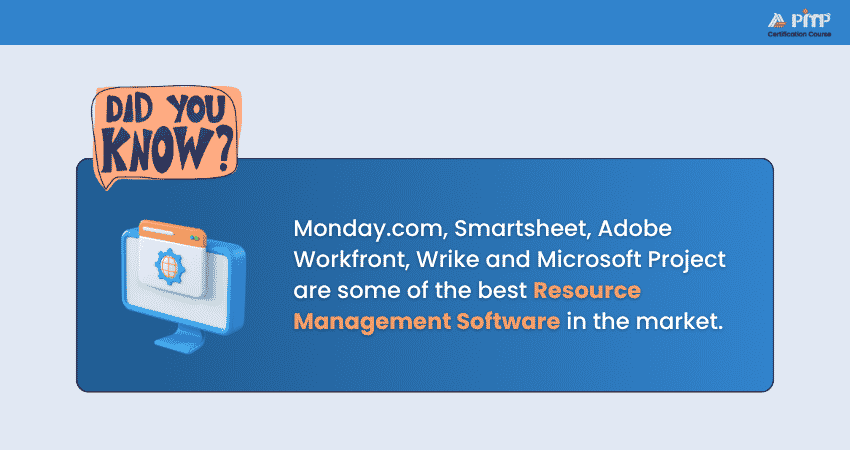
3) Use Resource Management Tools
Project Management platforms like Jira provide visibility across projects, highlight conflicts and support automated scheduling and tracking. These tools can reduce manual effort and improve the accuracy of your planning.
4) Develop a Plan
Set clear processes for allocating resources, managing change requests and approving adjustments. Include contingency capacity and identify risks early on. This must be supported by mitigation strategies to maintain progress.
5) Monitor and Adapt
Conduct regular reviews to track resource utilisation and project progress. Use performance data and stakeholder feedback to identify issues early and make informed adjustments. As project demands evolve, update resource allocations using guidelines to maintain efficiency and support successful outcomes.
How to Become a Resource Manager?
Becoming a Resource Manager comprises certain steps every candidate needs to follow. Here are the steps involved:
1) Obtain Your Degree
Most employers prefer candidates with at least a bachelor’s degree for Resource Management roles. Many professionals in this field hold degrees in business, communications, computer science or finance. subjects such as macroeconomics, business analytics, operations management and Project Management are particularly valuable.
2) Get Work Experience
Hands-on experience is essential for entering Resource Management. Employers typically expect prior exposure to Project Management or industry-specific roles. For instance, aspiring healthcare resource Managers often need experience in positions such as nursing, administration or operational support.
3) Hone the Right Skills
Successful Resource Managers rely on strong interpersonal and organizational abilities, as the role involves working across teams and departments. Building a balance of workplace and technical skills strengthens your profile:
1) Workplace Skills:
These include customer service, prioritization, teamwork, leadership, strategic thinking, and effective interpersonal communication.
2) Technical Skills:
These include project and Resource Management, Data Analysis, interpreting reports, evaluating multiple outcomes and working with technologies such as analytics platforms and CRM systems.
4) Consider Certification
While not mandatory, certifications can boost your credibility and improve career prospects. They spotlight the right expertise and commitment to professional development while helping refine advanced skills. Certifications in resource or Project Management can provide a competitive advantage and support long-term career growth.
Maximize Program Management for business success- Join our
Program Management Professional (PgMP)® Certification
today!
Resource Management Best Practices
Resource Management also comprises certain practices that support the ongoing process. Here are those key Resource Management best practices:
1) Resource Constraints
There are times when certain resources are unavailable. For instance, a piece of equipment is undergoing scheduled maintenance, or a particular team member has been allocated different tasks, limiting their availability. It's important to identify those constraints accurately to plan effectively for any related resource unavailability.
2) Identify the Level of Efforts
Level of effort refers to all those supportive or unplanned activities that help complete the project tasks. These may include transportation of resources from a warehouse or using other team members to support the task completion activity (in case of emergency or deadline meetups).
3) Assembling a Cross-functional Team
There might be cases, especially during the Forecasting stage, where the project demands a bigger picture in efficient and effective planning. For this, the entire organization is considered to gain a broader perspective about task completion.
Conclusion
Resource Management is a broader term that encapsulates all the processes, techniques, and practices for utilizing the available resources more efficiently. Moreover, it involves predicting the resource requirement for performing certain levels of tasks. With time, a clear understanding of What is Resource Management will produce vast opportunities for aspiring Resource Managers worldwide.
Level up your expertise in Business Analysis- Kickstart your
PMI-PBA® Certification
today!


 Back
Back

 Topics

 Courses


 10 Aug 2026

 Veronica Davis