A busy team does not always mean a productive team; the real difference lies in how work is managed. This happens because organizations fail to understand the difference between managing daily operations and managing projects. This is where understanding the difference between Work Management and Project Management becomes important.
While Work Management focuses on everyday tasks, Project Management is designed to complete specific objectives. Knowing when and how to use each approach can transform your workflows. In this blog, we will explore Work Management vs Project Management and help you understand which approach is best for your business needs. Let's dive in!
What is Work Management?
Work Management is the systematic process of organizing, coordinating and tracking everyday business activities to ensure tasks are completed efficiently. It focuses on managing ongoing operations, team responsibilities, workflows and communication across departments.
Many organizations use Work Management software to streamline operations and provide better visibility into ongoing work. Tools like task boards, calendars, workflow dashboards and collaboration platforms are commonly used to manage daily responsibilities.
Why is Work Management Important?
Here are some reasons why work management is important:
1) Improves Productivity: Work Management helps employees understand their tasks, priorities and deadlines. This reduces confusion and allows teams to complete their work quickly.
2) Enhances Teamwork: A proper Work Management system improves communication and collaboration between team members. Everyone can track progress, share updates and stay aligned with goals.
3) Organizes Workflows: Work Management creates a structured workflow for handling tasks and responsibilities. This helps businesses avoid delays and manage workloads smoothly.
4) Increases Visibility: Managers can easily monitor task progress, employee workloads and overall team performance. Better visibility helps identify issues before they become major problems.
5) Supports Flexibility: Businesses often face changing priorities and deadlines. Work Management helps teams quickly adjust tasks and workflows without affecting productivity.
6) Improves Time Management: Employees can plan and complete tasks on time when work is organized properly. This helps teams meet deadlines consistently.
What is Project Management?
Project Management involves using knowledge, skills, tools, and techniques to plan and manage project activities to achieve specific business goals. It involves guiding a project from initiation to completion while balancing scope, cost, quality and deadlines.
Unlike daily operational work, Project Management focuses on temporary objectives that have a clear beginning and end. Projects are usually created to deliver a unique product, service or result, such as developing software, launching a product, organizing an event or implementing a new business system.
Why is Project Management Important?
Here are some key benefits of Project Management:
1) Improves Project Planning: Project Management helps businesses plan tasks, schedules, budgets and resources in a structured way. Proper planning reduces confusion and improves workflow efficiency.
2) Ensures Timely Completion: Project Management helps teams track progress and complete tasks within the set timeline. This reduces delays and keeps projects on schedule.
3) Effective Resource Management: Project Managers allocate people, budgets and tools carefully to avoid wastage and improve productivity throughout the project.
4) Reduces Project Risks: Every project may face challenges or unexpected issues. Project Management helps identify risks early and create strategies to handle them.
5) Enhances Quality Standards: It ensures the final outcome meets the required quality, business objectives and stakeholder expectations.
6) Increases Project Success Rates: With proper planning and execution, Project Management improves the chances of completing projects successfully and achieving business goals.
Improve your understanding of project management concepts with the PMI Project Management Ready® Certification Training – Register today!
Work Management vs Project Management
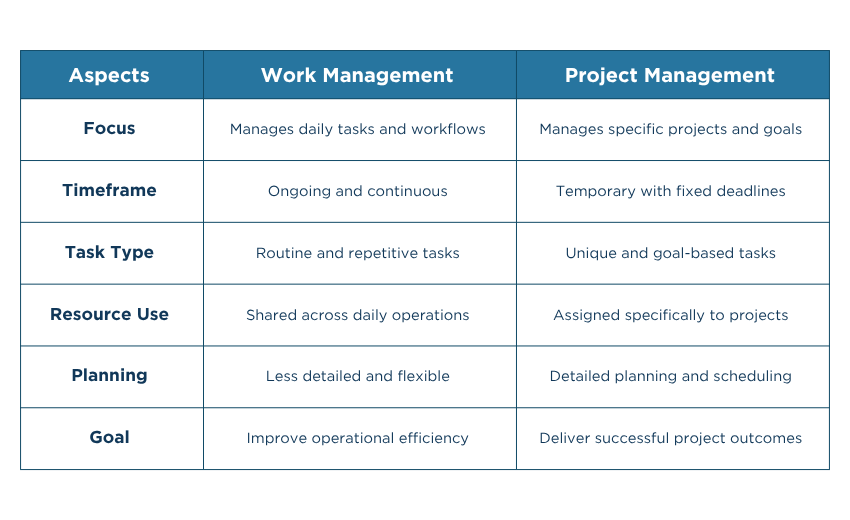
Although Work Management and Project Management may sound similar, they differ significantly in their purpose, structure and execution. Understanding these differences helps organizations choose the right approach for different types of work. Here is a detailed outlook on Work Management vs Project Management:
1) Focus
The primary focus of Work Management is handling ongoing operational activities and ensuring daily workflows run smoothly. It supports continuous business functions such as customer service, administration, marketing operations and employee coordination.
On the other hand, Project Management focuses on achieving a specific goal or outcome. It is designed to complete a defined project. The emphasis is on delivering unique results rather than maintaining ongoing operations.
2) Timeframe
Work Management deals with continuous work that does not have a fixed end date. This is because operational tasks continue as long as the business operates.
On the contrary, Project Management has a defined beginning and end. Once project objectives are completed, the project officially closes. This difference makes Project Management more deadline-driven, while Work Management focuses on maintaining long-term operational efficiency.
3) Resource Allocation
In Work Management, resources are allocated to support ongoing business operations. Teams may handle multiple responsibilities simultaneously, and workloads are adjusted regularly based on priorities.
However, Project Management involves assigning resources specifically for project tasks and deliverables. Budgets, timelines and resource plans are carefully managed to ensure successful project completion.
4) Structure
Work Management tends to have a flexible structure that adapts to changing operational needs. Tasks may shift frequently depending on customer demands, business priorities or workload changes.
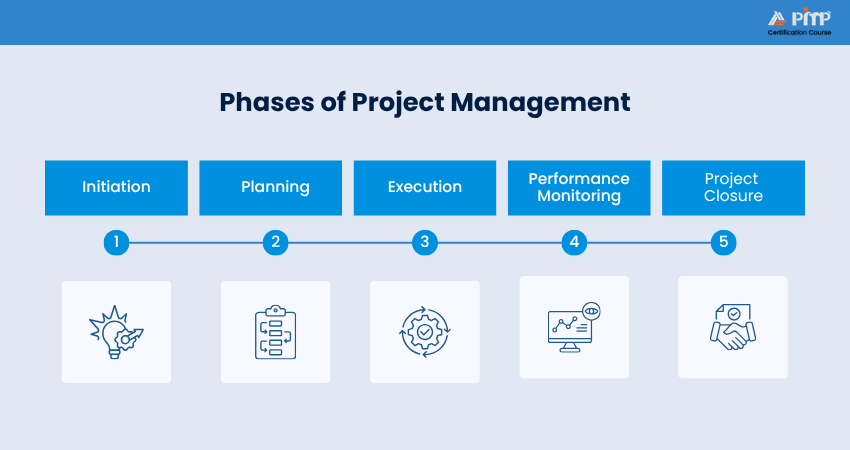
On the contrary, Project Management follows a formal and structured process. Projects usually include defined phases, milestones, schedules, risk assessments and reporting systems. This structured approach improves coordination and ensures clarity in roles and responsibilities throughout the project lifecycle.
5) Collaboration
Both Work Management and Project Management require teamwork, but collaboration styles differ slightly. Work Management promotes continuous collaboration across departments to maintain daily operations. Communication is often informal and ongoing.
On the other side, Project Management involves structured collaboration focused on achieving project goals. Teams typically work together for a limited period and follow defined communication plans, meetings and reporting procedures.
Explore the best practices for project scheduling and timeline control with the PMI Scheduling Professional (PMI-SP)® Certification Training – Sign up now!
Choosing the Right Approach for Your Business
Choosing between Work Management and Project Management depends on the nature of your business activities, goals and operational needs. In many cases, organizations use both approaches together. Here are some factors to consider when choosing the right approach:
When to Choose Work Management?
You can choose Work Management if:
1) Your business focuses heavily on ongoing operations
2) Teams manage recurring tasks daily
3) Flexibility and continuous workflow management are essential
4) You need better visibility into operational productivity
5) Collaboration across departments is a priority
Work Management can better suit operational departments such as customer service, Human Resources (HR), finance and administrative teams.
When to Choose Project Management?
You can choose Project Management if:
1) You are working toward a specific objective
2) The work has a fixed timeline and budget
3) You need structured planning and risk management
4) Deliverables must meet defined quality standards
5) Cross-functional teams are required for temporary initiatives
Project Management is ideal for product development, IT implementations, marketing campaigns and construction projects.
When to Use Both Approaches Together?
Many businesses benefit from combining Work Management and Project Management. Daily operations can be managed through Work Management systems, while major initiatives are handled using Project Management methodologies.
For example, a marketing team may use Work Management to coordinate daily content creation while applying Project Management techniques to launch a large advertising campaign. This combined approach helps organizations maintain operational efficiency while driving strategic growth and innovation.
Conclusion
Managing work is essential for every business, regardless of its size or industry. Both Work Management and Project Management play an important role in organizing tasks and helping teams achieve better results. Understanding Work Management vs Project Management differences helps businesses choose the right strategy for a productive work environment.
Prepare for successful project delivery with the Project Management Institute (PMI)® Certification Training – Join now!


 Back
Back

 Topics

 Courses


 10 Aug 2026
 Veronica Davis