Have you ever worked on a project where one team was waiting for updates, another was handling unexpected changes, and deadlines kept moving without clear communication? This is a common challenge in many organizations today. When projects involve multiple teams, tools, and priorities, even small coordination issues can lead to delays, confusion, budget overruns, and missed business goals.
This is why Integrated Project Management is important for modern businesses. It connects teams, processes, resources, and business goals into one unified system to improve collaboration, project visibility, and overall efficiency. This blog explores its key components, implementation steps, benefits, and more. Let’s begin!
What is Integrated Project Management?
Integrated Project Management (IPM) is a Project Management approach that combines all project activities, teams, and processes into one connected system. It integrates planning, budgeting, scheduling, communication, execution, and monitoring to improve coordination and project efficiency.
Integrated Project Management helps organizations manage complex projects more effectively by improving collaboration, reducing delays, and keeping projects aligned with business goals. It also helps Project Managers track progress, manage resources, and make better decisions throughout the project lifecycle.
Importance of Integrated Project Management
Projects may face delays and confusion without proper coordination. Project Integration Management creates a connected environment where all activities align with common project goals. Here are some key reasons why it is important:
1) Improves Coordination and Synchronization:
Integrated Project Management helps ensure that all project activities, teams, and processes work together smoothly throughout the project lifecycle.
2) Clarifies Roles and Responsibilities:
It helps stakeholders and team members clearly understand their duties, responsibilities, and project expectations.
3) Keeps Projects on Schedule:
By improving communication and visibility, Integrated Project Management helps teams track progress and manage project timelines more effectively.
4) Supports Performance Management:
Project Managers can monitor team performance, track deliverables, and implement feedback to improve overall project outcomes.
5) Improves Decision-making:
Structured project integration provides clear processes and documentation, helping organizations make informed decisions during each project phase.
6) Aligns Project Goals and Deliverables:
It helps coordinate project timelines, results, and business objectives to ensure successful project completion.
Advance your Agile Project Management career with the
PMI-ACP® Certification Training
– Register now!
Components of Integrated Project Management
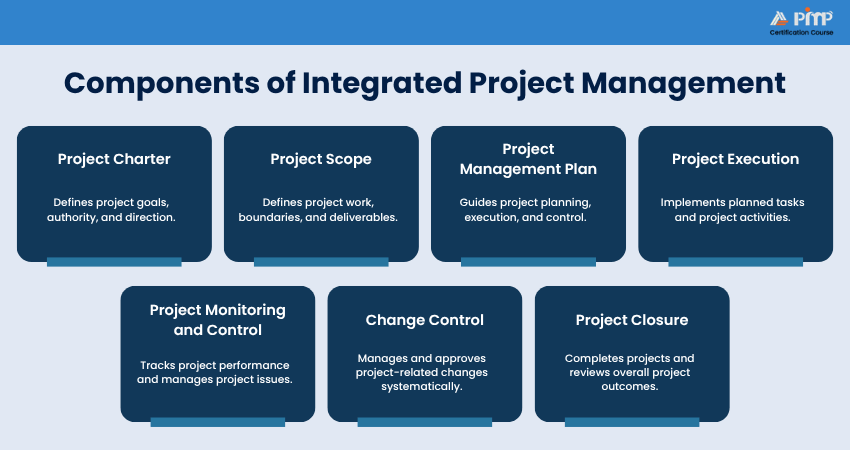
Integrated Project Management includes key components that help organizations manage projects effectively throughout the project lifecycle. These components work together to ensure alignment, coordination, and consistency across all project activities. Below are the main components of IPM:
1) Project Charter
A Project Charter is the official document that formally authorizes the project. It defines the project objectives, scope, stakeholders, timelines, budget, and overall purpose while providing clear direction to the Project Manager and project team. It also establishes project authority and stakeholder expectations clearly.
2) Project Scope
Project Scope defines the work, deliverables, objectives, and boundaries of the project. It helps ensure that all stakeholders understand what the project will deliver and prevents unnecessary changes or scope creep during execution. Clear scope definition improves planning and project accountability significantly.
3) Project Management Plan
The Project Management Plan outlines how the project will be planned, executed, monitored, controlled, and completed. It combines different management plans such as scheduling, budgeting, communication, risk management, and resource planning into one structured framework.
4) Project Execution
Project Execution involves carrying out the tasks and activities defined in the project plan. During this stage, teams coordinate resources, complete deliverables, manage communication, and ensure project activities remain aligned with project goals. Effective execution helps maintain workflow efficiency and team collaboration.
5) Project Monitoring and Control
Project Monitoring and Control focuses on tracking project performance, timelines, budgets, risks, and resource utilization. It helps Project Managers identify issues early, implement corrective actions, and ensure the project stays aligned with planned objectives. Continuous monitoring supports better project stability and performance management.
6) Change Control
Change Control is the process of managing modifications to project scope, schedules, budgets, or deliverables. It helps organizations review, approve, and implement changes systematically while minimizing project disruptions. Proper change control improves project flexibility and operational consistency effectively. It ensures that all changes are documented, evaluated, and aligned with project goals before implementation.
7) Project Closure
Project Closure is the final stage where the project or project phase is formally completed. This process includes verifying deliverables, obtaining stakeholder approval, completing documentation, and reviewing lessons learned for future project improvements. Proper closure helps evaluate overall project success and organizational learning. It provides valuable insights that support continuous improvement in future projects.
How to Implement Integrated Project Management?
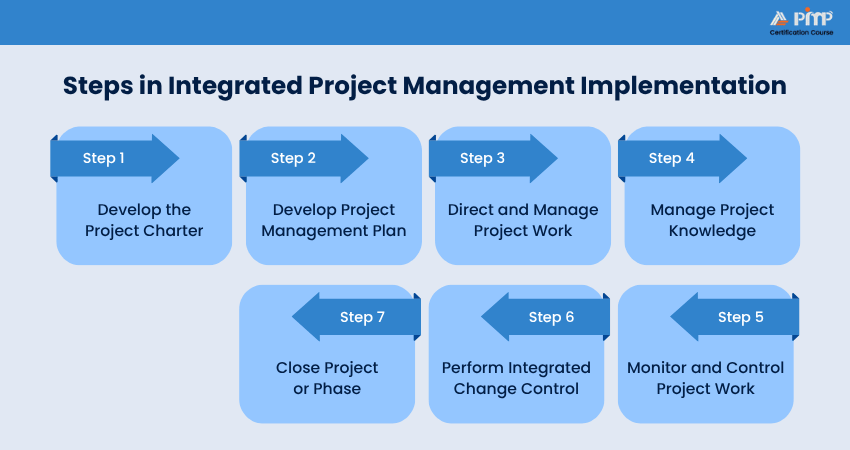
Implementing Integrated Project Management requires careful planning, coordination, and continuous monitoring. A structured approach ensures that all project elements are aligned and managed efficiently. Below are the key steps involved:
1) Develop the Project Charter
The Project Charter is the official document that formally starts the project. It defines the project objectives, scope, stakeholders, budget, timeline, and overall purpose. This document provides clear direction and authorizes the Project Manager to manage project activities. It ensures that all stakeholders agree on the project’s purpose before execution begins.
2) Develop Project Management Plan
The Project Management Plan outlines how the project will be executed, monitored, controlled, and completed. It combines plans related to scheduling, budgeting, communication, risk management, quality management, and resource allocation into one structured framework. This plan serves as a roadmap guiding the entire project lifecycle.
3) Direct and Manage Project Work
This step involves executing the tasks and activities defined in the project plan. Project Managers coordinate teams, allocate resources, monitor workflows, and ensure that project deliverables are completed according to the planned objectives and timelines. Effective coordination during this stage ensures smooth workflow and timely delivery.
4) Manage Project Knowledge
Project knowledge management focuses on collecting, sharing, and using valuable information gained throughout the project lifecycle. This includes lessons learned, project experiences, technical knowledge, and best practices that can improve future projects and decision-making.
5) Monitor and Control Project Work
This stage involves tracking project performance to ensure the project remains aligned with schedules, budgets, quality standards, and business goals. Project Managers monitor progress, identify issues, manage risks, and implement corrective actions when necessary.
6) Perform Integrated Change Control
Projects often experience changes in requirements, timelines, budgets, or resources. Integrated Change Control helps evaluate, approve, and manage these changes systematically to minimize disruption and maintain project stability. It ensures that all changes are handled in a controlled and transparent manner.
7) Close Project or Phase
The final step involves formally completing the project or a specific project phase. This includes verifying deliverables, obtaining stakeholder approval, completing documentation, evaluating project performance, and recording lessons learned for future improvement. A structured closure process ensures project success is properly documented and evaluated.
Gain practical project skills for future career opportunities with confidence through the
PMI Project Management Ready® Certification Training
– Join now!
Benefits of Integrated Project Management
Integrated Project Management improves coordination, visibility, and overall project efficiency by connecting teams, processes, and business goals. It ensures that all project activities are aligned and managed in a unified way, leading to better outcomes and reduced operational gaps. Below are some key benefits of IPM:
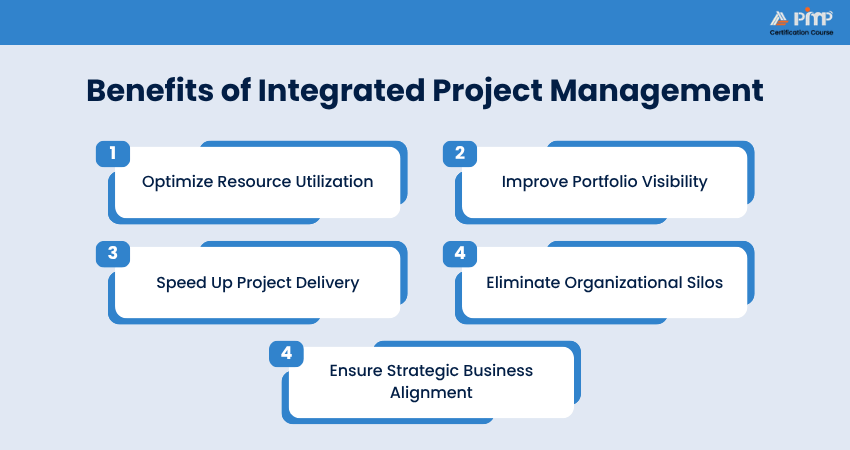
1) Optimize Resource Utilization
Integrated Project Management helps organizations allocate resources more effectively by improving visibility into workloads, project demands, and team capacity. This reduces resource conflicts, prevents duplicated efforts, and supports better workforce planning across projects. It also improves productivity and overall operational efficiency significantly.
2) Improve Portfolio Visibility
It provides a centralized view of all projects, timelines, dependencies, budgets, and performance metrics within the organization. Improved portfolio visibility helps leaders make informed decisions, manage priorities effectively, and identify potential risks before they affect project outcomes.
3) Speed Up Project Delivery
Better coordination and communication between teams help reduce delays and workflow disruptions. When departments collaborate from the beginning of the project, organizations can complete tasks faster and improve overall project delivery timelines. This also enhances productivity and supports faster business outcomes.
4) Eliminate Organizational Silos
Integrated Project Management improves collaboration between departments by creating shared visibility and accountability across teams. This encourages better communication, stronger teamwork, reduced duplication of work, and improved alignment between different business functions.
5) Ensure Strategic Business Alignment
It helps organizations ensure that projects remain aligned with business objectives and long-term strategies. By connecting project activities directly to organizational goals, businesses can prioritize high-value initiatives and improve overall strategic decision-making. This also supports better resource allocation and business growth.
Build strong Project Management foundations through the
Certified Associate in Project Management (CAPM)® Training
– Join now!
Future Trends in Integrated Project Management
Project Management continues to evolve with changing business needs and technological advancements. Modern organizations are increasingly adopting digital tools and flexible methodologies to improve project integration and efficiency. Below are some emerging trends shaping the future of Integrated Project Management:
1) Hybrid IPM Methodologies
Many organizations combine traditional Project Management methods with Agile approaches to create more flexible project environments. Hybrid IPM methodologies help teams improve collaboration, maintain operational control, and manage projects more efficiently across different business needs.
2) AI and Automation in Project Integration
Artificial Intelligence (AI) and automation are transforming Integrated Project Management by improving decision-making and reducing manual work. AI-powered tools help organizations predict risks, optimize resources, automate routine tasks, and improve workflow efficiency for faster project execution.
3) Automated Cross-platform Workflows
Modern organizations often use multiple software platforms for communication, scheduling, reporting, and resource management. Automated cross-platform workflows help connect these systems and ensure smooth information sharing between departments. This reduces manual errors, improves process efficiency, and speeds up project delivery.
4) Advanced Visual Project Management Dashboards
Advanced visual dashboards provide real-time visibility into project performance, timelines, budgets, risks, and resource utilization. These dashboards help stakeholders understand project progress more clearly and make faster, data-driven decisions. Interactive reporting and visual analytics also improve project monitoring and strategic planning.
Conclusion
Integrated Project Management helps organizations improve coordination, streamline workflows, and align projects with business goals through one connected system. By combining effective planning, collaboration, monitoring, and modern technologies, businesses can reduce project challenges, improve efficiency, and deliver successful outcomes in today’s fast-changing project environments.
Strengthen your Project Management expertise with the
Project Management Institute (PMI)® Certification Training
– Join now!


 Back
Back

 Topics

 Courses


 10 Aug 2026
 Richard Harris