Every successful project relies on more than just planning, scheduling, and execution. Behind the scenes, organizations must acquire the right products, services, materials, and expertise to keep projects moving forward. This is where Project Procurement Management plays a vital role.
From selecting suppliers and negotiating contracts to managing vendor relationships and ensuring timely delivery, effective procurement helps organizations control costs, reduce risks, and achieve project objectives efficiently. In this blog, we will explore what Project Procurement Management is, why it matters, the key steps involved in the procurement process, and best practices for creating an effective Project Procurement Management plan. Let's dive in!
What is Project Procurement Management?
Project Procurement Management is the process of acquiring the products, services, or expertise needed from external suppliers to successfully complete a project. It involves identifying procurement requirements, selecting vendors, negotiating contracts, managing supplier relationships, and ensuring that purchased goods or services are delivered on time, within budget, and meet the required quality standards.
Before procuring externally, organizations must evaluate whether the required goods or services should be produced in-house or sourced from third-party providers. Once external procurement is determined to be the most practical and cost-effective option, Procurement Management helps oversee the entire purchasing process, promoting vendor coordination, cost control, risk management, and successful project delivery.
Why is Project Procurement Management Important?
Project Procurement Management helps organizations acquire the resources and services needed for successful project delivery. Below are a few reasons why it is important:
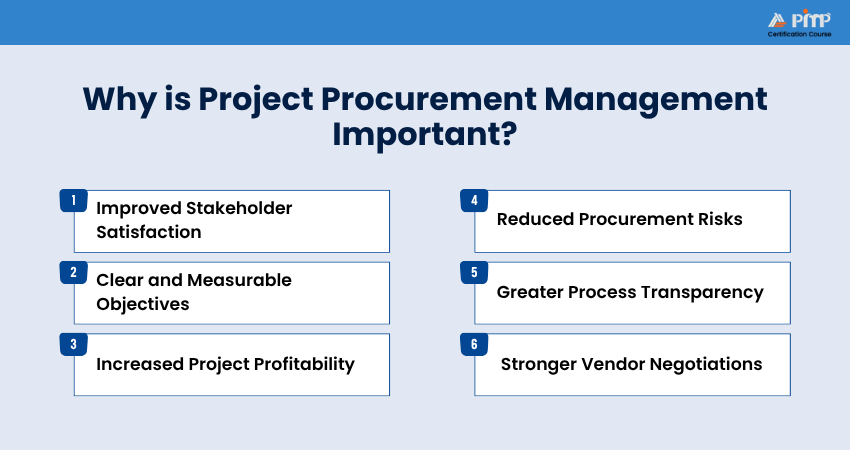
1) Improved Stakeholder Satisfaction
Effective procurement ensures that project requirements are met through reliable suppliers who deliver quality goods and services on schedule. When projects achieve their objectives within agreed budgets and timelines, stakeholders gain greater confidence in project performance and outcomes.
2) Clear and Measurable Objectives
Procurement planning helps define precise requirements, expectations, and performance criteria before purchasing decisions are made. This provides a clear framework for evaluating supplier performance, monitoring progress, and measuring project success throughout the procurement lifecycle.
3) Increased Project Profitability
Strategic procurement helps organizations optimize costs by selecting suppliers that offer the best balance of quality, reliability, and value. Effective contract management and supplier negotiations can reduce unnecessary expenditure, contributing to stronger financial performance and improved project profitability.
4) Reduced Procurement Risks
Procurement Management enables organizations to identify, assess, and mitigate potential risks before they affect project delivery. Careful supplier evaluation, contract controls, and risk management practices help minimize disruptions, delays, compliance issues, and unexpected costs.
5) Greater Process Transparency
A structured procurement process promotes accountability by ensuring that supplier selection, evaluation criteria, and purchasing decisions are clearly documented. This transparency builds trust among stakeholders and supports informed decision-making throughout the project.
6) Stronger Vendor Negotiations
Procurement Management strengthens an organization's ability to negotiate favorable pricing, contract terms, delivery schedules, and service agreements. Strong negotiations help maximize value, improve supplier relationships, and support successful project execution.
Develop the mindset of an Agile Leader with the
PMI-ACP® Certification Training
– Register now!
Procurement Documents
Various documents are used throughout the procurement process to communicate requirements, gather supplier information, and evaluate potential vendors. Some of the most common procurement documents are listed below:
1) Request for Information (RFI)
A Request for Information (RFI) is used during the early stages of procurement to gather general information from potential suppliers. It helps organizations understand the market, assess vendor capabilities, and explore available solutions before defining detailed project requirements or issuing formal procurement requests.
2) Request for Proposal (RFP)
A Request for Proposal (RFP) is issued when organizations require detailed solutions from suppliers to address specific project needs. It outlines project objectives, requirements, timelines, and evaluation criteria, allowing vendors to submit comprehensive proposals that explain how they will deliver the required products or services.
3) Request for Quotation (RFQ)
A Request for Quotation (RFQ) is used when project requirements are clearly defined, and the primary focus is on obtaining pricing information. Suppliers provide quotations based on specified products, services, quantities, and delivery requirements, enabling organizations to compare costs and select the most cost-effective option.
Procurement Management Process
Before procuring goods or services, organizations should follow a structured procurement process to ensure purchasing decisions align with project requirements, budgets, and timelines. The key stages of the Procurement Management Process are outlined below:
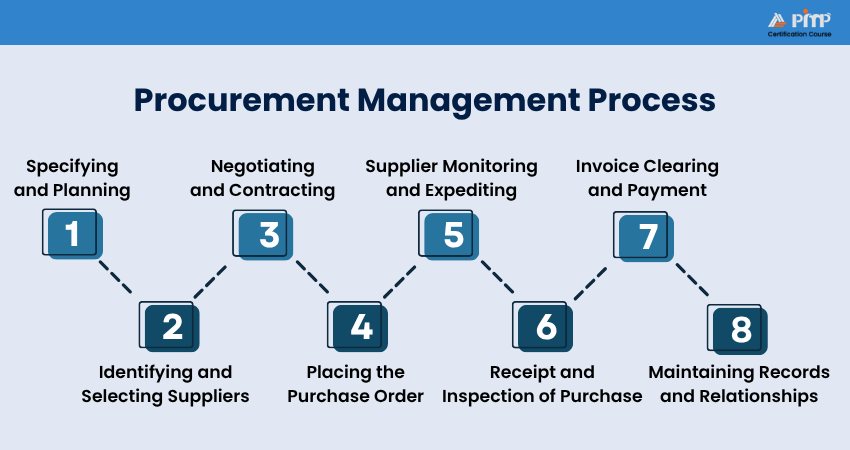
1) Specifying and Planning
This stage involves identifying what goods or services are required and defining detailed specifications, budgets, timelines, and quality expectations. Proper planning helps ensure procurement activities align with project objectives and business needs.
2) Identifying and Selecting Suppliers
Organizations research potential suppliers and evaluate them based on factors such as cost, quality, experience, reliability, and delivery capabilities. The most suitable supplier is selected based on predefined evaluation criteria.
3) Negotiating and Contracting
Once a supplier is chosen, both parties negotiate pricing, delivery schedules, payment terms, and service requirements. These agreements are documented in a contract to establish clear expectations and responsibilities.
4) Placing the Purchase Order
After the contract is finalized, a Purchase Order (PO) is issued formally to the selected supplier to authorize the procurement of goods or services. The purchase order outlines quantities, prices, delivery dates, and other important purchasing details.
5) Supplier Monitoring and Expediting
Expediting involves monitoring supplier progress to ensure goods or services are delivered according to the agreed schedule. This helps identify and resolve potential delays before they impact project timelines.
6) Receipt and Inspection of Purchase
When goods or services are delivered, they are inspected to verify that they meet the required specifications, quality standards, and contractual requirements. If goods or services do not meet the required standards, procurement teams coordinate with suppliers to arrange replacements, corrections, or remediation.
7) Invoice Clearing and Payment
Once goods or services have been received and inspected, suppliers submit invoices for payment. It is reviewed and matched against purchase orders, delivery records, and contract terms. Once verified, payment is processed according to the agreed payment schedule.
8) Maintaining Records and Relationships
The final step involves maintaining procurement records, contracts, invoices, supplier evaluations, and performance reports for future reference and compliance purposes. Building strong supplier relationships also supports better collaboration and future procurement success.
Build the Project Management skills that employers value with
PMI Project Management Ready® Certification Training
– Join now!
Steps in the Procurement Management Plan
A Procurement Management Plan provides a structured framework for acquiring the goods and services required to support project objectives. The following steps help organizations establish clear procurement procedures.
1) Define Project Scope
The first step is to clearly define the
Project Scope
and identify the products, services, equipment, or expertise required to achieve project objectives. This stage also involves conducting a make-or-buy analysis to determine which requirements should be produced in-house and which should be procured externally. A well-defined scope helps prevent unnecessary purchases and ensures procurement activities remain aligned with project goals.
2) Define Procurement Requirements
Once the scope is established, project teams determine exactly what needs to be procured. This includes creating detailed specifications, quality standards, quantity requirements, budget expectations, and delivery requirements to guide supplier selection and ensure that procured goods or services fully meet project needs.
3) Outline Milestones and Purchasing Timelines
Procurement activities should be aligned with project schedules. Establishing procurement milestones and purchasing timelines ensures that goods and services are acquired when needed, reducing delays and supporting smooth project execution. Allowing enough time for suppliers to prepare and deliver resources helps prevent procurement delays that may affect project progress.
4) Identify Stakeholders and Decision-makers
A procurement plan should clearly identify stakeholders involved in procurement decisions. Defining roles and responsibilities, including who has the authority to approve contracts of different values, helps improve accountability, streamline communication, and ensure purchasing decisions are made efficiently.
5) Define Vendor Evaluation Criteria
Supplier evaluation criteria should be established before the vendor selection process begins. Factors such as cost, quality, experience, reliability, financial stability, compliance, and delivery capabilities can be used to assess and compare potential suppliers. This ensures that the most suitable vendor is selected for each procurement requirement.
6) Design the Bidding and Purchasing Process
The procurement plan should outline how suppliers will be invited to bid, how proposals will be evaluated, and how contracts will be awarded. A structured bidding process promotes fairness, consistency, and transparency in supplier selection.
7) Build an Approval Workflow
An approval workflow defines the steps required before procurement decisions can be finalized. Establishing approval levels for purchases, contracts, and budget allocations helps maintain financial control and reduces the risk of unauthorized spending. This means that all procurement decisions are reviewed and sanctioned by the appropriate stakeholders.
8) Track Procurement KPIs
Key Performance Indicators (KPIs) should be established to measure procurement effectiveness. Metrics such as supplier performance, procurement cycle time, cost savings, contract compliance, and on-time delivery rates help organizations evaluate procurement success and identify opportunities for improvement.
Lead complex project initiatives effectively with the
Program Management Professional (PgMP)® Certification Training
– Register now!
Best Practices for a Project Procurement Management Plan
Implementing effective procurement practices helps organizations improve efficiency, maintain cost control, and ensure procurement activities support project objectives. Consider the following best practices when developing a Procurement Management Plan:
1) Establish a Clear Procurement Policy: Define procurement procedures, approval hierarchies, and purchasing guidelines to ensure consistency, accountability, and compliance across all procurement activities.
2) Create Structured Approval Processes: Set clear approval workflows based on factors such as project priority, spending limits, contract terms, and procurement risk to support informed decision-making.
3) Standardize Procurement Procedures: Use consistent processes for requisitions, supplier evaluations, purchasing, and contract management to reduce confusion and improve operational efficiency.
4) Leverage Procurement Automation Tools: Implement automated procurement systems to simplify purchasing, improve accuracy, and support faster procurement cycles.
5) Enhance Visibility and Spend Control: Use centralized procurement platforms to monitor purchases, track budgets, manage spending, and maintain oversight throughout the procurement lifecycle.
6) Maintain Strong Supplier Relationships: Developing strong relationships with reliable suppliers helps improve communication, service quality, and more dependable supplier partnerships.
7) Strengthen Stakeholder Communication: Ensure all stakeholders understand procurement policies, responsibilities, and expectations through regular communication and training.
8) Monitor Procurement Performance: Track procurement metrics such as supplier performance, cost savings, contract compliance, and delivery timelines to identify opportunities for continuous improvement.
Conclusion
Project Procurement Management is a critical component of successful project delivery, ensuring that the necessary goods, services, and resources are acquired efficiently and cost-effectively. By following structured procurement processes, maintaining strong supplier relationships, and implementing effective procurement practices, organizations can reduce risks, control costs, improve quality, and increase the likelihood of achieving project objectives on time and within budget.
Improve project delivery and business performance Project Management Institute (PMI)® Certification Training – Register now!


 Back
Back

 Topics

 Courses


 10 Aug 2026
 Maria Thompson