Successful projects are built upon clear, purposeful communication that keeps everyone aligned and moving forward. Without it, delays, confusion, and costly mistakes are inevitable. This is where Project Communication Management plays a vital role. It ensures that the information reaches the right people at the right time and smooth information flow between stakeholders.
When done well, it reduces confusion, builds trust, and helps teams collaborate better. In a fast-paced environment, strong Communication in Project Management is the key to project excellence. In this blog, we’ll explore what is Project Communication Management, its importance, key processes, benefits and best practices for achieving project success. So, read on!
What is Project Communication Management?
Project Communication Management is a vital set of processes that ensures project information is shared with the team and stakeholders at the right time and in a clear, understandable way. Project Managers use appropriate tools and techniques to create and regularly review a communication plan to reduce the risk of misunderstandings and conflicts.
Since communication is a key part of Project Management, Project Managers often spend significant time interacting with the team and stakeholders. By supporting timely and accurate information sharing, Project Communication Management enables informed decision-making, strengthens stakeholder engagement, and improves the chances of achieving project objectives.

Why is Project Communication Management Important?
Project Communication Management plays a key role in keeping projects organized and ensuring everyone involved understands their roles, responsibilities, and expectations. It is about real human connection, where Project Managers make an effort to communicate honestly and authentically.
When communication is well planned and consistently managed, project teams can coordinate their work effectively, respond quickly to changes, and make informed decisions based on accurate information. It also strengthens stakeholder confidence by providing regular updates on project progress, risks, and milestones. It helps minimize conflicts, reduce delays, and improve collaboration, ultimately delivering projects on time, within budget, and in line with business objectives.
Types of Communication in Project Management
Communication in Project Management takes many forms, each serving a specific purpose throughout the project lifecycle. Choosing the right communication method helps ensure information is shared clearly, efficiently, and with the right audience. Below are the most common types:
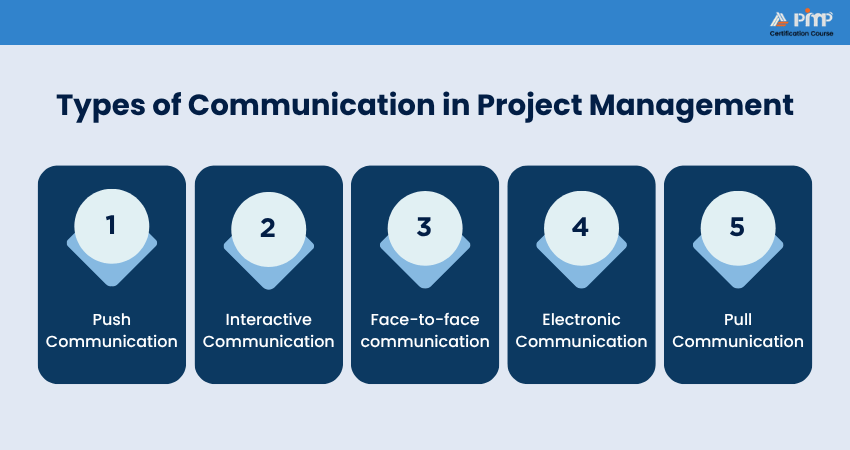
1) Push Communication
Push communication is all about sharing information without expecting an immediate response. It is useful for sending things like meeting notes, updates, or announcements. Project Managers often use emails, memos, newsletters, project reports, or formal letters to keep everyone informed.
While the sender ensures the information is delivered, it is the recipient's responsibility to review and act on it where necessary. When used effectively, it keeps stakeholders informed while reducing the risk of miscommunication or missed updates.
2) Interactive Communication
Good Project Communication Management works best when it is interactive; when everyone is involved and can respond in real time. Tools like video calls, live chats, and phone conversations make this possible, especially when teams are spread out.
It is a two-way exchange of information where participants actively discuss ideas, ask questions, and provide feedback. This type of communication encourages collaboration, resolves issues quickly, and ensures everyone has a shared understanding of project objectives.
3) Face-to-face communication
Face-to-face communication involves direct, in-person conversations between project team members and stakeholders. It is one of the most effective communication methods because it allows for immediate feedback, clearer understanding through verbal and non-verbal cues, and quicker resolution of complex issues.
It is especially valuable during negotiations, brainstorming sessions, and decision-making meetings. In addition, direct conversations help Project Managers understand how team members feel and ensure that everyone truly understands what is being communicated.
4) Electronic Communication
Electronic communication uses digital platforms and technology to exchange project information efficiently. Teams communicate through emails, instant messaging applications, Project Management software, video conferencing tools, and collaboration platforms.
Popular tools include Trello, Asana, Wrike, Microsoft Teams, Slack, and Airtable. This communication method is particularly useful for remote and hybrid teams, enabling real-time collaboration regardless of location. Internal portals and websites also allow team members to access updates and track project progress from anywhere.
5) Pull Communication
Pull communication works well for people who prefer to take in information at their own pace. Instead of sending information directly, it is stored in a central place where team members can access it whenever they need it.
Examples include project dashboards, shared document repositories, intranet portals, and knowledge bases. Its main advantage is flexibility, allowing team members to access information whenever they need it. When choosing this approach, it’s important to consider things like team size and location to make sure it is effective.
Learn Project Management best practices with
Certified Associate in Project Management (CAPM)® Course
- Register today!
Project Communication Management Process
Managing communication in a project really comes down to a few simple, practical steps. Here’s how the Project Communication Management process typically plays out:
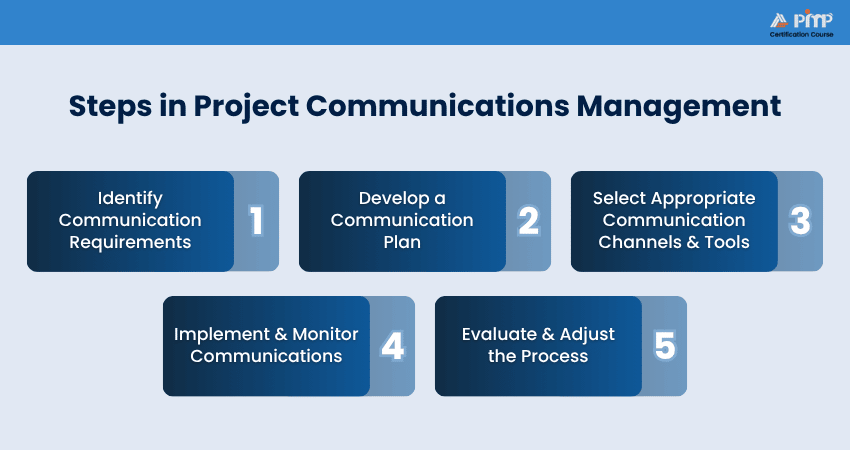
Step 1: Identify Communication Requirements
First, you need to be clear about what information is needed, who needs it, and when they must get it. This is usually spearheaded by the Project Manager, who works with stakeholders to identify key updates such as timelines, budgets, risks, etc. By the end of this step, everyone has a clear understanding of what kind of communication to expect throughout the project.
Step 2: Develop a Communication Plan
Next, you map out how communication will actually happen. The Project Manager puts together a plan with input from the team and stakeholders. The plan should define how often updates will be shared, what format they’ll take, and who’s responsible for sending them. This helps everyone stay on the same page and avoid confusion later on.
Step 3: Select Appropriate Communication Channels and Tools
Now, it’s time to decide where and how communication will happen. This could include emails, messaging platforms, video conferencing tools, or Project Management software. The key is to pick a set of tools that everyone agrees on and uses regularly. That way, information doesn’t get scattered across multiple platforms or missed altogether.
Step 4: Implement and Monitor Communications
With everything set up, it’s time to put the plan into action. Updates are shared regularly through reports, dashboards, or meeting notes, in line with the agreed schedule. The Project Manager must ensure consistent communication, while the team contributes by updating progress and raising any issues. This reduces last-minute surprises and keeps the project on track.
Step 5: Evaluate and Adjust the Process
Finally, take a step back and review what’s working and what’s not. At regular intervals, the team must review whether the communication process is effective. They should ask questions like: Are updates reaching the right people? Are they clear and timely? Feedback from both the team members and stakeholders helps fine-tune the approach.
Empower the art of modern project scheduling with the
PMI Scheduling Professional (PMI-SP)® Certification Course
. Sign up now and stay aligned with every milestone!
What are the Benefits of Project Communication?
Project Communication is essential for keeping teams aligned, stakeholders informed, and projects on track. It enables the timely exchange of information, supports collaboration, and helps prevent misunderstandings that could affect project outcomes. Below are some of the key benefits of implementing it:
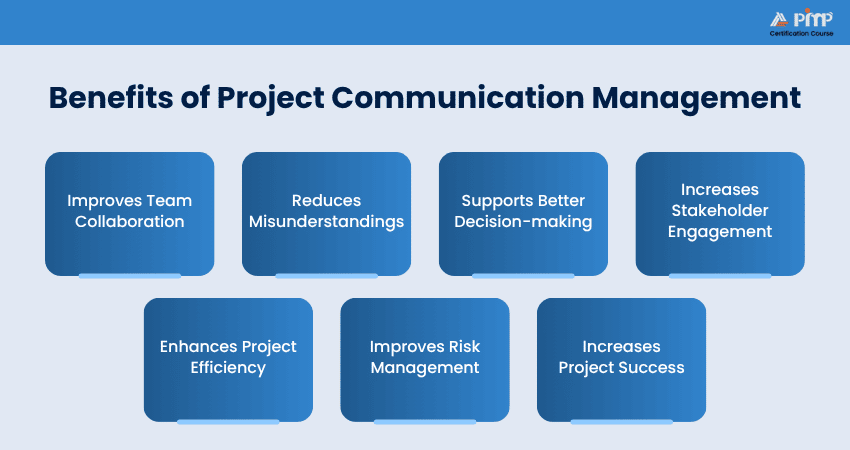
1) Improves Team Collaboration
Clear communication encourages team members to share information, discuss ideas, and work together towards common project goals. It strengthens coordination, builds trust, and ensures everyone understands their roles and responsibilities.
2) Reduces Misunderstandings
Regular and accurate communication helps minimize confusion by ensuring project requirements, expectations, and updates are clearly understood. This reduces the likelihood of errors, duplicated work, and unnecessary delays.
3) Supports Better Decision-making
When stakeholders have access to timely and reliable information, they can make informed decisions more quickly. Effective communication ensures potential risks, challenges, and opportunities are identified early, enabling proactive problem-solving.
4) Increases Stakeholder Engagement
Keeping stakeholders informed throughout the project builds confidence and encourages active participation. Regular updates on project progress, milestones, and changes help manage expectations and strengthen stakeholder relationships.
5) Enhances Project Efficiency
Well-managed communication keeps workflows running efficiently by ensuring information is shared promptly with the appropriate stakeholders. This reduces delays, improves task coordination, and helps teams complete work on schedule.
6) Improves Risk Management
Open communication enables project teams to identify potential risks and issues before they become major problems. Sharing concerns early allows teams to develop mitigation strategies, minimize disruptions, and maintain project progress.
7) Increases Project Success
Proper communication management keeps project objectives, timelines, and responsibilities aligned throughout the project lifecycle. By promoting transparency, collaboration, and accountability, it helps deliver projects on time, within budget, and according to stakeholder expectations.
Transform your strategic vision into measurable business outcomes with
Portfolio Management Professional (PfMP)® Certification Course
- Begin now!
Challenges in Project Communication Management and How to Solve Them
Project Communication Management can be challenging when teams use multiple tools, stakeholder expectations are unclear, or too much or too little information is shared. Let’s look at these problems and how to deal with them effectively:
1) Scattered Tools Make It Hard to Track Updates
When teams rely on a mix of emails, chat apps, and spreadsheets, communication quickly becomes scattered. Important details can get lost, people may act on outdated information, and stakeholders might receive mixed messages. Without a single source of truth, it gets difficult to keep track of who said what and when.
Bring everything into one central platform where tasks and reports live in the same place. This way, everyone works with the same information, and clients know exactly where to go for updates.
2) Stakeholder Misalignment
Misalignment happens when expectations aren’t clearly defined at the start. For example, a client might expect weekly updates, while the team only sends them monthly. Without clear agreements, stakeholders may pull in different directions and request last-minute changes.
Set clear communication expectations right from the beginning. Document and share the communication plan so that everyone can stay aligned. Using a single platform can also help keep everything visible and structured, reducing misunderstandings and unexpected issues.
3) Information Overload or Silence
Sometimes teams share too much information, which can be overwhelming for everyone with unnecessary updates. Other times, there’s not enough communication, leaving gaps and increasing risk. Both extremes can slow down a project.
Deciding what information should be shared, how often, and through which channels can help strike the right balance. Dashboards and structured reports can help highlight only the most important information. When everything is organized in one place, teams get the context they need without feeling overloaded.
Conclusion
Project Communication Management is about creating clarity, connection, and momentum. When communication flows well, teams can stay aligned, stakeholders can stay confident about your work and projects move forward with purpose. In short, it involves turning complex ideas into successful delivery through the simple power of clear, thoughtful conversation.
Speed up your Project Management career with Project Management Institute (PMI)® Certification Training - Sign up now!


 Back
Back

 Topics

 Courses


 10 Aug 2026
 Richard Harris