Projects do not always go according to plan. Delays, budget issues, and unexpected risks can quickly affect progress if they are not identified early. This is why RAG Status Project Management is widely used to give teams and stakeholders a clear view of project performance and overall health.
Using simple red, amber, and green indicators, RAG Status makes it easier to track progress, identify risks, and support faster decision-making. In this blog, you will learn about What is RAG Status Project Management, its importance, key benefits, limitations, and more for effective project reporting. Let’s begin!
What is a RAG Status?
A RAG Status is a project reporting method used in RAG Status Project Management. It shows the current condition of a project using red, amber, and green indicators. Red highlights critical issues that require immediate attention, amber signals of caution or potential risks, and green shows that the project is progressing as planned.
In RAG Status Project Management, these indicators are commonly used to track timelines, budgets, risks, and project progress. Also, organizations set specific tolerances to decide when a project should move between red, amber, or green based on changing project conditions and performance levels.

Why is RAG Status Important?
RAG Status is important because it provides a simple way to communicate project performance. In RAG Status Project Management, the red, amber, and green system helps teams, managers, and stakeholders identify whether a project is on track, facing risks, or requires immediate attention. This improves transparency and supports more effective decision-making.
Also, RAG Status Project Management encourages early issue reporting and better communication within project teams. By identifying risks and challenges at an early stage, organizations can take corrective action before problems escalate. This helps projects stay organized, improves resource prioritization, and supports smoother project delivery.
RAG Status Signals
Each color in the RAG Status Project Management represents a different level of project performance. Let’s look at the three main RAG Status signals and what they represent below:
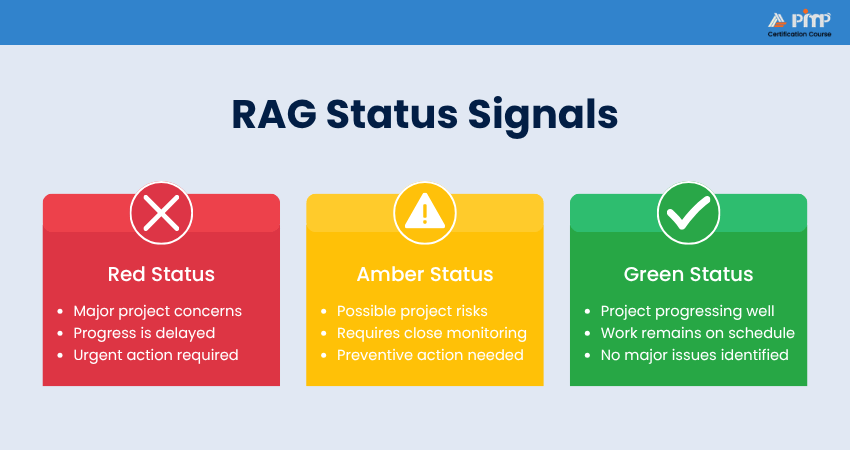
1) Red Status
A Red status indicates that the project is facing serious issues that could affect delivery, budget, or timelines. It requires immediate attention and corrective action to prevent further impact on project objectives. This status often signals critical risks that may require escalation and urgent intervention.
2) Amber Status
An Amber status highlights potential risks or challenges that may affect project progress if not addressed quickly. It signals the need for close monitoring and proactive steps to keep the project within acceptable limits. It acts as a warning stage, giving teams time to take corrective measures before issues escalate.
3) Green Status
A Green status shows that the project is progressing as planned and remains within agreed targets. It indicates stable performance with no major risks currently affecting project delivery. Here, regular monitoring and reporting should continue to maintain project stability and progress. Maintaining a green status requires continuous tracking and consistent performance management.
Build strong foundations in Project Management and start your career confidently with the
Certified Associate in Project Management (CAPM) ® Training
– Join now!
What Affects the Reliability of RAG Status?
In RAG Status Project Management, incorrect reporting or unclear updates can lead to poor decisions and misunderstandings about project performance. Let’s look at some key factors that affect the reliability of RAG Status reporting. Understanding these factors helps organisations improve reporting accuracy and make better project decisions.
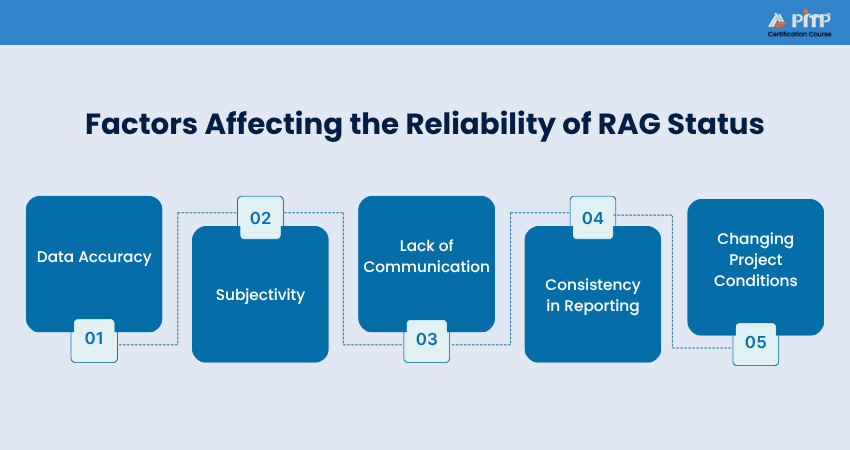
1) Data Accuracy
Reliable RAG Status reporting depends on accurate and updated project data. Incorrect information, outdated metrics, or incomplete reports can create a false view of project performance and risks. Project managers should regularly review project data to ensure reporting remains accurate and trustworthy.
2) Subjectivity
Different stakeholders may interpret project performance differently when assigning a RAG Status. Without clear guidelines, personal opinions and bias can affect reporting consistency. Using objective criteria and involving multiple viewpoints can improve the reliability of status assessments.
3) Lack of Communication
Poor communication can prevent teams from identifying risks, delays, or new issues at the right time. When stakeholders are not properly informed, project reporting may become inaccurate. Open and transparent communication helps teams share updates quickly and supports reliable RAG Status reporting.
4) Consistency in Reporting
Using different reporting methods across teams or projects can make RAG Status comparisons less reliable. Standardized reporting processes help ensure that project statuses are measured and reported consistently. This improves trend analysis and makes project tracking more effective.
5) Changing Project Conditions
Project conditions can change quickly due to risks, changes in scope, or shifting priorities. If RAG Status updates are not reviewed regularly, project assessments can become outdated and misleading. Frequent monitoring and timely reporting help maintain accurate project status information.
Build essential Project Management knowledge early by joining the
PMI Project Management Ready® Certification Training
today!
How to Choose RAG Status in Project Reporting?
Choosing the correct RAG Status in project reporting requires careful evaluation of project performance, risks, timelines, and overall progress. Let’s look at some important factors below to consider when selecting a RAG Status:
1) Objective Criteria
Using an objective criterion helps ensure RAG Status reporting remains accurate, consistent, and transparent across projects. Clear benchmarks reduce confusion and support better decision-making. To make these criteria more effective, organizations must follow the following practices:
a) Defining Measurable Benchmarks:
Projects should have clear thresholds for budget, schedule, scope, quality, and risk. Minor issues may result in amber status, while major issues may require red status.
b) Tailoring Criteria to Project Needs:
RAG criteria should align with the project’s size, complexity, and priorities, as the same issue may affect projects differently.
c) Collaborative Approach:
Stakeholders and project teams should help define RAG criteria to improve transparency and maintain consistency.
d) Documentation and Reporting:
Clearly documented RAG criteria help maintain consistent reporting and improve project tracking across teams.
2) Risk Assessment
Project Managers should regularly assess risks and potential issues that may affect project delivery. Evaluating the impact and likelihood of risks helps determine whether a project should remain in green or move to amber or red.
3) Key Performance Indicators (KPIs)
Tracking KPIs such as budget performance, milestone completion, resource usage, and stakeholder satisfaction helps measure project health accurately. Also, significant deviations from expected targets may require a change in RAG Status.
4) Regular Project Reviews
Frequent project reviews help teams identify issues early and take corrective action before problems become more serious. Also, regular monitoring ensures that RAG Status reporting remains accurate and up to date.
5) Stakeholder Input
Feedback from stakeholders, clients, sponsors, and project teams provides valuable insights into project performance. By including stakeholder input, it improves reporting accuracy and supports better communication and collaboration.
Benefits of RAG Status Reporting
RAG Status reporting provides a simple and effective way to monitor project performance and communicate progress. In RAG Status Project Management, color-based indicators help teams identify risks early, improve decision-making, and maintain better project control. Let’s look at some key benefits of RAG Status reporting below:
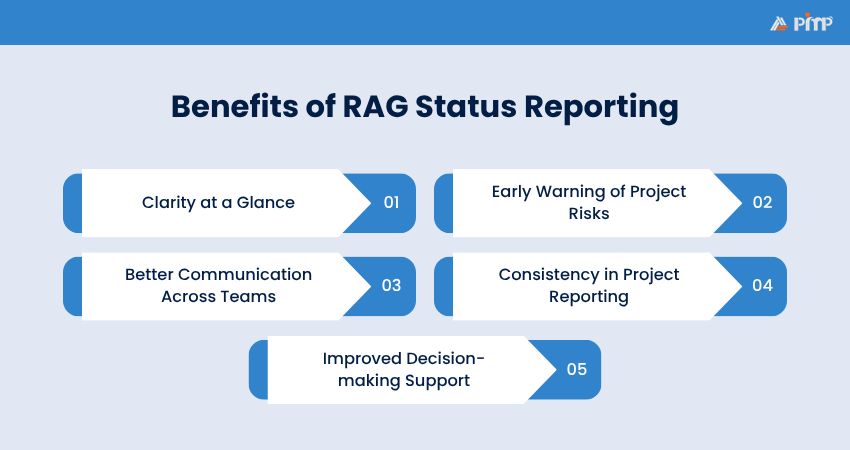
1) Clarity at a Glance
RAG reporting allows stakeholders to understand project health quickly without reviewing lengthy reports. The color indicators make it easy to identify whether a project is on track or requires attention.
2) Early Warning
Amber and Red statuses help teams identify risks and issues before they become major problems. This supports timely corrective action and reduces the chances of costly delays or failures. Early detection enables proactive management and better risk control.
3) Better Communication
The RAG system creates a simple and shared reporting language for both technical and non-technical stakeholders. This improves understanding and reduces confusion during project discussions. It ensures that everyone involved can interpret project status consistently.
4) Consistency
RAG Status reporting provides a standardized method for tracking project performance across teams and departments. This consistency improves reporting accuracy and supports smoother project reviews.
5) Decision-making Support
Clear visual indicators help managers and stakeholders prioritize actions, allocate resources effectively, and make faster project decisions. This helps keep projects aligned with their objectives and timelines.
Strengthen your Agile Project Management skills and deliver projects faster with the
PMI-ACP® Certification Training
now!
Limitations of RAG Status Reports
In RAG Status Project Management, relying only on color indicators may sometimes create gaps in understanding or delay issue resolution. Let’s look at some common limitations of RAG Status reports below:
1) Oversimplification
RAG Status can oversimplify complex project situations by reducing them to only three colors. This may not fully reflect the actual challenges, risks, or progress within a project. In some cases, organizations may use additional sub-statuses to provide more detailed project reporting. This limitation can hide underlying issues if not supported by detailed analysis.
2) Delayed Identification of Issues
RAG reports may not always identify new issues immediately, especially in fast-changing projects. Delays in reporting cycles can sometimes slow down mitigation actions and the overall decision-making process.
3) Lack of Context
A RAG Status alone may not explain the reasons behind a project’s condition. Additional reports, discussions, and stakeholder feedback are often needed to understand the full project situation.
4) Inability to Predict Future Issues
RAG Status mainly reflects the current state of a project and may not accurately predict future risks or challenges. Additional forecasting and risk analysis tools are required for better project planning.
5) Overemphasis on Negative Aspects
Projects marked red or amber may receive more attention than successful green projects. This can sometimes shift focus away from recognizing positive performance and identifying successful project practices.
Example of RAG Status Report
A RAG Status Project Management provides a quick overview of project performance by highlighting the condition of different project areas using red, amber, and green indicators. Let’s look at an example of how a RAG Status report may look in a website development project:
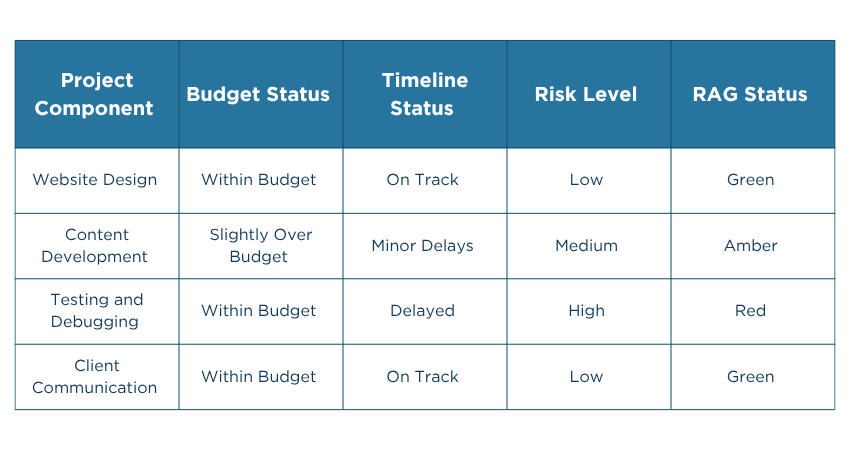
In this example, each project component is evaluated based on budget, timelines, and risk levels. The combined assessment helps Project Managers and stakeholders quickly identify areas performing well and areas requiring immediate attention.
Conclusion
RAG Status reporting helps organizations track project progress, identify risks early, and improve decision-making. In RAG Status Project Management, color-based indicators provide a quick and clear view of project health, helping teams maintain better control and project performance.
Build globally recognized project leadership skills with the Project Management Institute (PMI)® Certification Training – Join now!


 Back
Back

 Topics

 Courses


 10 Aug 2026
 Veronica Davis