Have you ever started a project thinking everything was clear, only to face missed deadlines, changing requirements, and confusion about who was responsible for what? These situations are more common than many organisations realise and usually happen when there is no proper SOW Project Management process in place. Without a clearly defined agreement, even well-planned projects can quickly become stressful, delayed, and difficult to manage.
A strong SOW Project Management approach helps teams, clients, and vendors stay aligned by clearly defining project scope, deliverables, timelines, responsibilities, and expectations. It acts as a roadmap for smoother project execution. In this blog, you will learn the purpose, types, components, benefits, and best practices of a Statement of Work. Let's begin!
What is a Statement of Work (SOW)?
A Statement of Work (SOW) is a formal Project Management document that defines a project’s scope, objectives, deliverables, timelines, responsibilities, and payment terms. It acts as an official agreement between a client and a vendor, contractor, or service provider before the project work begins.
The SOW serves as a single source of truth throughout the project lifecycle by clearly outlining expectations and requirements for all stakeholders. It helps improve communication, reduce misunderstandings, manage risks, and ensure the project is completed according to agreed goals, timelines, and quality standards.

Purpose of a Statement of Work (SOW)
The purpose of a Statement of Work (SOW) is to create clarity between all project stakeholders by clearly defining project expectations, deliverables, timelines, and performance standards. It helps improve communication, align teams with agreed requirements, and ensure everyone understands their responsibilities before project execution begins.
A SOW also helps prevent scope creep by outlining what is included and excluded from the project scope. In addition, it defines payment terms, supports accountability during disputes, and ensures clients, vendors, contractors, and project teams work from a single source of truth throughout the project lifecycle.
Components of a Statement of Work
The components of a Statement of Work (SOW) define the key details required for successful project execution. They help stakeholders understand project scope, deliverables, timelines, and responsibilities clearly. Key components include:
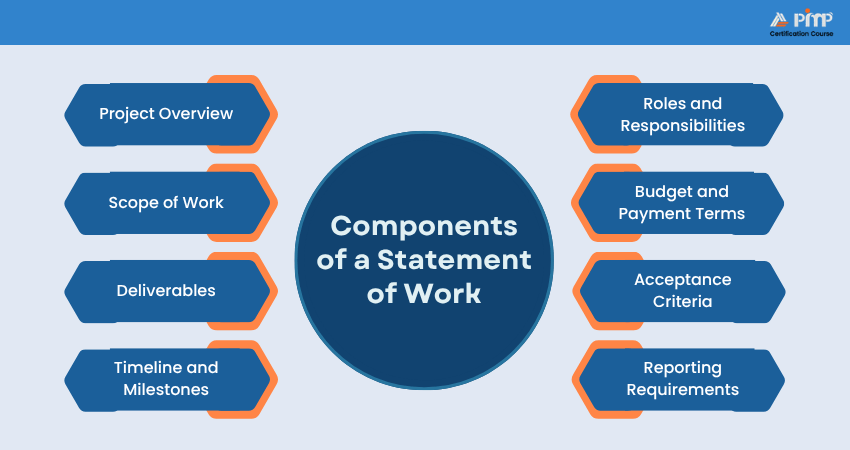
1) Project Overview: Provides a summary of the project goals, background, and objectives.
2) Scope of Work: Defines the tasks, activities, and services included in the project.
3) Deliverables: Lists the expected outputs or final results of the project.
4) Timeline and Milestones: Includes project schedules, deadlines, and key milestones.
5) Roles and Responsibilities: Explains the duties of stakeholders, teams, vendors, and Project Managers.
6) Budget and Payment Terms: Outlines project costs, payment schedules, and billing methods.
7) Acceptance Criteria: Defines the quality standards and conditions required for approval.
8) Reporting Requirements: Explains how project progress, updates, and communication will be managed.
Develop smarter requirement management skills with the
PMI-PBA® Certification Training
– Register now!
Types of Statement of Work
The types of Statement of Work (SOW) vary based on project requirements, deliverables, and performance expectations. Choosing the right SOW type helps organisations manage projects more effectively. Common types include:
1) Performance-based SOW
A Performance-based SOW focuses on the expected outcomes and performance standards instead of the exact process used to complete the work. It gives contractors flexibility in deciding how to achieve the required results and is commonly used in IT services, software development, and large-scale projects.
2) Design SOW
A Design SOW clearly defines how work should be performed by specifying methods, materials, processes, and detailed instructions. It is commonly used in manufacturing, engineering, construction, and government projects where strict compliance and quality standards are consistently required throughout project execution. This level of detail ensures consistency, control, and adherence to specific standards.
3) Level of Effort SOW
A Level of Effort SOW is based on the time, effort, and resources needed for a project rather than fixed deliverables. It is commonly used for consulting, support services, freelancers, and projects with changing requirements. This type provides greater flexibility when the project scope or workload may change over time. It is particularly useful for projects where outcomes cannot be precisely defined in advance.
How to Write a Statement of Work?
Writing a Statement of Work (SOW) requires clear planning and detailed documentation to ensure all project requirements, responsibilities, and expectations are properly defined. Following a structured approach helps improve communication, reduce misunderstandings, and support successful project execution.
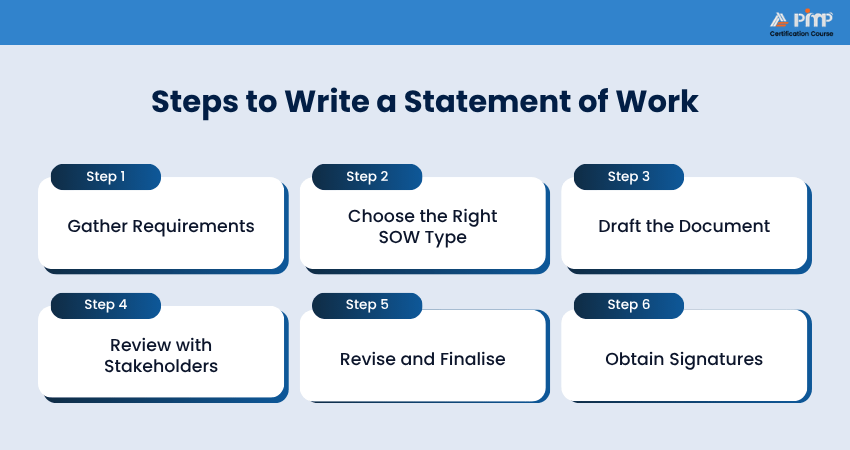
Step 1: Gather Requirements
Start by collecting project information from stakeholders, clients, and team members. Identify project objectives, deliverables, timelines, budgets, constraints, and success criteria to ensure all requirements are clearly understood before drafting the SOW. This step ensures that the document is based on accurate and complete project information.
Step 2: Choose the Right SOW Type
Select the most suitable SOW type based on the project complexity, level of control required, industry standards, and project risks. Common types include Performance-based, Design, and Level of Effort SOWs. Choosing the correct type helps align expectations and improves project outcomes.
Step 3: Draft the Document
Prepare the SOW using clear, specific, and easy-to-understand language. Include important details such as project scope, deliverables, timelines, payment terms, roles, responsibilities, and acceptance criteria. Tables, charts, and visuals may also help improve clarity.
Step 4: Review with Stakeholders
Share the draft with stakeholders, project teams, vendors, and clients for feedback. Reviewing the document helps verify technical accuracy, resolve concerns, and ensure all parties understand and agree to the project terms. This collaborative review process helps identify gaps and improve document quality.
Step 5: Revise and Finalise
Update the document based on stakeholder feedback and confirm that all project details are accurate, consistent, and complete. Proofreading and version control also help maintain document quality and reliability. This step ensures the SOW is error-free and ready for formal approval.
Step 6: Obtain Signatures
Once finalised, obtain formal approval and signatures from authorised stakeholders. The signed SOW should then be distributed securely and kept accessible for reference throughout the project lifecycle. Formal approval ensures accountability and agreement among all parties involved.
Benefits of a Well-structured Statement of Work
A well-structured Statement of Work (SOW) helps organisations manage projects effectively by clearly defining scope, timelines, deliverables, and responsibilities. It improves communication, reduces confusion, and supports smoother project execution. Key benefits include:
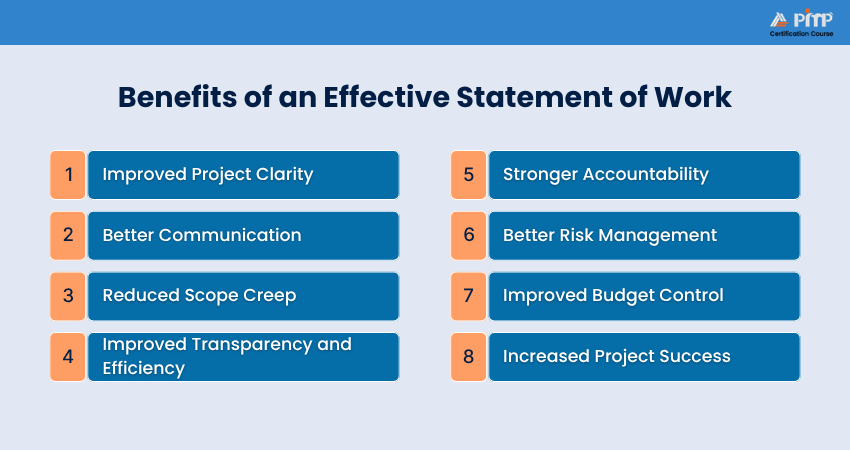
1) Improved Project Clarity:
Clearly defines project objectives, deliverables, timelines, and responsibilities.
2) Better Communication:
Ensures all stakeholders share a common understanding of project expectations and requirements.
3) Reduced Scope Creep:
Prevents unapproved project changes by defining project boundaries clearly.
4) Improved Transparency and Efficiency:
Helps teams stay aligned with tasks, milestones, and project timelines.
5) Stronger Accountability:
Assigns clear roles and responsibilities for better performance tracking.
6) Better Risk Management:
Helps reduce operational, financial, and legal risks through proper planning.
7) Improved Budget Control:
Supports better cost planning and resource allocation throughout the project.
8) Increased Project Success:
Improves coordination and reduces misunderstandings, helping projects stay on time and within budget.
Strengthen Agile project delivery skills with the
PMI-ACP® Certification Training
– Sign up now!
Tips for Managing SOWs and Processes
Managing Statement of Work (SOW) documents effectively helps organisations maintain project clarity, control changes, and improve project performance. It also ensures stakeholders stay aligned throughout the project lifecycle. Key tips include:
1) Maintain Clear Communication: Keep stakeholders informed through regular meetings, updates, and progress reports.
2) Monitor Deliverables Regularly: Track milestones, deadlines, and project outputs to ensure timely completion.
3) Manage Scope Changes Properly: Document and approve all project changes to avoid scope creep and miscommunication
4) Use Project Management Tools: Use software tools to organise tasks, schedules, resources, and project documentation efficiently.
5) Review Progress Frequently: Conduct regular reviews to identify risks, delays, or performance issues early.
6) Keep Documentation Updated: Ensure the SOW remains accurate and reflects any approved project changes.
7) Define Roles Clearly: Assign responsibilities clearly to improve accountability and decision-making.
8) Ensure Stakeholder Alignment: Keep clients, vendors, and teams aligned with project goals and expectations throughout execution.
Best Practices for Writing a Statement of Work
Following best practices while creating a Statement of Work (SOW) helps improve project clarity, reduce misunderstandings, and support smoother project execution. Some important best practices include:
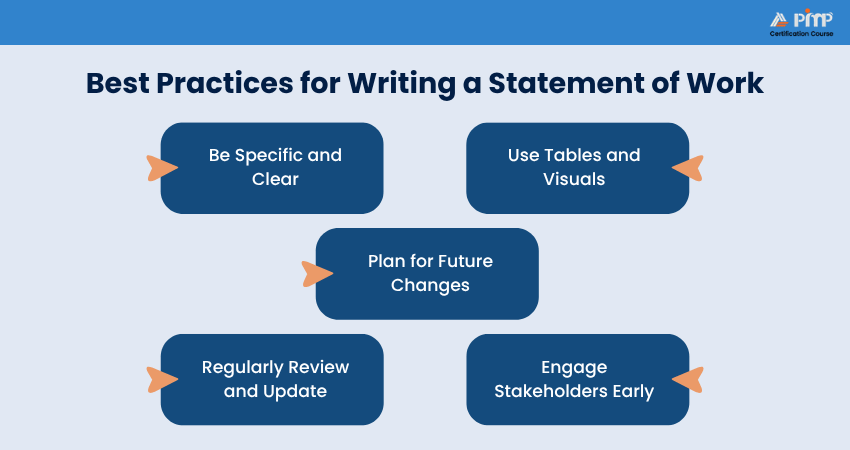
1) Be Specific and Clear
Use simple, detailed, and precise language when defining project scope, deliverables, timelines, and responsibilities. Clear instructions help stakeholders understand expectations properly, reduce misunderstandings, and minimise project delays, disputes, or confusion during project execution. Clarity also ensures that all parties have a shared understanding of project objectives and outcomes.
2) Use Tables and Visuals
Include tables, charts, timelines, flowcharts, and Gantt charts to present project information more clearly. Visual elements help stakeholders quickly understand project schedules, dependencies, milestones, and deliverables, improving communication and overall project planning efficiency. Using visuals makes complex information easier to interpret and supports better decision-making.
3) Plan for Future Changes
Projects may evolve over time, so include a proper change management process within the SOW. Clearly define how scope, timeline, cost, or deliverable changes will be reviewed, approved, documented, and communicated to all stakeholders involved throughout the entire project lifecycle.
4) Regularly Review and Update
Review the SOW regularly to ensure it remains accurate, updated, and aligned with project goals and requirements. Maintaining proper version control also helps teams work from the latest approved document throughout the complete project lifecycle effectively and without unnecessary confusion. Regular updates ensure the document remains relevant and supports ongoing project success.
5) Engage Stakeholders Early
Involve stakeholders during the planning and drafting stages to gather accurate project requirements and expectations. Early collaboration improves communication, reduces conflicts, strengthens teamwork, and ensures all stakeholders clearly understand their responsibilities and project objectives. Engaging stakeholders early also builds trust and improves overall project alignment.
Build strong Project Management foundations with Certified Associate in Project Management (CAPM) ® Training – Register now!
Statement of Work Example
A Statement of Work (SOW) example helps organisations understand how project scope, deliverables, timelines, and responsibilities are documented in a real project. It provides a clear structure that helps stakeholders align expectations before project execution begins.
Example: E-commerce Website Development Project
A retail company hires a software development agency to build an e-commerce website for online product sales. The SOW clearly defines the project requirements, deliverables, timelines, responsibilities, and payment terms to ensure smooth collaboration between both parties.
1) Project Objective
Develop a secure and mobile-responsive e-commerce website that allows customers to browse products, place orders, and complete online payments.
2) Scope of Work
The project includes website design, frontend and backend development, payment gateway integration, product page creation, testing, and website deployment.
3) Deliverables
Fully functional e-commerce website
Mobile-responsive user interface
Secure payment gateway integration
Product management dashboard
User training documentation
4) Timeline and Milestones
The SOW defines deadlines for planning, design, development, testing, and final project delivery to ensure the project stays on schedule.
5) Roles and Responsibilities
The client provides business requirements and approvals, while the development agency manages website design, coding, testing, and deployment activities.
6) Budget and Payment Terms
The document outlines the project budget, milestone-based payments, billing schedule, and payment conditions agreed upon by both parties.
7) Acceptance Criteria
The website must meet performance, security, and usability standards and pass all testing requirements before final approval and launch.
Conclusion
A well-structured SOW Project Management process creates a strong foundation for efficient project delivery by clearly defining scope, deliverables, timelines, and responsibilities. It improves communication, minimises ambiguity, controls project risks, and helps stakeholders stay aligned to ensure projects achieve expected outcomes efficiently.
Advance your Project Management career with industry-recognised Project Management Institute (PMI)® Certification Training – Join now!


 Back
Back

 Topics

 Courses


 10 Aug 2026

 James Smith