Modern business priorities are redefining the way Project Management standards are developed and applied. With digital transformation, new technologies, and sustainability goals, Project Managers need guidance that keeps pace with these changes. The PMBOK 8th Edition addresses these evolving challenges.
It aligns Project Management practices with today's dynamic business environment. Whether you're a Project Manager, a PMP® Certification aspirant, or someone looking to stay current with industry best practices, understanding these updates is essential. In this blog, you'll discover the key updates introduced in the PMBOK 8th Edition and how they can help improve project success. Let's dive in and explore what has changed!
What is the PMBOK 8th Edition?
The Project Management Body of Knowledge (PMBOK® Guide) Eighth Edition is the latest Project Management standard published by the Project Management Institute (PMI®). It offers practical guidance for managing projects using predictive, Agile, hybrid, and adaptive approaches.
The PMBOK 8th Edition continues to promote flexibility while offering clearer and actionable practices that can be applied across projects of all sizes and industries. It also places greater emphasis on governance, stakeholder engagement, sustainability, and the use of Artificial Intelligence (AI), helping Project Managers deliver successful project outcomes.
Core Principles of the PMBOK 8th Edition
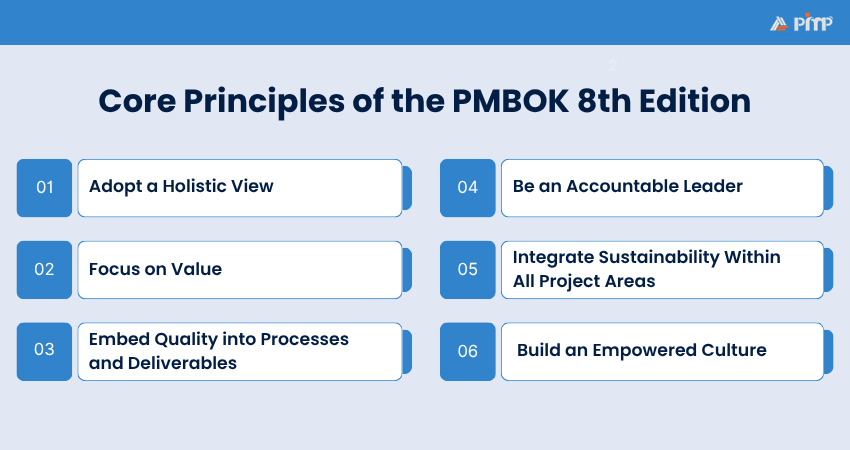
The PMBOK 8th Edition builds on the principles-based approach introduced in the previous edition and refines it into six core principles. These principles help professionals balance strategic objectives with practical project delivery. Here are the six principles of Project Management:
1) Adopt a Holistic View
Projects operate within a broader organizational and business environment. This principle encourages Project Managers to consider how strategy, governance, stakeholders, risks, technology, and external factors influence project success. Taking a holistic approach helps teams make informed decisions and ensures project outcomes support long-term organizational objectives.
2) Focus on Value
Every project should deliver meaningful value to customers, stakeholders, and the organization. Rather than measuring success only by time and budget, Project Managers should focus on achieving strategic objectives, solving business challenges, and creating long-term benefits. As business priorities and stakeholder expectations evolve, project value should be reviewed continuously.
3) Embed Quality into Processes and Deliverables
Quality should be integrated into every phase of a project rather than assessed only after completion. The PMBOK 8th Edition encourages teams to establish clear quality standards, follow consistent processes, and continuously improve the way work is delivered. This approach minimizes rework, increases customer satisfaction, and strengthens confidence in the final deliverables.
4) Be an Accountable Leader
Successful Project Managers lead with integrity, accountability, and professionalism. They create an environment where responsibilities are clearly defined, decisions are communicated clearly, and team members feel empowered to perform at their best. By encouraging collaboration and resolving conflicts effectively, accountable leaders help teams achieve shared project goals.
5) Integrate Sustainability Within All Project Areas
Projects should balance business objectives with Environmental, Social, and Governance (ESG) considerations wherever appropriate. This principle encourages organizations and Project Managers to evaluate the long-term impact of project decisions, use resources responsibly, and adopt sustainable practices while continuing to deliver value. As a result, projects contribute to both organizational success and societal well-being.
6) Build an Empowered Culture
Every successful project depends on teams that are trusted, motivated, and encouraged to make informed decisions. The PMBOK Guide 8th Edition promotes a culture of collaboration, continuous learning, knowledge sharing, and psychological safety, enabling teams to innovate, adapt to change, and take ownership of their work with greater confidence.
Establish a strong Project Management foundation with the
PMI Project Management Ready® Certification Course
– Register today!
What are the Five New Focus Areas in PMBOK 8th Edition?
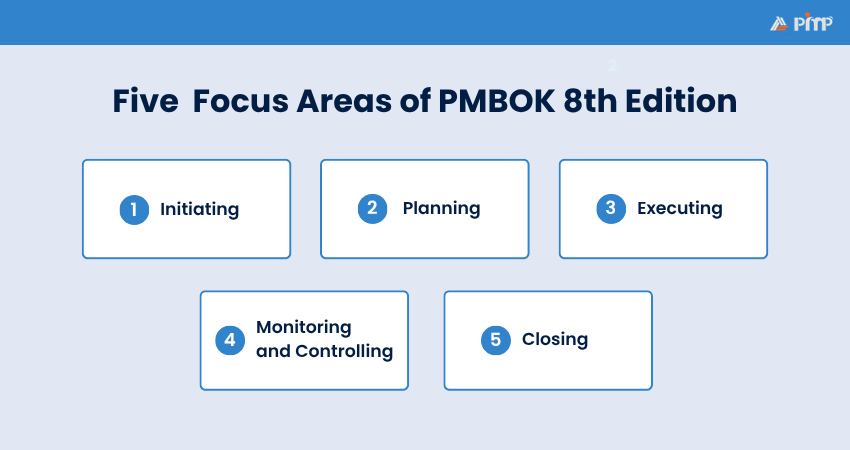
The PMBOK 8th Edition defines five focus areas that help Project Managers manage projects from initiation through to closure. Below are the five new focus areas:
1) Initiating
The initiating focus area lays the foundation for the project by defining its purpose, objectives, and expected value. It involves identifying stakeholders, assessing feasibility, establishing governance, and obtaining the necessary approvals before project work begins.
2) Planning
The planning focus area creates a roadmap for successful project delivery by defining the scope, schedule, budget, resources, risks, and communication strategy. It ensures the project is well organized while remaining flexible enough to respond to changing requirements.
3) Executing
The executing focus area involves delivering project work by coordinating people, resources, and activities. It encourages effective collaboration, stakeholder engagement, quality management, and strong leadership to keep the project progressing as planned.
4) Monitoring and Controlling
The monitoring and controlling focus area measures project performance, manages risks and changes, and ensures activities remain aligned with project objectives. Continuous monitoring enables informed decision-making and timely corrective actions to keep the project on track.
5) Closing
The closing focus area formally concludes the project by securing final approvals, documenting lessons learned, releasing project resources, and handing over deliverables. It also captures valuable knowledge that can support continuous improvement in future projects.
What are the Seven Project Management Performance Domains?
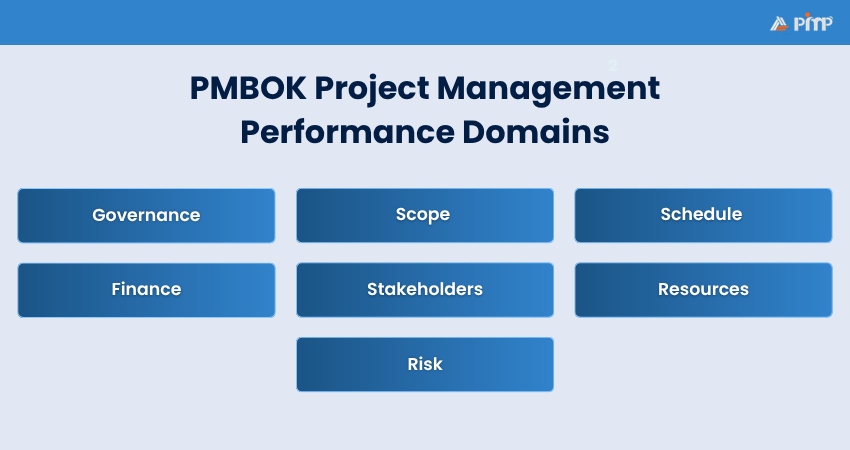
The PMBOK 8th Edition introduces seven Project Management performance domains that represent the key areas contributing to successful project outcomes. The following are the seven performance domains:
1) Governance Performance Domain
The governance performance domain defines decision-making structures, oversight responsibilities, compliance requirements, and alignment with organizational objectives. Strong governance promotes accountability, supports strategic priorities, and ensures projects deliver value throughout the project lifecycle.
2) Scope Performance Domain
The scope performance domain facilitates project deliverables while ensuring requirements remain aligned with business objectives, stakeholder expectations, and customer needs. Effective Scope in Project Management helps prevent unnecessary work, reduce scope creep, and keep projects focused on achieving their intended outcomes.
3) Schedule Performance Domain
The schedule performance domain manages the planning, sequencing, monitoring, and adjustment of project timelines and milestones. It helps teams coordinate dependencies, monitor progress, and respond proactively to changes that may affect project delivery.
4) Finance Performance Domain
The finance performance domain manages budgeting, cost control, financial forecasting, investment decisions, and value delivery. Strong financial management ensures project resources are used efficiently, supports organizational objectives, and maximizes Return on Investment (ROI).
5) Stakeholders Performance Domain
The stakeholders performance domain reinforces identifying stakeholders, understanding their expectations, maintaining engagement, and building strong relationships throughout the project lifecycle. Effective stakeholder management strengthens collaboration, builds trust, and supports informed decision-making.
6) Resources Performance Domain
The resources performance domain addresses the management of people, technology, equipment, suppliers, and other resources essential for achieving project objectives. It helps ensure teams have the right skills, tools, and support to deliver successful outcomes while maintaining balanced workloads and improving productivity.
7) Risk Performance Domain
The risk performance domain involves identifying threats and uncertainties, assessing their potential impact, implementing appropriate response strategies, and monitoring risks throughout the project lifecycle. Proactive risk management helps minimize potential threats while identifying opportunities to improve overall project performance.
Develop the skills and confidence to manage projects effectively with
Certified Associate in Project Management (CAPM)® Training
– Sign up soon!
What are the Benefits of PMBOK 8th Edition for Modern Project Managers?
As projects become increasingly technology-driven, Project Managers need guidance that is both practical and adaptable. The PMBOK 8th Edition meets these evolving demands by helping professionals improve project planning, strengthen governance, and deliver consistent value throughout the project lifecycle. Some of its key benefits include:
1) Improves Strategic Alignment:
The PMBOK 8th Edition helps align projects with organizational goals, ensuring every initiative contributes to measurable business value.
2) Supports Flexible Delivery:
It supports predictive, Agile, hybrid, and adaptive approaches, enabling teams to tailor Project Management practices to different project environments and changing business needs.
3) Embraces Modern Project Management:
It incorporates guidance on AI, sustainability, and Project Management Offices (PMOs), helping Project Managers adopt modern practices that improve project outcomes.
4) Strengthens Governance:
The latest edition offers clear accountability, effective oversight, and informed decision-making throughout the project lifecycle.
5) Improves Risk and Resource Management:
It provides structured guidance for identifying and managing risks while optimizing resources to improve project performance and delivery.
6) Enhances Stakeholder Engagement:
The PMBOK 8th Edition encourages continuous communication and collaboration, enabling teams to build trust and effectively manage stakeholder expectations.
7) Encourages Continuous Improvement:
By promoting continuous learning and lessons learned, the PMBOK 8th Edition helps organizations refine their Project Management practices and achieve better results over time.
Key Differences Between PMBOK 7th and 8th Edition
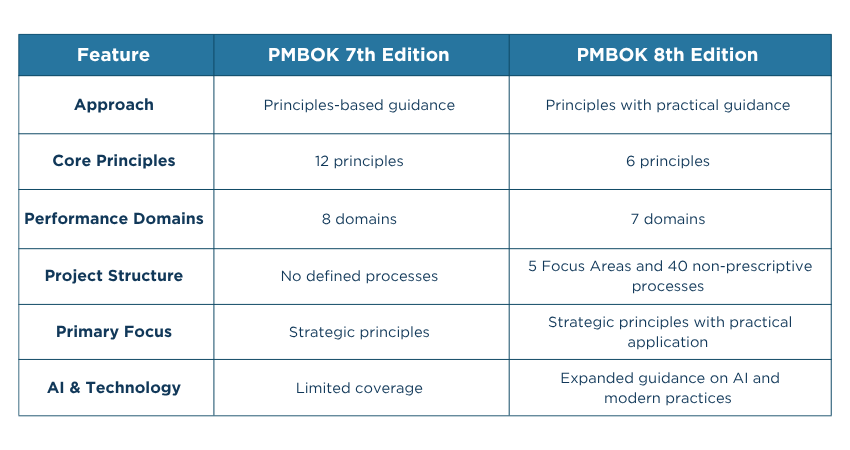
While the PMBOK 7th Edition marked a significant shift towards principles-based Project Management, professionals needed clear guidance for practical implementation. The PMBOK 8th Edition addresses this by balancing strategic principles with practical project delivery. The table below outlines the key differences between the two editions:
Conclusion
The PMBOK 8th Edition reflects the continued evolution of Project Management by combining strategic principles with practical guidance. This helps Project Managers navigate complex projects, embrace modern technologies, and deliver greater value across a wide range of project environments. By understanding and applying these updates, professionals can improve project outcomes and stay aligned with current industry best practices.
Explore the practical skills needed to manage successful projects with Project Management Institute (PMI)® Certification Training – Join now!


 Back
Back

 Topics

 Courses


 10 Aug 2026
 Richard Harris