Every organization wants projects to finish on time, stay within budget and deliver real business value. This is where PMO Project Management plays a crucial role by providing the structure, governance and oversight needed to keep projects organized and in line with strategic objectives.
Whether you're managing a single project or overseeing an entire portfolio, PMO in Project Management can help you improve project success and organizational efficiency. In this blog, you'll explore what is PMO Project Management, its types, roles and responsibilities, their benefits, and more. Let’s begin!
Table of Contents
1) What is a Project Management Office (PMO)?
2) Types of PMOs
3) Common PMO Roles
4) PMO Key Responsibilities
5) Benefits of a PMO to the Business
6) Common PMO Challenges
7) How to Set Up a Project Management Office?
8) The Future of PMO
9) Conclusion
What is a Project Management Office (PMO)?
A Project Management Office (PMO) is a central function within an organization. It defines and maintains Project Management standards, processes and best practices. It provides governance, promotes consistency and helps you ensure that the projects are delivered efficiently in line with the business objectives.
A PMO supports the Project Managers by monitoring project performance and overseeing multiple projects across the organization. By improving the coordination process and standardizing project delivery, it helps organizations achieve better outcomes and manage projects more effectively.
Types of PMOs
The right type of PMO depends on an organization's goals, the level of governance required and the complexity of its projects. The four main types of PMOs include:
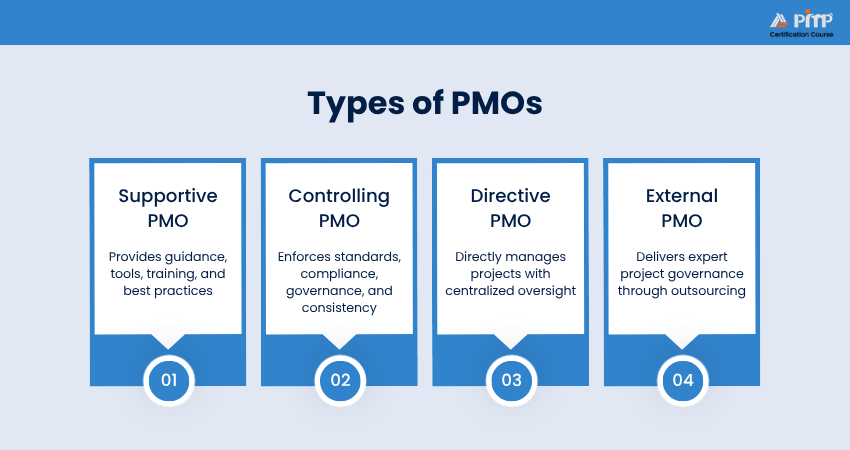
1) Supportive PMO
A Supportive PMO provides guidance and resources without enforcing strict controls. It is ideal for organizations that want greater consistency while allowing project teams to work independently. Its key functions include:
a) Templates and frameworks for project planning
b) Training to improve project delivery
c) Best practices and lessons learned
d) Project tracking and reporting tools
e) Access to experienced Project Managers and mentors
f) Collaboration spaces for sharing knowledge
2) Controlling PMO
A Controlling PMO ensures project teams follow established standards and governance while allowing some flexibility. It is commonly used in regulated industries where compliance and consistency are essential. Its key functions include:
a) Establishing a clear project lifecycle
b) Setting risk and compliance policies
c) Aligning projects with business objectives
d) Reviewing project progress with senior management
e) Standardizing reporting tools and dashboards
3) Directive PMO
A Directive PMO takes direct responsibility for managing projects and provides a high level of oversight. It is best suited to large organizations that require centralized control over project execution and portfolio management. Its key functions include:
a) Directly manages projects and Project Managers
b) Oversees project execution from start to finish
c) Maintains full control over project governance
d) Coordinates project portfolios across the organization
e) Ensures projects align with strategic business objectives
4) External PMO
An External PMO is provided by a third party to deliver project governance and expertise without creating an internal PMO. It is useful when organizations need temporary support or specialist Project Management capabilities. Its key functions include:
a) Managing mergers, acquisitions, or large-scale transformations
b) Requiring independent oversight for compliance
c) Scaling Project Management capabilities without hiring an internal PMO team
Common PMO Roles
A PMO brings together professionals with different responsibilities to ensure projects are managed efficiently. Each role contributes to improving governance, supporting project teams and achieving successful project outcomes. Let’s look at the common PMO roles below:
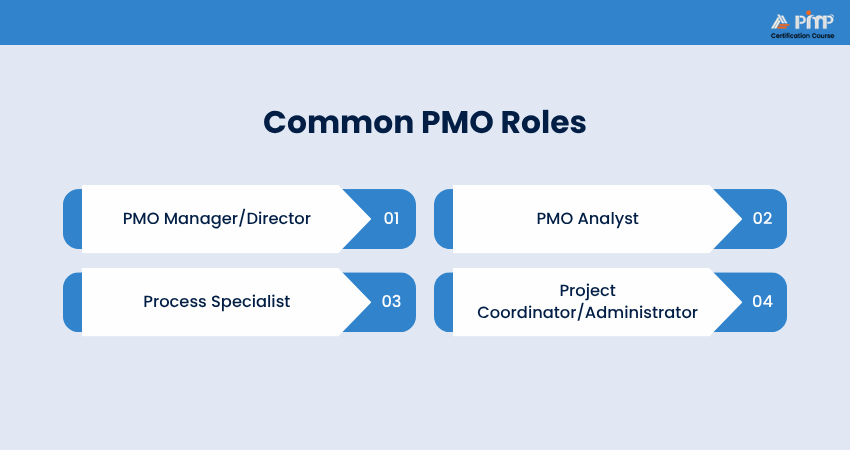
1) PMO Manager/Director
They lead the PMO by overseeing project governance, aligning projects with business objectives and ensuring Project Management standards are applied. They work closely with senior leadership to monitor project performance and drive strategic improvements.
2) PMO Analyst
They collect and analyze project data, prepare reports and provide insights that support informed decision-making and performance tracking. Their analysis helps identify trends, measure project health, and improve reporting accuracy.
3) Process Specialist
They develop, implement and improve Project Management methodologies and training programmes to catalyze project delivery. They also promote continuous improvement by refining processes based on project outcomes and organizational needs.
4) Project Coordinator/Administrator
They are tasked with maintaining project documentation, coordinating schedules and meetings and managing administrative tasks. This leads to smooth project execution. They help keep project information organized, ensuring teams remain aligned, and activities stay on track.
Gain job-ready Project Management skills with the
PMI Project Management Ready® Certification Course
– Join now!
PMO Key Responsibilities
A PMO ensures projects are delivered consistently by establishing standards, supporting project teams and aligning project activities with business objectives. Let’s look at their core responsibilities below:
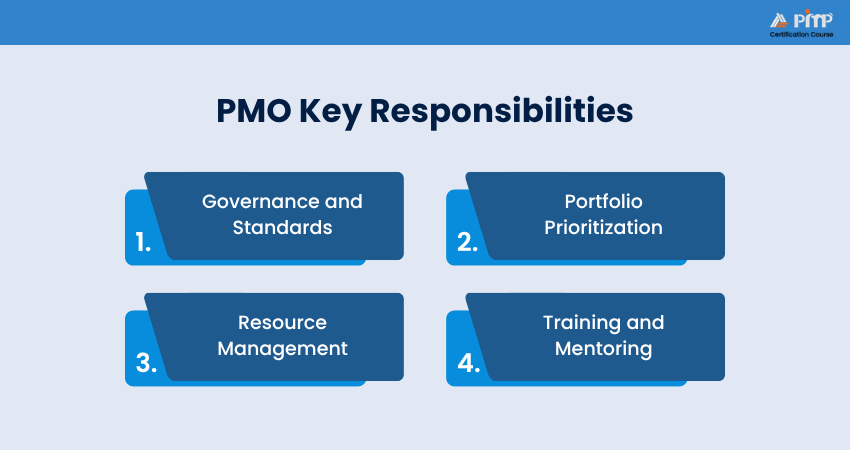
1) Governance and Standards
Establishes Project Management frameworks, Standard Operating Procedures (SOPs) and documentation standards to ensure consistency across projects. It also promotes the use of recognized methodologies, such as Agile or Waterfall, where appropriate.
2) Portfolio Prioritization
Evaluates and prioritizes projects based on strategic objectives, available resources, and business value. This helps organizations focus on the initiatives that deliver the greatest impact. It also enables better investment decisions by directing resources to high-priority projects.
3) Resource Management
Allocates people, budgets, tools, and other resources to balance workloads and prevent bottlenecks. Effective resource planning also helps improve productivity and project delivery. This ensures that resources are used efficiently while reducing delays and resource conflicts.
4) Training and Mentoring
Provides training, guidance, and mentoring to Project Managers and team members on Project Management tools, techniques and best practices. This helps build organizational capability and supports continuous professional development.
Benefits of a PMO to the Business
A PMO helps organizations improve project performance by introducing consistent governance, better Resource Management and strategic oversight. These benefits enable businesses to deliver projects efficiently while supporting long-term organizational success. Let’s look at the key benefits below:
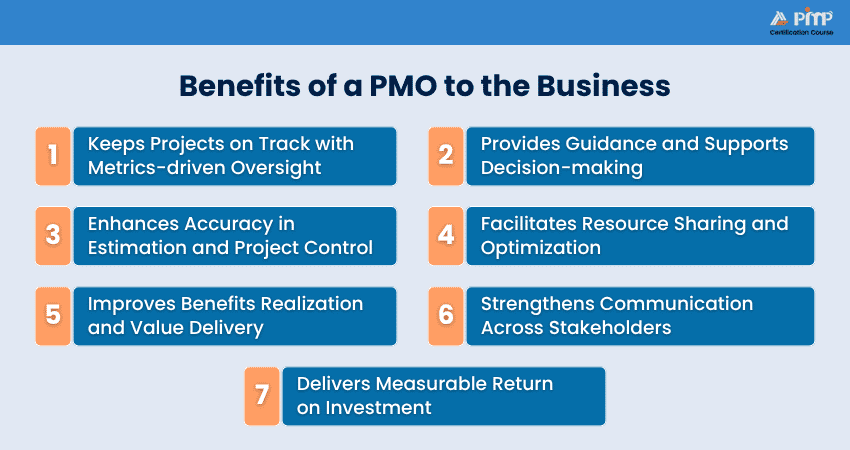
1) Keeps Projects on Track with Metrics-driven Oversight
A PMO monitors project performance using key metrics to identify risks related to scope, budget, and timelines. Early visibility into potential issues allows teams to take corrective action before problems escalate.
2) Provides Guidance and Supports Decision-making
A PMO aligns projects with business objectives by providing governance, best practices, and valuable insights. This enables Project Managers and Stakeholders to make more informed and consistent decisions.
3) Enhances Accuracy in Estimation and Project Control
A PMO improves the accuracy of project estimates by applying standard processes and using historical project data. This helps reduce unexpected delays, cost overruns and changes throughout the project lifecycle.
4) Facilitates Resource Sharing and Optimization
A PMO allocates people, budgets, and other resources across projects based on priorities and availability. This improves resource utilization, reduces bottlenecks and supports efficient project delivery.
5) Improves Benefits Realization and Value Delivery
A PMO tracks whether projects deliver their intended business outcomes and long-term value. It also helps organizations measure benefits after project completion to maximize return on investment.
6) Strengthens Communication Across Stakeholders
A PMO establishes clear communication frameworks to ensure stakeholders receive timely and relevant project updates. This improves collaboration, transparency and decision-making across the organization.
7) Delivers Measurable Return on Investment
By improving project governance, reducing project failures, and increasing delivery efficiency, a PMO helps organizations achieve greater value from their project investments. It also contributes to better resource utilization and faster project delivery.
Lead complex programmes with confidence and drive strategic success across programmes with the
Program Management Professional (PgMP)® Certification Training
now!
Common PMO Challenges
Although a PMO brings significant value to an organization, implementing and managing one is not without challenges. Addressing these issues early helps improve project performance, strengthen governance, and increase the effectiveness of the PMO. Let’s look at the common challenges below:
a) Resistance to Change: Teams may resist new processes and governance because they see them as additional bureaucracy. Clear communication and stakeholder engagement can help encourage adoption.
b) Resource Constraints: Limited budgets, skilled personnel, or competing project demands can make it difficult to allocate resources effectively. This may lead to bottlenecks and delays in project delivery.
c) Lack of Strategic Alignment: Without strong support from senior leadership, projects can lose focus and fail to align with organizational goals. Executive sponsorship is essential for a PMO's success.
d) Poor Communication: Inconsistent reporting and fragmented project information can create misunderstandings and slow decision-making. Establishing clear communication channels improves collaboration and transparency.
e) Scope Creep: Frequent or uncontrolled changes to project requirements can increase costs and delay delivery. A PMO helps minimize scope creep through structured Change Management and governance.
f) Demonstrating PMO Value: Measuring the impact of a PMO can be challenging because many benefits, such as improved governance and decision-making, become invisible over time. Tracking performance metrics helps demonstrate its long-term business value.
How to Set Up a Project Management Office?
Establishing a PMO requires careful planning, clear objectives, and ongoing support from stakeholders. Following a structured approach helps organizations build a PMO that improves governance, enhances project delivery, and supports long-term business goals. Let’s look at the steps below:
a) Define the PMO's Purpose: Identify the business challenges the PMO will address and determine whether it will provide support, governance or direct Project Management. Make sure that its objectives align with the organization's strategic goals.
b) Secure Executive Support: Gain commitment from senior leadership to obtain the funding, resources, and organizational support needed for successful implementation. Executive sponsorship also encourages adoption across teams.
c) Assess Existing Project Management Practices: Review current Project Management processes to identify strengths and areas for improvement. This assessment helps define the PMO's priorities and structure.
d) Establish the PMO Structure and Governance: Select the most suitable PMO model and create standard processes, templates, reporting methods and governance frameworks. Consistent standards improve project oversight and delivery.
e) Implement the Right Project Management Tools: Choose tools that support project planning, collaboration, reporting, and performance tracking. Real-time dashboards and centralized data improve visibility across projects.
f) Define Success Metrics: Establish key performance indicators (KPIs) to measure project performance, resource utilization and the overall effectiveness of the PMO. Regular measurement supports continuous improvement.
g) Train Teams and Encourage Adoption: Provide training on PMO processes, tools, and best practices to ensure teams understand and consistently follow the new approach. Strong adoption is essential for long-term success.
h) Monitor Performance and Continuously Improve: Regularly review PMO performance, gather stakeholder feedback, and refine processes to meet changing business needs. Continuous improvement helps the PMO remain effective and deliver lasting value.
The Future of PMO
The future of the PMO is being shaped by digital transformation, with technologies such as Artificial Intelligence (AI), automation, and the Internet of Things (IoT). It is changing how projects are planned, monitored and delivered. As routine tasks become increasingly automated, PMOs are expected to focus more on strategic planning, governance, data-driven decision-making and business transformation.
To remain relevant, PMOs must embrace new technologies while adapting their processes to meet evolving business needs. Balancing innovation with governance, using performance metrics to demonstrate value, and aligning projects with organizational goals will help PMOs continue to play a critical role in driving successful project outcomes in the digital era.
Conclusion
A well-structured PMO Project Management approach helps organizations improve governance, optimize resources, and deliver projects consistently and efficiently. As business needs continue to evolve, a modern PMO remains essential for aligning projects with strategic objectives, enabling informed decision-making, and driving long-term organizational success.
Build essential project skills and become a trusted project leader with the Project Management Institute (PMI)® Certification Courses – Sign up now!


 Back
Back

 Topics

 Courses


 10 Aug 2026
 Maria Thompson