Every successful project begins with one important question: Is it worth the investment? A Business Case answers this by presenting a clear justification for a proposed initiative and expected outcomes. It enables organizations to make confident decisions and secure stakeholder support before committing to a project.
Whether you're proposing a new product, process improvement, or strategic initiative, knowing how to justify your project is a valuable skill. In this blog, we'll explain what is a Business Case, explore its key benefits, the steps to write one and practical tips for creating a persuasive document that supports informed decision-making. So, read on!
What is a Business Case?
A Business Case is a formal document or proposal that explains why a project, investment, or business initiative should be undertaken. It presents the reasons for the proposal by outlining the problem or opportunity, objectives, expected benefits, estimated costs, potential risks, and available options.
A well-developed Business Case also provides a clear roadmap for the project. It aligns the initiative with organizational goals, supports resource allocation and establishes measurable outcomes, improving the likelihood of project approval and successful delivery.

Key Elements of a Business Case
A well-prepared Business Case includes several key elements that help stakeholders evaluate whether a project is worthwhile. Each section provides essential information to support informed decision-making and successful project approval. So, here are those key elements:
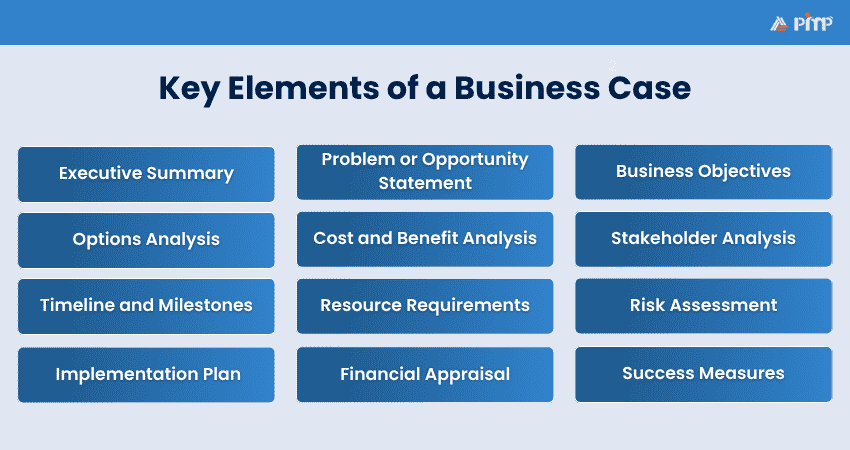
1) Executive Summary
The Executive Summary provides a brief overview of the proposed project, its objectives, expected benefits and the recommended solution. It gives decision-makers a quick understanding of the Business Case without reading the entire document.
2) Problem or Opportunity Statement
This section explains the business problem that needs to be solved or the opportunity the organization wants to pursue. It establishes the reason for the project and highlights why action is necessary.
3) Business Objectives
Business Objectives define what the project aims to achieve. These objectives should align with the organization's strategic goals and be specific, measurable and realistic.
4) Options Analysis
Options analysis compares different approaches for addressing the identified problem or opportunity. It evaluates the advantages, disadvantages, costs and potential outcomes of each option before recommending the most suitable solution.
5) Cost and Benefit Analysis
This section estimates the project's expected costs and compares them with the anticipated financial and non-financial benefits. It helps determine whether the proposed investment offers sufficient value.
6) Stakeholder Analysis
Stakeholder analysis identifies the individuals or groups affected by or involved in the project. It outlines their roles, interests, level of influence and communication needs, helping project teams manage expectations, gain support and address concerns throughout the project lifecycle.
7) Timeline and Milestones
This section outlines the project schedule, including key phases, milestones and expected completion dates. It helps stakeholders understand the implementation timeline, track progress and ensure the project stays on schedule.
8) Resource Requirements
The resource requirements section identifies the people, budget, technology, equipment, and other resources needed to deliver the project successfully. It helps organizations plan resource allocation and determine whether required capacity is available.
9) Risk Assessment
Risk Assessment identifies potential challenges that could affect the project's success. It also outlines mitigation strategies to minimize the likelihood or impact of those risks. This enables organizations to prepare for uncertainties and minimize disruptions during project delivery.
10) Implementation Plan
The implementation plan explains how the proposed solution will be executed. It outlines the key activities, delivery approach, governance structure and responsibilities required to complete the project successfully.
11) Financial Appraisal
A Financial Appraisal evaluates the project's financial viability using measures such as Return on Investment (ROI), Net Present Value (NPV), payback period or cost-benefit analysis, depending on the organization's requirements.
12) Success Measures
This section defines the criteria used to evaluate whether the project has attained its intended objectives. Success measures may include performance indicators, business outcomes, cost savings, customer satisfaction or operational improvements.
Enhance your knowledge of Project Management processes with
Certified Associate in Project Management (CAPM) ® Training
– Register today!
Five Steps to Write and Pitch Business Case
A well-structured Business Case is built through careful planning, collaboration, and clear communication. The following steps will help you create a persuasive document and present it effectively to decision-makers:
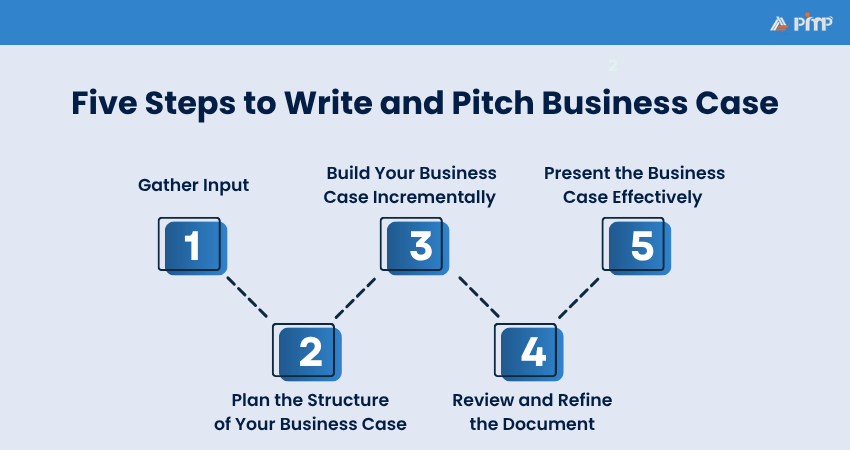
1) Gather Input
Begin by collecting information from key stakeholders, Subject Matter Experts (SMEs) and relevant departments. Understand the business problem or opportunity, identify project objectives, estimate costs, assess potential benefits and evaluate risks. Gathering accurate data early helps build a strong and credible Business Case.
2) Plan the Structure of Your Business Case
Before writing, create a clear structure that organizes your ideas logically. Planning the structure in advance helps ensure all key information is covered without repetition. It also improves readability, allowing stakeholders to quickly locate important details and evaluate the proposal efficiently.
3) Build Your Business Case Incrementally
Develop the Business Case section by section rather than trying to complete it all at once. Support each part with relevant evidence, financial data and realistic assumptions. Review the information as you progress to ensure consistency and alignment with business goals.
4) Review and Refine the Document
Now, carefully review the completed Business Case for accuracy, clarity and completeness. Verify calculations, remove unnecessary information, correct any inconsistencies and ensure the document effectively communicates the proposal. Seeking feedback from colleagues or stakeholders can further strengthen the final version.
5) Present the Business Case Effectively
When presenting your Business Case, focus on the key business problem, the proposed solution, expected benefits, costs and potential risks. Use clear visuals, concise explanations and supporting data to reinforce your recommendations. Be prepared to clarify questions and explain how the proposal aligns with organizational priorities.
Demonstrate your expertise in Agile practices across industries with
PMI-ACP® Certification Training
– Join now!
Benefits of a Business Case
A Business Case clearly identifies the business problem or opportunity and explains why action is needed. It also proposes a practical solution supported by evidence, helping stakeholders understand the purpose and expected outcomes of the initiative. Some of the key benefits of a Business Case include:
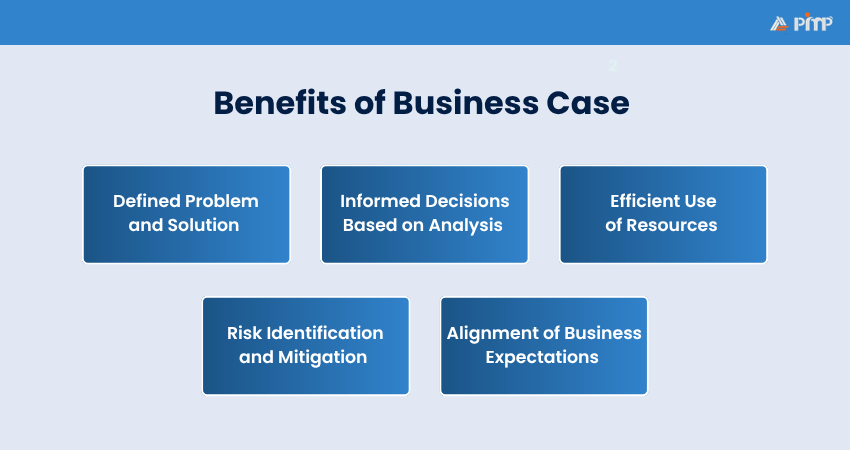
1) Defined Problem and Solution
A Business Case clearly defines the business problem, opportunity, or need that the proposed initiative aims to address. It explains why the issue is important and outlines the potential impact of taking or not taking action.
It also presents the recommended solution, supported by evidence and analysis. This helps stakeholders understand how the proposed approach will achieve the expected outcomes and contribute to organizational objectives.
2) Informed Decisions Based on Analysis
A Business Case provides a structured evaluation of the project's costs, benefits, risks, and available alternatives. By comparing different options, it enables stakeholders to make decisions based on evidence rather than assumptions.
This analytical approach improves transparency and ensures that the selected solution offers the greatest value. It also builds confidence among decision-makers by supporting recommendations with reliable data.
3) Efficient Use of Resources
A Business Case identifies the financial, human, and operational resources required to deliver a project successfully. It ensures that budgets, timelines and responsibilities are planned before implementation begins.
This structured planning helps organizations allocate resources where they generate the greatest return. As a result, unnecessary expenditure is reduced and project efficiency is improved.
4) Risk Identification and Mitigation
Every project involves uncertainties, and a Business Case helps find potential risks at an early stage. These may include financial, operational, technical or organizational challenges that could affect project success.
By assessing these risks and proposing mitigation strategies, organizations can prepare for potential issues before they arise. This proactive approach improves project resilience and supports better outcomes.
5) Alignment of Business Expectations
A Business Case establishes clear project objectives, expected benefits, and measurable success criteria from the outset. This ensures that stakeholders have a common understanding of the project's purpose and expected outcomes.
Maintaining this alignment throughout the project reduces misunderstandings and supports better collaboration. It also helps keep the initiative focused on delivering strategic business value.
Difference Between a Business Case and Business Plan
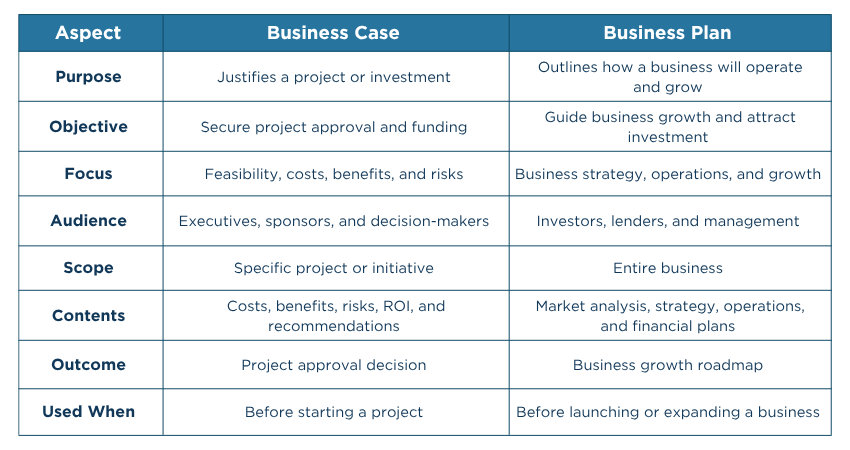
Although a Business Case and a Business Plan are both important business documents, they serve different purposes. A Business Case is used to justify a proposed project or investment before it begins, while a Business Plan provides a roadmap for starting, managing, or growing a business over the long term.
While a Business Case supports a single decision or project, a Business Plan focuses on the long-term direction and success of the entire business. Let's check their differences in detail with the table below:
Conclusion
A Business Case is a valuable tool for justifying projects, supporting informed decisions, and aligning initiatives with organizational goals. By clearly outlining costs, benefits, risks and expected outcomes, it helps secure stakeholder approval and improves the chances of project success. Mastering this skill enables organizations to make confident, value-driven decisions.
Strengthen your Project Management expertise with Project Management Institute (PMI)® Certification Training – Sign up now!


 Back
Back

 Topics

 Courses


 10 Aug 2026

 Richard Harris