Projects often fall behind because work becomes difficult to prioritize, track and manage as demands continue to grow. Kanban Project Management addresses these challenges by making every stage of work visible. It helps teams stay organized, minimize delays and maintain a steady flow of tasks from start to finish.
Whether you are managing a small project or coordinating multiple teams, Kanban Project Management provides a practical way to improve everyone’s efficiency and keep the work on track. In this blog, you will explore its principles, benefits, best practices, and more. So, let’s get started!
What is Kanban Project Management?
Kanban Project Management is a visual approach to managing projects. It uses the Kanban method to organize, track and improve the flow of work. The tasks are displayed on a Kanban board and they move through different stages. This makes it easier for teams to monitor progress, identify bottlenecks and complete the work in a more efficient manner.
Its flexible and Agile-based approach makes Kanban Project Management ideal for organizations of every size and industry. It is used in numerous sectors such as manufacturing, construction, Software Development, etc. It helps teams of any size adapt to changing priorities, catalyse their collaborative efforts and deliver projects effectively.
Why Use Kanban for Project Management?
Kanban is widely used in Project Management because it provides a clear visual view of tasks and workflows. This makes it easier to understand how work progresses. Such visibility helps the teams prioritize work and make sure that the projects move forward without stumbling on unnecessary delays.
By tracking every task in one place, teams can quickly identify bottlenecks and resolve workflow issues. The helps them fuel more efficiency. As a result, Kanban supports better collaboration, smoother project execution and a consistent delivery of high-quality outcomes.
Key Principles of Kanban Methodology
The Kanban Methodology is built on four core principles that support continuous improvement with minimal disruption. These principles help organizations optimize existing workflows, adapt to change, and improve collaboration across teams. Let’s learn about them below:
1) Start with What You Do Now:
Kanban builds existing workflows instead of replacing them. Teams assess current processes, retain what works, and improve areas that need optimization.
2) Agree to Pursue Incremental, Evolutionary Change:
Kanban promotes small, continuous improvements rather than major changes. This reduces risk, helps teams adapt easily, and delivers steady progress.
3) Respect Current Processes, Roles, and Responsibilities:
Kanban enhances existing processes without changing organizational structures. This makes adoption smoother and reduces resistance to change.
4) Encourage Leadership at Every Level:
Kanban encourages everyone to take ownership of their work and contribute ideas for improvement. This fosters accountability, collaboration, and continuous learning.
Benefits of Kanban Project Management
Kanban Project Management provides several benefits that help teams improve workflow, increase productivity, and deliver projects efficiently. Let’s look at the key benefits of Kanban Project Management below:
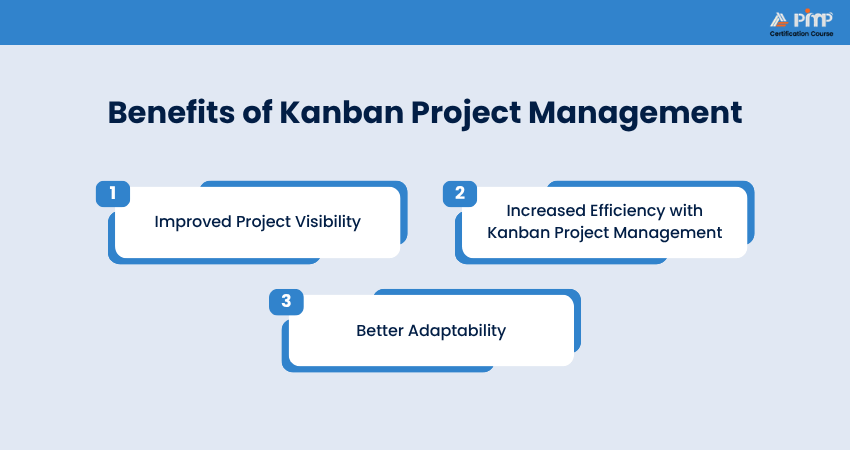
1) Improved Project Visibility
Kanban provides a clear visual view of tasks and workflows, making it easy to monitor progress and identify potential bottlenecks. This transparency improves collaboration, supports informed decision-making, and helps teams address issues before they impact project delivery.
2) Increased Efficiency with Kanban Project Management
Kanban improves efficiency by limiting Work in Progress (WIP) and using a pull-based system, where new tasks are started only when capacity is available. This reduces multitasking, prevents overload, and keeps project work flowing smoothly.
3) Better Adaptability
In Kanban Project Management, teams can respond quickly to changing priorities without disrupting existing workflows. Its flexible approach supports continuous improvement, helping organizations adjust to new requirements while maintaining productivity.
Build strong Project Management Foundations with the
PMI Project Management Ready® Certification Training
– Join now!
Implementing Kanban Project Management
Successful implementation of Kanban Project Management involves selecting the right tools, defining clear workflows, and using suitable performance metrics. One of the key elements of implementing Kanban Project Management is selecting software that supports workflow visualization, collaboration, and performance tracking.
Kanban software enables teams to visualize workflows, collaborate efficiently, and make informed decisions using real-time project data. Most Kanban tools include features, such as:
1) Kanban Boards and Cards:
These display workflows and individual tasks. They make it easy to track progress and manage priorities.
2) Kanban Metrics:
Measure Key Performance Indicators (KPIs), such as lead time, cycle time, and throughput. They help identify improvement opportunities.
3) Collaboration Tools:
These tools allow team members to share updates, communicate and provide feedback in real time.
Foundational Practices of Kanban
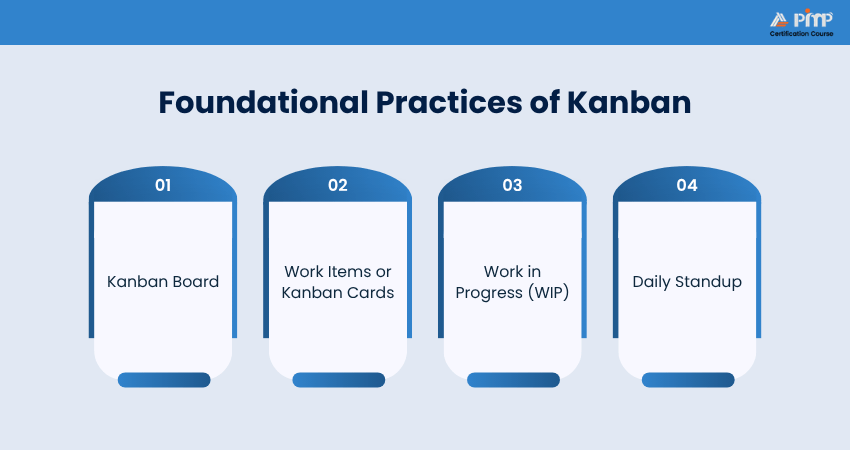
Foundational practices translate Kanban principles into daily actions that help teams manage work effectively. These practices improve workflow visibility, encourage collaboration, and support continuous improvement. Let's learn about the foundational practices of Kanban Project Management below:
1) Kanban Board
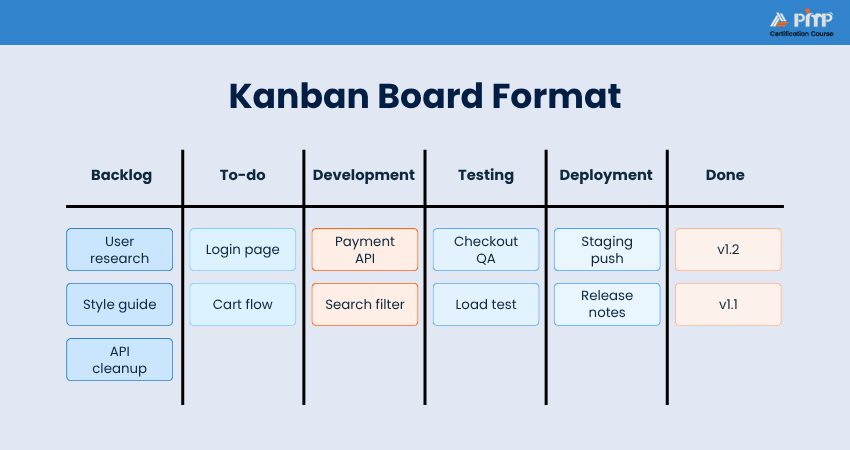
The Kanban board is the central visual tool used to organize and track work. It displays tasks in columns representing different stages of progress, making it easier to monitor workflows, identify bottlenecks, and manage priorities.
2) Work Items or Kanban Cards
Work items, also known as Kanban cards, represent individual tasks, user stories, or deliverables moving through the workflow. Each card includes essential information like the task description, assignee, due date and priority.
3) Work in Progress (WIP)
Work in Progress (WIP) refers to the number of tasks being worked on a given time. Setting WIP limits helps prevent teams from taking on too much work, improves focus, reduces bottlenecks, and creates a balanced and efficient workflow.
4) Daily Standup
A daily standup refers to a brief team meeting in Kanban Project Management. These usually last around 15 minutes, where members review progress, discuss blockers and plan out their next steps. By reviewing the Kanban board together, teams can resolve the issues quickly and keep working without any stumbling blocks.
How to Use Kanban for Project Management?
Kanban can be applied at both the team and portfolio levels to improve project visibility, coordination, and delivery. The approach helps organizations manage multiple projects by breaking work into manageable tasks. Let’s learn about them below:
1) Using Kanban Project Management at the Team Level
Kanban helps organize project workflows at the team level by breaking large projects into smaller, manageable work items. Using a Kanban board, you can track the task progress, monitor dependencies and quickly detect bottlenecks. This carves out a clear view of project status and makes it easier to manage day-to-day work.
2) Using Kanban Project Management at the Portfolio Level
At the portfolio level, Kanban provides a central view of multiple projects and teams. It enables organizations to monitor progress across initiatives and balance workloads. This makes it easy to identify potential issues early. This broader perspective supports better planning, resource allocation and decision-making across the entire project portfolio.
Learn how to drive organizational success through portfolio excellence with the
Portfolio Management Professional (PfMP)® Certification Training
– Join today!
Challenges of Implementing Kanban
While Kanban is simple to adopt and highly flexible, organizations may encounter a few challenges during implementation. Understanding these limitations helps teams use the methodology more effectively. Let’s look at them below:
1) Too Much Flexibility: Kanban's flexibility can lead teams to remove too much structure from their workflows. Regular check-ins help maintain alignment, resolve blockers, and support continuous improvement.
2) No Built-in Timeboxing: Kanban does not include fixed iterations or sprints. Without timeboxing, teams may need due dates or regular planning cycles to manage priorities and meet deadlines effectively.
3) Using Kanban Instead of Driving Change: Since Kanban builds existing processes, organizations may avoid making larger improvements when needed. Teams should continue evaluating workflows and introduce broader changes where they add value.
Best Practices for Beginner Kanban Teams
Adopting the right practices from the beginning helps teams get the most out of Kanban Project Management. These best practices encourage continuous improvement, better collaboration, and an efficient workflow. Let’s learn about them below:
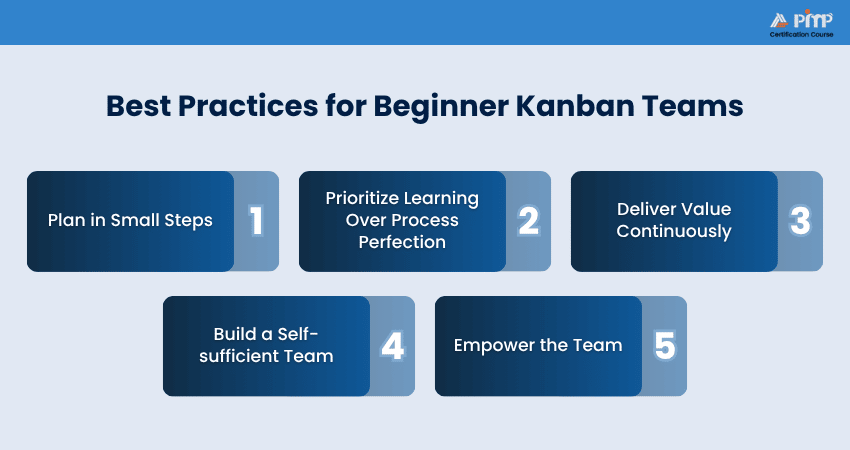
1) Plan in Small Steps: Focus on short-term priorities instead of detailed long-term plans. This allows teams to adapt quickly as project requirements change.
2) Prioritize Learning Over Process Perfection: Rather than aiming for a perfect process, observe how work flows, identify bottlenecks and improve workflows via continuous learning.
3) Deliver Value Continuously: Break work into smaller, manageable tasks that can be completed and delivered regularly. This keeps progress visible and enables faster feedback.
4) Build a Self-sufficient Team: Encourage cross-functional collaboration to reduce dependencies and enable teams to complete work efficiently.
5) Empower the Team: Give team members ownership of their work and encourage them to suggest improvements. Empowered teams are more engaged, accountable, and productive.
Conclusion
Kanban Project Management provides a simple and effective way to improve workflow visibility, enhance collaboration, and deliver projects efficiently. By applying its principles and best practices, teams can reduce bottlenecks, adapt to changing priorities, and achieve continuous improvement for consistent project success.
Build globally recognized Project Management expertise by signing up for the Project Management Institute (PMI)® Certification Training now!


 Back
Back

 Topics

 Courses


 05 Aug 2026
 Veronica Davis