Have you ever started a project with excitement, only to see it lose direction, face delays or go over budget? You are not alone. Many projects struggle not because of a lack of effort, but because the right approach is missing. This is where Project Management Best Practices become essential, helping teams stay organized, focused, and in control from the very beginning.
In today’s fast-changing work environment, managing tasks alone is not enough. Teams need clear strategies, strong communication, and adaptability. By following Project Management Best Practices, you can improve efficiency, reduce risks and deliver successful outcomes with confidence. Let’s explore how these practices can boost your project success!
Table of Contents
1) Top 15 Project Management Best Practices
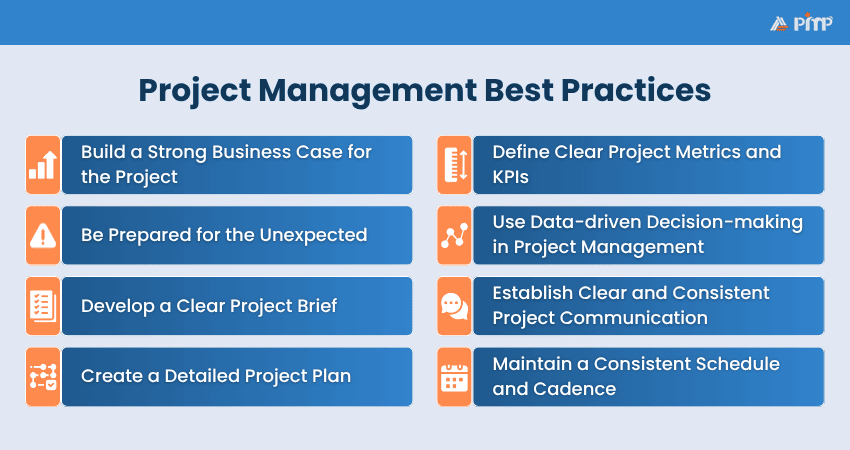
a) Build a Strong Business Case for the Project
b) Be Prepared for the Unexpected
c) Develop a Clear Project Brief
d) Create a Detailed Project Plan
e) Define Clear Project Metrics and KPIs
f) Use Data-driven Decision-making in Project Management
g) Establish Clear and Consistent Project Communication
h) Maintain a Consistent Schedule and Cadence
i) Leverage the Right Technology
j) Ensure Stakeholder Engagement and Management
2) Conclusion
Top 15 Project Management Best Practices
Successful project delivery depends on following proven practices that guide teams from planning to completion, improving clarity, reducing risks, enhancing collaboration and ensuring alignment with goals, timelines, and budgets.
The following 15 Project Management Best Practices outline practical strategies across industries, each focusing on a key area of success to help you manage work more effectively, as explored below:
1) Build a Strong Business Case for the Project
Every successful project begins with a clear and well-structured business case that explains why the project is needed and how it supports organizational goals. As part of Project Management Best Practices, it should outline key aspects such as objectives, expected benefits, required resources, potential risks, and overall feasibility before seeking approval.
A strong business case also helps stakeholders understand the value of the project and how it fits into the bigger picture. By evaluating timelines, budgets, and possible challenges in advance, teams can make informed decisions, secure the right resources, and ensure the project starts on a solid and strategic foundation.
2) Be Prepared for the Unexpected
Projects rarely follow a perfectly planned path, making it essential to prepare for uncertainty. This involves identifying potential risks early, assessing their impact, and developing contingency plans to handle delays, resource shortages, or unexpected changes effectively throughout the project lifecycle.
Being proactive allows teams to respond quickly without disrupting overall progress or losing momentum. It also reduces stress during critical phases, ensures continuity, and helps maintain alignment with timelines, objectives, and stakeholder expectations, even when unforeseen challenges arise during execution.
3) Develop a Clear Project Brief
A project brief provides a concise overview of the project, including its objectives, scope, stakeholders, and expected outcomes across all project phases and stages. It ensures that everyone engaged understands the purpose and direction before moving into the detailed planning and execution stages.
With a clearly defined brief, teams can avoid confusion, reduce miscommunication, and stay aligned with project goals across teams and departments. It also acts as a reference point overall for the project, supporting decision-making and ensuring that all activities contribute to achieving the intended outcomes efficiently.
4) Create a Detailed Project Plan
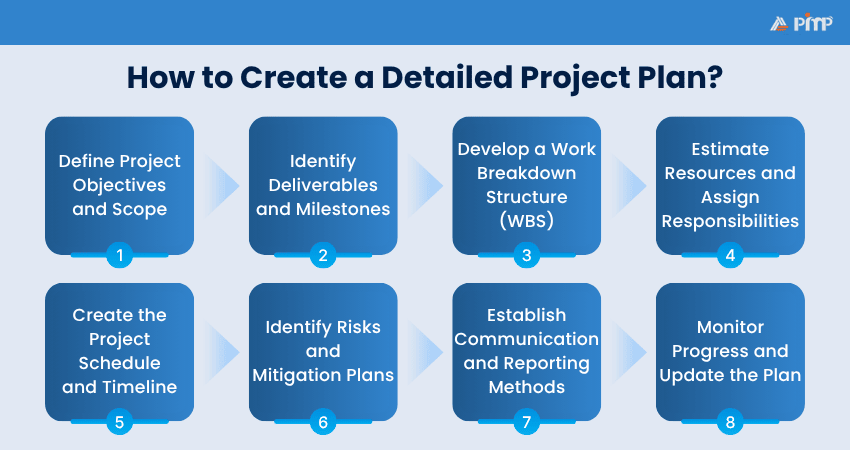
A detailed project plan outlines all tasks, timelines, dependencies, and resources required to complete the project successfully across all phases and stages. It breaks down complex activities into manageable steps, ensuring that teams have a clear structure to follow during execution.
This structured approach improves coordination, improves accountability and helps track progress effectively across teams and functions. It also allows Project Managers to identify possible delays early and take corrective action, ensuring the project remains on schedule and aligns with its defined objectives.
5) Define Clear Project Metrics and KPIs
Project metrics and KPIs are essential for measuring performance and determining whether a project is achieving its goals across different phases and stages. As part of Project Management Best Practices, these indicators may include timelines, cost efficiency, quality standards, and overall team productivity throughout the project lifecycle.
By establishing clear metrics at the beginning, Project Managers can monitor progress objectively and ensure accountability. This method helps identify areas that require improvement, supports informed decision-making, and ensures that the project delivers measurable and meaningful results.
6) Use Data-driven Decision-making in Project Management
Data-driven decision-making involves using real-time data, analytics, and performance reports to guide project actions across all project phases and stages. This approach reduces reliance on assumptions and ensures that decisions are based on accurate and relevant information throughout the project lifecycle.
Using data improves efficiency, amplifies the forecasting process and supports better resource allocation across teams and processes. It also enables teams to identify patterns, respond to challenges proactively, and make timely adjustments, ultimately leading to more reliable outcomes and improved overall project performance.
Kickstart your Project Management career with PMI Project Management Ready® Certification – Register today!
7) Establish Clear and Consistent Project Communication
Clear and consistent communication ensures that all stakeholders and team members remain informed about project progress, challenges, and updates across all project phases and activities. Structured communication channels and regular interactions help maintain transparency throughout the project lifecycle.
Effective communication reduces misunderstandings, improves collaboration, and ensures that issues are addressed promptly across teams and departments. It also strengthens relationships among stakeholders, enabling smoother coordination and helping the project progress efficiently without unnecessary delays or confusion.
8) Maintain a Consistent Schedule and Cadence
Maintaining a consistent schedule ensures that project tasks are completed in an organized and timely manner across all phases of the project. Regular meetings, progress reviews, and updates create a predictable workflow, helping teams stay focused and aligned with project objectives.
A steady cadence improves productivity, reduces last-minute pressure, and ensures timely delivery of milestones across teams and departments. It also allows Project Managers to track progress effectively, address delays early, and maintain a balanced workflow throughout the project lifecycle.
9) Leverage the Right Technology
Using the right technology is essential for improving efficiency and managing complex project tasks effectively across different teams and workflows. Project Management tools help with planning, tracking, collaboration, and reporting, providing better visibility into project progress and performance.
The right tools streamline workflows, reduce manual effort, and boost team coordination across departments and project functions. They also enable real-time updates and data sharing, allowing teams to make better decisions quickly and ensuring smoother execution across different phases of the project.
10) Ensure Stakeholder Engagement and Management
Stakeholders play an important role in the success of any project, making their engagement essential from the start and throughout the entire project lifecycle. Regular communication and involvement ensure that their expectations are understood and aligned with project goals.
Effective Stakeholder Management builds trust, encourages collaboration, and ensures continued support throughout the project lifecycle across teams and departments. It also helps address concerns early, minimizes conflicts, and keeps the project aligned with organizational priorities and stakeholder needs.

11) Plan for Project Setbacks and Corrective Actions
Even well-planned projects can face setbacks, making it important to prepare for potential disruptions at every stage of execution and delivery. Identifying possible issues and defining corrective actions in advance helps teams respond quickly and effectively when unexpected challenges arise.
Having a structured approach to handling setbacks ensures minimal impact on overall project progress and delivery timelines across teams and functions. It also enables teams to recover efficiently, maintain stability, and continue working towards project goals without significant delays or loss of productivity.
Build Agile leadership skills with globally recognized PMI-ACP® Certification Training – Join now!
12) Monitor Your Project Closely for Scope Creep
Scope creep occurs when additional tasks or changes are introduced without proper approval or structured planning processes, and a clear stakeholder agreement is not in place. This can lead to increased expenses, delays, and reduced quality if not managed effectively throughout the entire project lifecycle.
Monitoring project scope ensures that all changes are controlled and aligned with initial objectives and agreed deliverables and timelines from the beginning. It helps maintain focus, prevents unnecessary expansion, and ensures that resources are used efficiently while delivering the agreed project outcomes.
13) Implement Effective Change Management
Change is a common aspect of Project Management, requiring a structured approach to handle it effectively across all phases and environments. Change Management involves evaluating the impact of changes, communicating updates clearly, and adjusting plans accordingly to maintain alignment.
A well-managed change process ensures that modifications do not disrupt project stability or team performance. It helps teams adapt to new requirements smoothly while maintaining control, ensuring that changes contribute positively to project outcomes without causing unnecessary confusion or delays.
14) Track and Document All Project Activities
Tracking and documenting project activities ensures transparency, accountability, and consistency throughout the entire project lifecycle and processes. It includes recording decisions, changes, progress updates, and key outcomes for future reference, reporting, and evaluation purposes.
Proper documentation supports audits, improves communication across teams, and helps teams learn from past experiences and challenges. It also ensures that important information is easily accessible, enabling better decision-making and contributing to continuous improvement in future projects.
15) Monitor Progress and Adjust When Needed
Regularly monitoring progress helps identify gaps between planned and actual performance at different stages of the project lifecycle in real time. This helps Project Managers take corrective action and make the necessary adjustments to keep a project aligned with its objectives and timelines.
Adapting strategies based on real-time progress ensures better efficiency and improved overall outcomes consistently across all project phases. It also helps teams respond to changing conditions effectively, maintain control over project execution, and increase the likelihood of delivering successful results.
Conclusion
Successful projects are built on clarity, consistency, and the ability to adapt to change. By applying the right strategies, teams can improve coordination, reduce risks, and deliver better results. Embracing Project Management Best Practices enables organizations to achieve smoother execution and long-term success with confidence.
Gain practical project expertise with globally respected Project Management Institute (PMI)® Certification – Join now!


 Back
Back

 Topics

 Courses


 10 Aug 2026
 Jenny Morris